
⚡ Quick Answer
Agents on a Tree proposes a coordinated agent approach for multi-objective molecular optimization, where different branches reflect different design paths and tradeoffs. The method aims to handle conflicting goals in molecular design better than a single policy that collapses everything into one score.
Multi-objective molecular optimization has always carried an awkward fact: the molecule that shines on one metric often stumbles on another. Potency climbs, synthesizability falls. Toxicity gets better, permeability drifts. Agents on a Tree goes after that tension with a coordination scheme that treats molecular search as branching decision-making, not one flat optimization task. That's a smart call. Especially in chemistry, where an early move can box in everything that follows.
What is agents on a tree for multi objective molecular optimization?

Agents on a Tree is a multi-agent method for multi objective molecular optimization that arranges molecular search along branching paths instead of one unified policy. That matters. Molecular design almost never behaves like a neat one-score exercise. A candidate can look great on binding affinity yet miss on ADMET properties or synthetic accessibility, and fixed scalarization can bury those tradeoffs too early. The paper arXiv:2606.00008 suggests pathwise coordination as a way to keep alternative routes alive deeper into search. We'd argue that's the core idea. Rather than asking one agent to carry every objective at once, the tree lets different paths hold different priorities while still feeding a coordinated search. That's a bigger shift than it sounds.
Why pathwise coordination could improve molecular design search
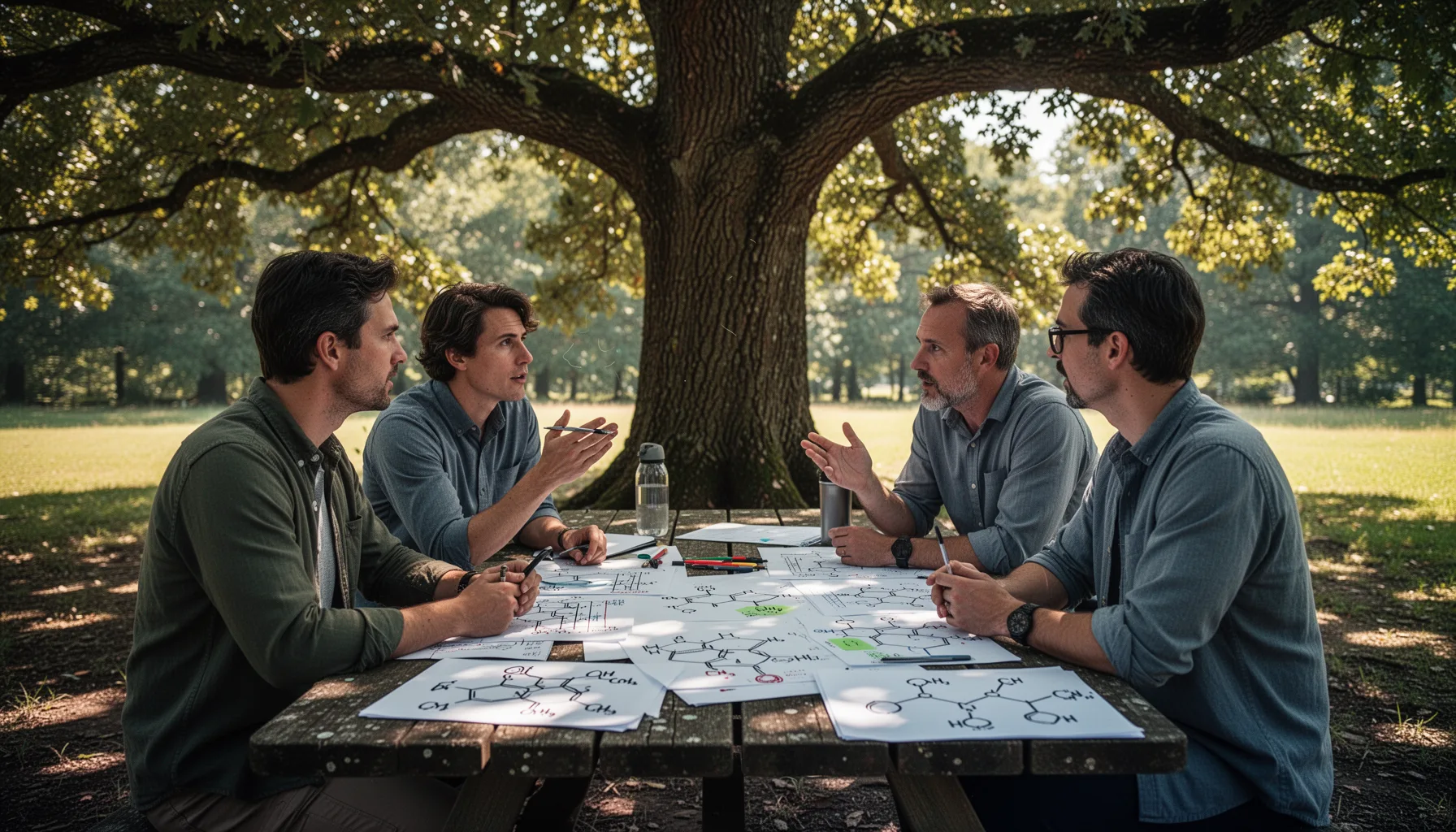
Pathwise coordination could improve molecular design search because early branch decisions in chemistry often narrow the future space far more than standard optimizers admit. Not quite obvious at first. A substitution choice near the scaffold stage can shape solubility, target fit, and synthesizability downstream, so keeping branches alive has real practical value. And tree search has a long record in AI, from Monte Carlo methods to planning systems, but chemistry adds a tougher twist: objectives collide, and feasible molecules sit in a tiny corner of the combinatorial space. Companies like Insilico Medicine, Recursion, and Atomwise already rely on AI for drug discovery molecular optimization, though their methods vary a lot from pipeline to pipeline. What stands out here is the attempt to coordinate multiple agents over a structured search frontier instead of collapsing everything into one learned policy. We'd say that's a healthier fit for medicinal chemistry. It respects how chemists often keep several plausible series in play at once rather than naming a winner too soon. Worth noting.
How agents on a tree compares with standard multi objective molecular optimization ai agents
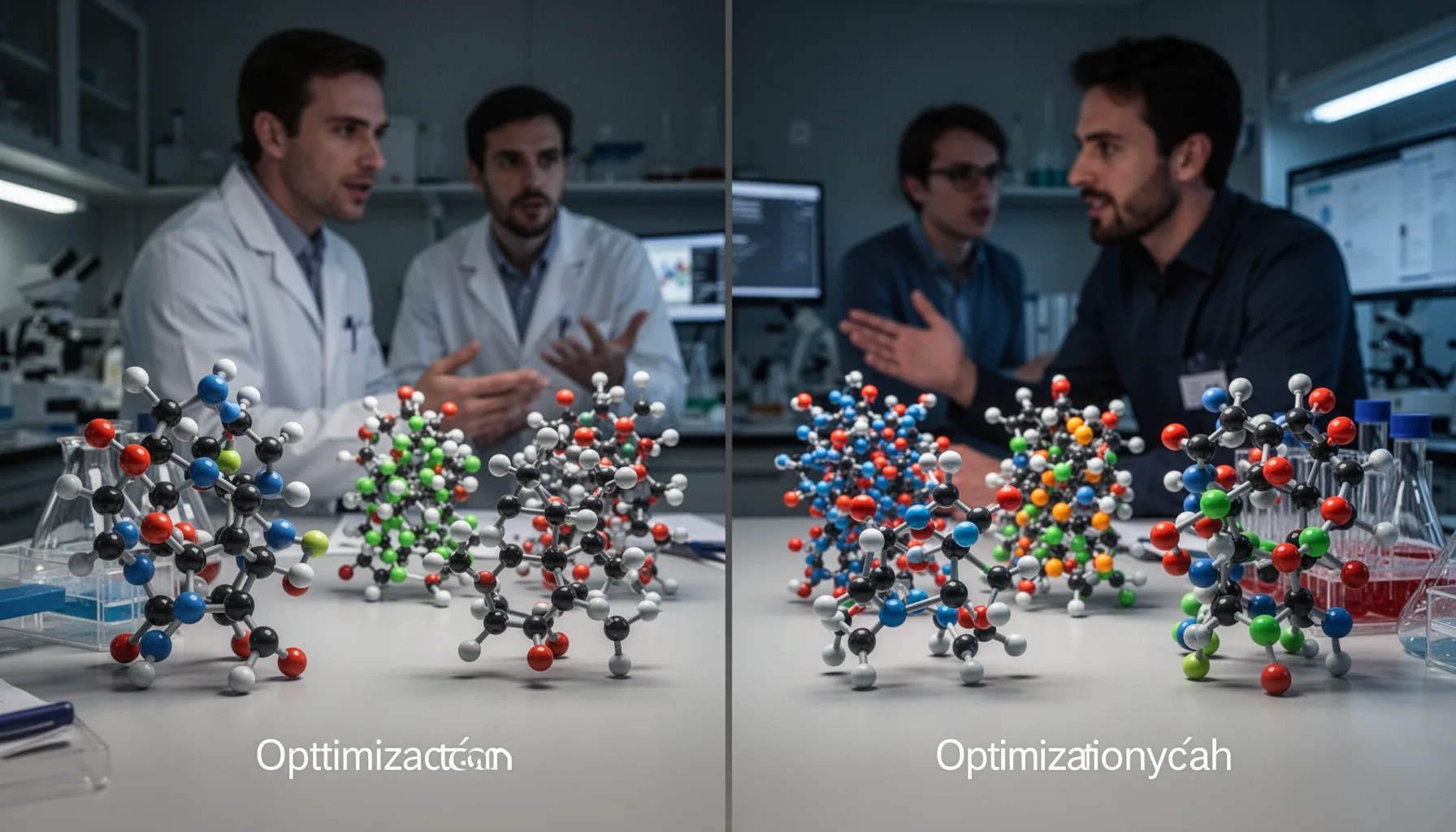
Agents on a Tree differs from standard multi objective molecular optimization AI agents by giving coordination a path structure instead of leaning mostly on static weighting or a central policy. Here's the thing. In many existing systems, developers choose scalar weights for potency, novelty, toxicity, and synthesis cost, then optimize that blended score. But fixed weights can bake in assumptions that stop making sense once the search enters a new region of chemical space. A tree-based setup can, at least in principle, let one branch emphasize novelty while another guards synthesizability, with later coordination comparing the consequences. That feels closer to how medicinal chemistry teams review series portfolios, not just top-ranked compounds. That's a strength. If the method also records branch rationale and handoff decisions, it could make pathwise coordination molecular design easier to interpret than black-box ranking alone. Think of a team at Novartis comparing two series side by side.
What this means for ai for drug discovery molecular optimization

For AI for drug discovery molecular optimization, this work points to a more plural way to search chemical space when objectives clash. Simple enough. Drug discovery teams don't just want a good score; they want viable candidates they can explain, synthesize, and test. And branch-based coordination could make it easier to align model search with real project structure, where biology, DMPK, and chemistry teams each bring different constraints. Benchmarks will matter, and we'd want to see comparisons against graph-based generative baselines, reinforcement learning approaches, and frontier tree search agents for chemistry. Still, the practical question isn't whether the model finds prettier Pareto fronts on paper. It's whether Agents on a Tree produces better compounds per synthesis cycle, because that's the metric program leaders at places like Pfizer, Novartis, or Exscientia actually care about. That's the part that counts.
Key Statistics
Frequently Asked Questions
Key Takeaways
- ✓Molecular design gets harder when potency, safety, and synthesis pull in different directions.
- ✓Agents on a Tree relies on branching coordination instead of one global policy.
- ✓Tree structure matters because early chemistry choices constrain later options.
- ✓This could make AI for drug discovery more exploratory and easier to audit.
- ✓The real test is wet-lab value per synthesis cycle, not just benchmark wins.