
⚡ Quick Answer
AI hallucinations explained in plain English means language models sometimes generate false, invented, or internally inconsistent answers that sound convincing. ChatGPT hallucinates because it predicts likely text patterns, not verified truth, and that gap widens under weak prompts, missing context, or tasks that exceed its evidence.
AI hallucinations explained starts with a pretty uncomfortable fact: ChatGPT can sound certain even when it's flat-out wrong. That's the trap. A polished paragraph feels trustworthy, and our brains often mix up fluency with accuracy. But in actual use, these failures usually aren't random nonsense. They tend to land in repeatable buckets you can test, rank, and control before they reach customers, students, or executives.
AI hallucinations explained: what counts as a hallucination and what doesn't

AI hallucinations explained properly starts by separating invented content from ordinary mistakes, ambiguity, or stale information. That's a consequential distinction. We'd argue too many articles toss every model error into one pile, and that makes diagnosis worse, not better. A hallucination usually means the model states unsupported claims as though they're grounded facts, like a fake legal case, a made-up paper title, or an invented product feature. OpenAI and Anthropic both warn that fluent output can include inaccuracies, and that matters because people often trust tidy prose more than they should. Worth noting. In the 2023 Mata v. Avianca case, lawyers filed citations generated by ChatGPT that didn't exist, and the court record turned a technical issue into a professional one. That's the kind of moment when language stops being harmless. We'd also say stale data, probabilistic guessing, and instruction pressure can all create bad output. But true hallucinations stand apart because the model presents fiction as evidence.
Why does ChatGPT hallucinate when the answer sounds certain?
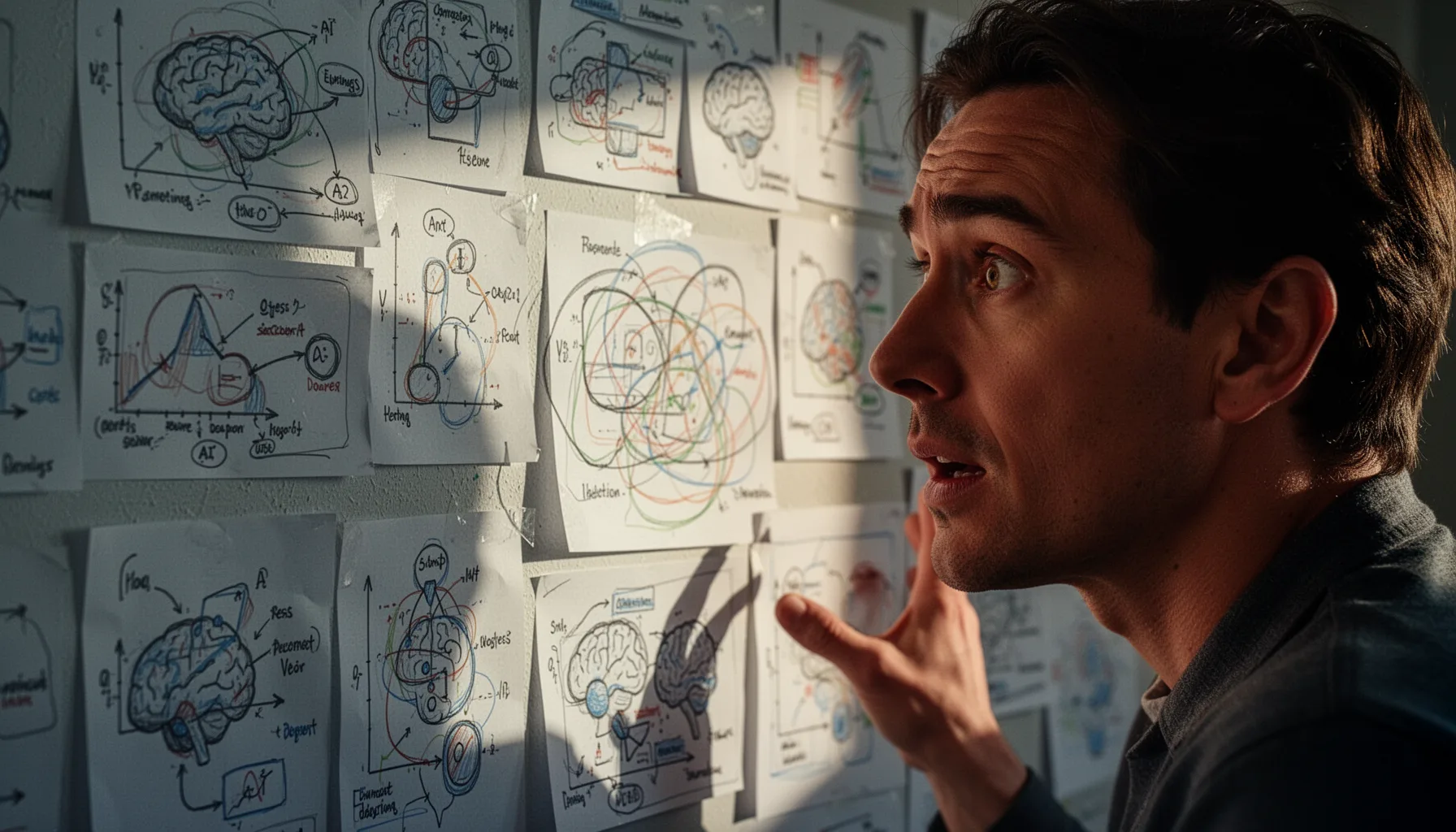
Why does ChatGPT hallucinate? Because the model predicts plausible next tokens from patterns in training data and context, not from any built-in fact-checking engine. That's the core mechanic. And confidence in wording doesn't equal confidence in truth. The same system that learned persuasive structure also learned when decisive language usually shows up. Researchers at Stanford and UC Berkeley have found in benchmark work that large language models can do strikingly well on surface tasks while still failing on factual grounding and multi-step consistency. That's a bigger shift than it sounds. Claude and ChatGPT both get better when you give them retrieval tools or explicit source limits, which suggests a plain reality: unsupported generation is where risk jumps. Consider someone asking for obscure biotech trial data without supplying documents. The model will often patch the gap with likely-sounding details instead of saying it doesn't know. Not quite. That's not malice. It's next-word prediction under pressure, and we'd say the product decision to favor helpfulness over refusal has, historically, made the problem worse.
How to detect AI hallucinations before they cause damage

How to detect AI hallucinations starts with claims specific enough to verify, especially names, dates, figures, quotes, and citations. Start there. But don't rely on tone alone, because a hesitant answer can be right and a crisp one can be fabricated. A practical field test is asking the model for source-backed answers, then independently opening every cited paper, court opinion, or URL. Fabricated references remain one of the easiest failure modes to catch. Another useful check is cross-model comparison: if ChatGPT and Claude disagree on a narrow factual point, you probably need a primary source, not a tiebreaker from another model. Here's the thing. We also recommend adversarial re-prompting by asking, "What part of your answer are you least certain about?" Uncertainty often shows up on the second pass. In enterprise settings, teams increasingly rely on evaluation harnesses with factuality checks, citation validation, and regression tests; it mirrors software QA for a reason. Worth noting. The blunt truth is simple: if a wrong answer could trigger legal, medical, financial, or reputational cost, human review isn't optional.
AI hallucination examples and fixes: a practical field guide

AI hallucination examples and fixes make more sense when you sort them into categories and match each one with a playbook. Here's the useful frame. First, factual fabrication: the model invents a company milestone or regulation, and the fix is retrieval, source requirements, or refusal rules when evidence is missing. Second, fabricated citations: ChatGPT or Claude returns papers, cases, or links that look real, and the fix is automated citation verification plus a rule that only supplied documents may be cited. Third, reasoning failure: the final answer reads smoothly but contains arithmetic or logic breaks, and the fix is external tools like Python, calculators, or constrained chain verification. Simple enough. Fourth, instruction conflict: the model follows tone or completeness cues so aggressively that it blows past truth boundaries, and the fix is to rank accuracy rules above helpfulness and length. A concrete example comes from coding assistants that invent library methods when documentation isn't available; GitHub Copilot users have seen this often enough that vendor guidance now stresses doc lookup and testing. We'd argue this category-based approach beats generic warning labels because each failure mode points to a different control, owner, and severity score. That's worth watching.
Reduce ChatGPT hallucinations without killing useful output

Reduce ChatGPT hallucinations by narrowing the task, supplying trusted context, and forcing the model to separate facts from guesses. That's the playbook that works most often. Still, every control carries a tradeoff, and teams should be candid about that. Retrieval-augmented generation can improve grounding, yet it adds latency and depends on document quality. Aggressive refusals cut false claims, yet they can make assistants feel less helpful. Shorter prompts reduce drift, yet they may also cut useful nuance. We see the best results when teams define risk tiers: marketing ideation can tolerate more creativity, while compliance summaries need strict source citation and answer abstention. Microsoft, Google Cloud, and AWS all push versions of this governance pattern in enterprise AI guidance, which tells you the market has already moved past blind trust. Here's the thing. Zero hallucinations probably isn't a realistic target for open-ended generation. But lower, measured, monitored hallucination rates are realistic, and that's usually what responsible deployment actually requires. We'd argue that's the real benchmark.
Step-by-Step Guide
- 1
Classify the task by risk
Start by sorting prompts into low, medium, or high consequence categories. Brainstorming and drafting usually sit low, while legal, medical, and finance work sit high. And once a task enters a high-risk lane, require sources, logs, and human sign-off.
- 2
Constrain the model's evidence
Give the model the documents, links, or data tables it may use, then tell it not to go beyond them. This sharply reduces unsupported guessing. If no evidence exists in the provided set, instruct the model to say so plainly.
- 3
Force citation and uncertainty labels
Ask for claim-by-claim citations and a confidence note for each major assertion. That won't guarantee truth. But it makes unsupported statements much easier to spot during review.
- 4
Cross-check with a second method
Verify critical outputs with search, a database query, a calculator, or a domain tool instead of another free-form model answer. Different methods fail differently. That's exactly why this catches errors that polished prose hides.
- 5
Run adversarial follow-up prompts
Challenge the answer with prompts like "What might be wrong here?" or "List assumptions and unsupported claims." Models often reveal weak points when asked directly. So use that behavior as a diagnostic, not a curiosity.
- 6
Track failure patterns over time
Log hallucination types, prompt conditions, and downstream impact in a simple review sheet. Soon you'll see recurring triggers such as long context windows, missing sources, or citation-heavy tasks. That's how teams move from anecdotes to operating discipline.
Key Statistics
Frequently Asked Questions
Key Takeaways
- ✓Hallucinations aren't one bug; they split into factual, citation, reasoning, and instruction-conflict failures.
- ✓ChatGPT sounds confident because fluency and accuracy come from different parts of model behavior.
- ✓The best detection method is structured verification, not gut feel or writing style.
- ✓RAG, constrained prompting, and tool use cut risk, but they usually add latency.
- ✓You shouldn't chase zero hallucinations if creativity or brainstorming matters more than precision.