
⚡ Quick Answer
The Anthropic CEO White House visit AI security story centers on government concern that advanced AI models could aid hacking or other national security threats. The meeting signals that frontier AI labs now face direct scrutiny from policymakers, not just market competition.
Anthropic CEO White House visit AI security is more than a headline. It's a marker. When a leading AI executive heads to the White House amid worries over model-enabled hacking, Washington is treating frontier systems as an operational risk, not an abstract one. That's a bigger shift than it sounds. And it suggests the next stretch of AI policy will dwell less on flashy demos and more on whether these models can be bent toward misuse by criminals, state actors, or just careless users.
What does the Anthropic CEO White House visit AI security meeting actually mean?
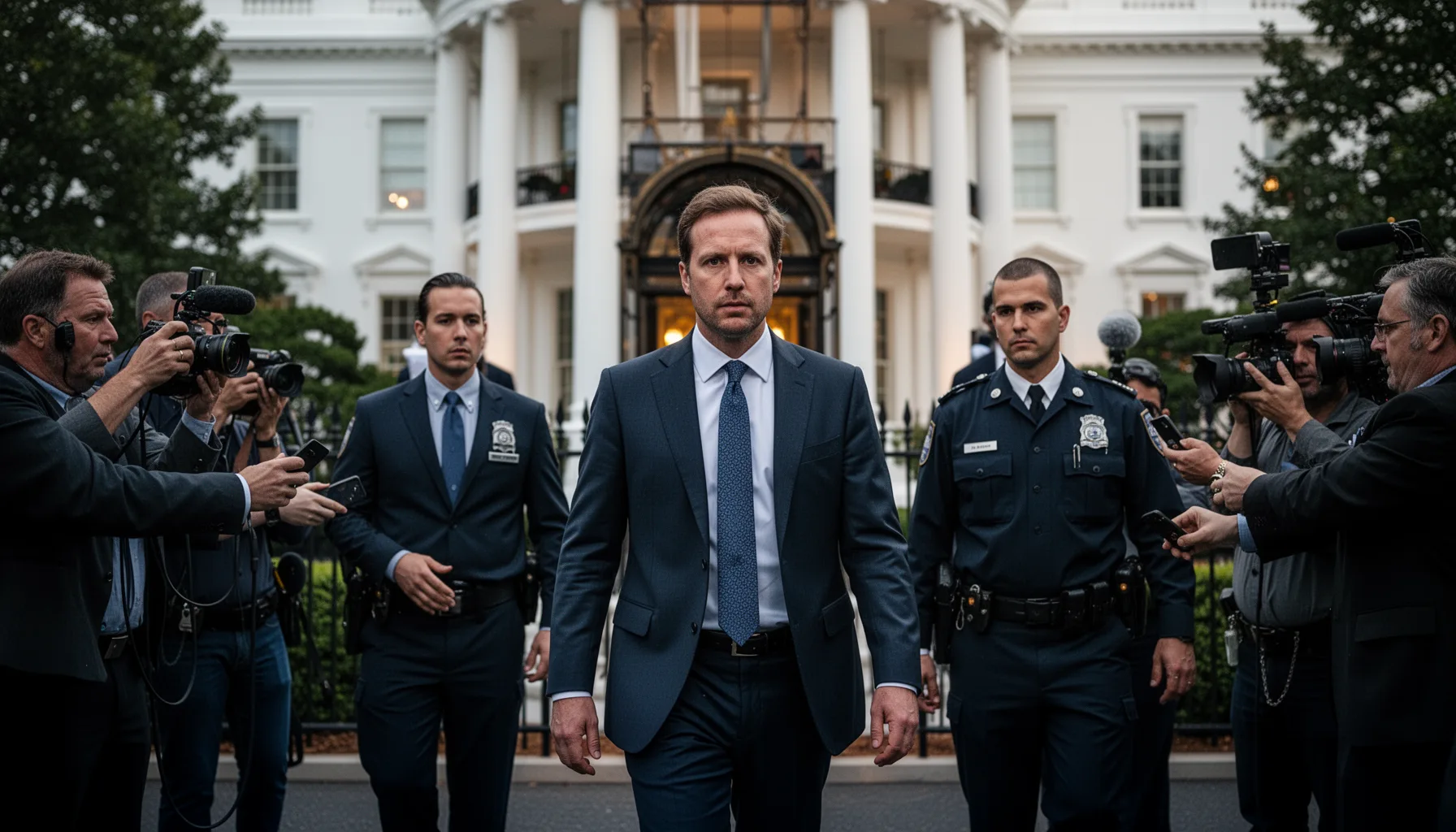
The Anthropic CEO White House visit AI security meeting suggests federal officials now treat advanced model misuse as a policy issue that calls for direct executive attention. That's the plainest read. The Washington Post cast the visit around hacking fears tied to a new AI model, which makes clear this wasn't some hazy anxiety about AI at large. That distinction isn't trivial. Cybersecurity assistance from large language models sits much closer to immediate harm than broad labor disruption or speculative social effects. We've watched this script before with dual-use tools. Governments usually step in when a capability looks deployable, not while it still lives on slides and theory. In 2023, the White House secured voluntary AI safety commitments from Anthropic, Google, Meta, Microsoft, and OpenAI, setting an early pattern for direct coordination between labs and government. We'd argue that's early governance in action, even before formal law catches up. Private meetings do real work. They shape what regulators ask for next.
Why are Anthropic hacking fears over a new AI model getting serious attention?

Anthropic hacking fears over a new AI model are drawing serious attention because offensive cyber capability remains one of the quickest ways AI can cause real-world damage. Not years away. Right now. Frontier models already assist with coding, debugging, and system analysis, so the policy fight turns on where legitimate support stops and dangerous enablement starts. Here's the thing. Anthropic has publicly stressed safety work, including its Responsible Scaling Policy, which sets thresholds and response measures for increasingly capable systems. That gives the company more standing than many smaller firms, but it also lifts expectations. If even a safety-focused lab draws White House concern, officials likely think the capability frontier is moving fast. Consider the UK AI Safety Summit at Bletchley Park in 2023. Frontier model misuse became a diplomatic issue there, not just a lab-side argument. We'd argue hacking fears resonate because they're measurable, operational, and tied to national security playbooks officials already understand. They may not grasp every model internal. But they know cyber risk when they see it.
How does White House Anthropic meeting explained fit broader national security concerns?
White House Anthropic meeting explained in national security terms means the government now sees leading AI models as strategic infrastructure, not merely software products. That's the larger frame. A model that can boost phishing campaigns, automate exploit research, or compress the skill needed for intrusion work lands squarely where tech policy meets defense policy. And the U.S. government has already started building that view through bodies such as the U.S. AI Safety Institute at NIST, which aims to support evaluations and standards for advanced AI systems. Worth noting. The concern isn't just that a model might answer a malicious prompt. Access rules, fine-tuning, tool reliance, and deployment choices can all widen misuse paths. Microsoft and OpenAI have both published research on threat actors experimenting with LLMs, even when the results look uneven, and that gives officials a real evidence base. We think national security agencies don't need proof of catastrophic misuse before they act. They just need a believable route from capability to abuse. That's why these meetings keep happening behind closed doors.
What government concerns about frontier AI models are likely driving this debate?

Government concerns about frontier AI models likely center on evaluation gaps, model access, misuse safeguards, and the speed of capability gains. Those are the pressure points. Officials want to know whether labs can reliably detect dangerous capabilities before release and whether red-teaming captures realistic attack behavior instead of tidy benchmark scores. Not quite simple. Anthropic, like OpenAI and Google DeepMind, has relied on internal testing and outside experts, but no universally accepted standard yet exists for frontier model cyber risk scoring. NIST's AI Risk Management Framework gives agencies and companies a shared vocabulary, yet it doesn't settle the hardest question: how to measure emergent misuse in systems that shift quickly. And when firms ship models through APIs, enterprise products, and developer ecosystems, the exposure surface gets messy fast. One concrete example is tool-enabled agents. A model can pair reasoning with command execution or browsing, which increases practical utility for defenders and attackers alike. My view is straightforward: Washington worries less about one dramatic jailbreak than about thousands of small gains piling up into a usable offensive assistant.
Key Statistics
Frequently Asked Questions
Key Takeaways
- ✓The White House is treating frontier model misuse as a live security issue
- ✓Anthropic sits near the center of debates over hacking-capable AI systems
- ✓Government officials want evidence, testing methods, and risk mitigation plans
- ✓AI security now covers model behavior, access controls, and deployment choices
- ✓This meeting matters because regulation often starts with private briefings