
Anthropic Suspends Claude Fable Access After Order
Anthropic suspends Claude Fable access after a US government order. What export controls mean for users, firms, and foreign nationals.

Table of Contents
Quick Answer
Anthropic suspends Claude Fable access because a US government export control directive reportedly requires the company to block Fable 5 and Mythos 5 for foreign nationals. If AI access is suspended under national security rules, affected users can lose model access immediately, while employers, developers, and buyers scramble to replace workflows and review compliance exposure.
Anthropic suspends Claude Fable access, and that phrase alone will recast plenty of enterprise risk meetings. Not small. This isn't a pricing tweak or a routine regional outage. It's something else. The reported order covers Fable 5 and Mythos 5 access for foreign nationals inside and outside the United States, which turns frontier AI from a product choice into a compliance question. That's a bigger shift than it sounds. And for companies that built workflows around these models, the shock isn't abstract. It's operational. Immediate. Expensive.
Anthropic suspends Claude Fable access: what happened?
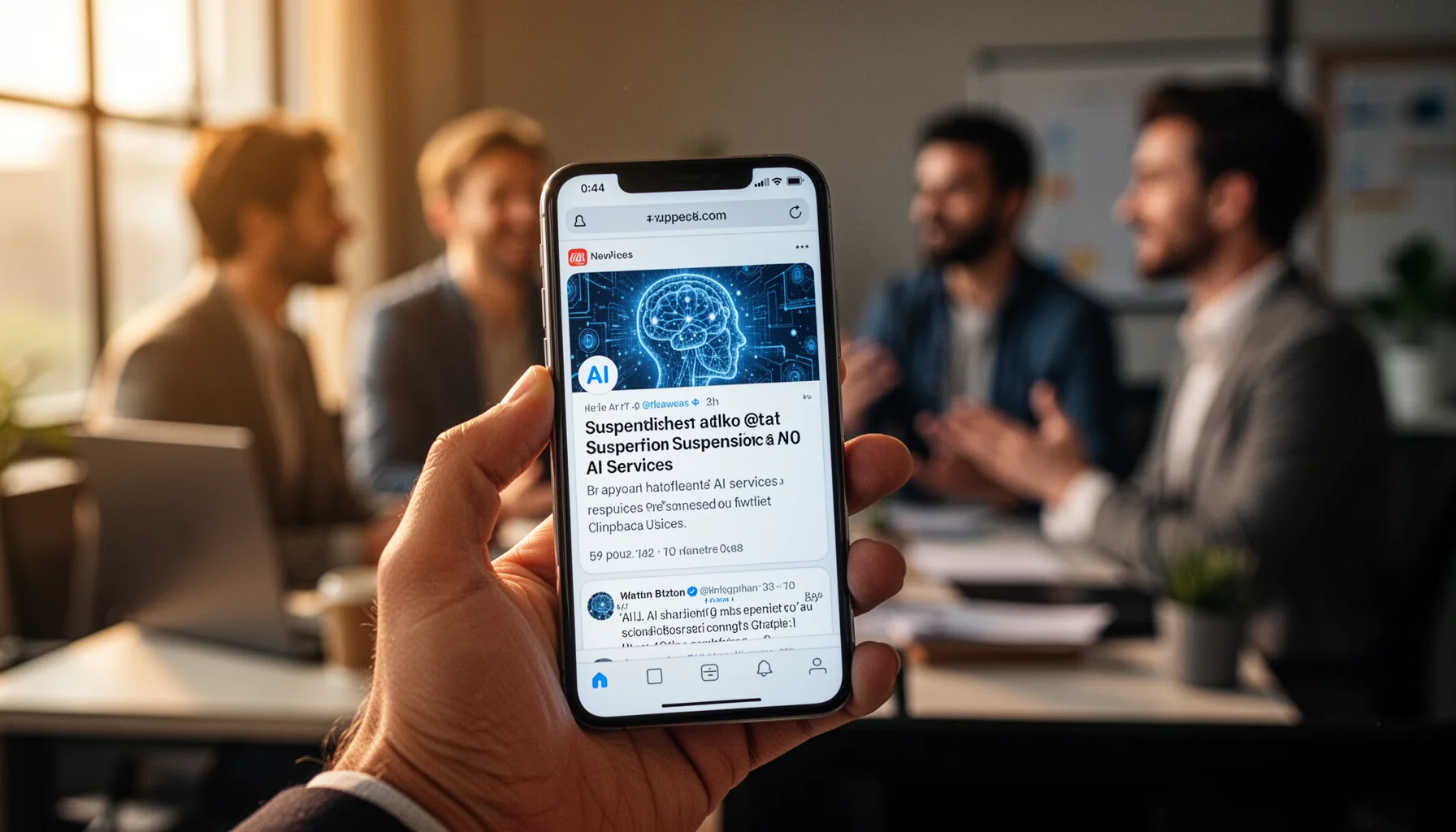
Anthropic suspends Claude Fable access after what the company says is a US government order tied to national security authorities and export control rules. That's a very different bucket from a voluntary policy clampdown. According to the company's public notice, the directive requires suspension of access to Fable 5 and Mythos 5 for foreign nationals, whether they're inside or outside the United States. That scope stands out. Export controls have long touched semiconductors, advanced compute, and certain technical transfers, but user-level model access limits mark a sharper turn for AI governance. Worth noting. The US Commerce Department's Bureau of Industry and Security has widened AI-related controls in recent years, and this move fits that broader pattern of treating frontier capabilities as strategic assets. We'd argue this is one of the clearest signals yet that frontier model access can become conditional overnight. Every procurement team should pay attention. Think Nvidia.
How do US export controls AI models Anthropic affect foreign nationals?

US export controls affecting AI models can hit foreign nationals directly by cutting access even when they work for US-based employers or live in the country legally. That's the part many firms won't have mapped out. If the directive is enforced as described, nationality becomes a gate for relying on specific Anthropic systems, which raises immediate issues for engineering teams, research groups, and multinational companies. Here's the thing. A software team in New York or Austin may suddenly find that some employees can work with a model while others can't. And that creates workflow fragmentation, access-control headaches, and potential HR sensitivity. Real export control programs already distinguish between persons, entities, destinations, and technical data categories; this order appears to bring that same logic into model access itself. We'd say that's a bigger administrative shift than most CIOs expect. AI access is starting to look like controlled technology transfer, not ordinary SaaS. Ask any team at IBM.
Claude Fable Mythos government order: why this matters beyond Anthropic
The Claude Fable Mythos government order matters beyond Anthropic because it points to a policy template other frontier model providers may eventually face. OpenAI, Google, xAI, and others should read this very carefully. Once regulators establish that advanced model access can be restricted on national security grounds, the market has to assume similar directives could show up elsewhere, whether by model class, capability threshold, or user category. That's not trivial. And that possibility changes vendor strategy. Companies choosing a single-model provider now carry a geopolitical dependency they may not have priced in. We think this will speed up demand for model routing layers, internal fallback systems, and contract language around service interruption tied to legal orders. The cloud market learned this lesson through outages and sovereign hosting rules. AI buyers may learn it through access bans. Think of how AWS customers treat redundancy.
What happens if AI access is suspended for your team or business?
If AI access is suspended, your team loses more than a chatbot; it loses embedded process assumptions. That's why the damage spreads fast. Product teams may lose drafting workflows, support teams may lose macro generation, researchers may lose synthesis tools, and compliance groups may suddenly need to assess whether prior outputs involved controlled access conditions. Not quite hypothetical. A company using Anthropic through its own API account, Amazon Bedrock, or partner tooling may also need to confirm whether alternate access paths are blocked too. And legal teams should review contracts, data handling commitments, and user eligibility clauses right away. In practical terms, the first response should be containment: identify affected users, freeze risky automations, and map replacement providers. The second response is strategic. We'd argue no company should let one frontier model become a single point of organizational failure. Simple enough. Amazon Bedrock users should check first.
Frequently Asked Questions
Why did Anthropic suspend Claude Fable access?
Who are the foreign nationals blocked from AI models under this order?
How do US export controls affect access to AI models?
What happens if AI access is suspended during active business operations?
When should companies prepare for model access restrictions?
Key Takeaways
- Anthropic suspends Claude Fable access under a government directive, not a routine product change
- US export controls AI models Anthropic now reach individual user access, not just chip shipments
- Foreign nationals blocked from AI models may include workers inside US companies and labs
- Companies need contingency plans for model shutdowns, access reviews, and vendor concentration risk
- What happens if AI access is suspended depends on citizenship, employer obligations, and contract terms