
⚡ Quick Answer
Auditable decisions in enterprise ai require systems to trace how a business event changes the facts, rules, and options available before an agent acts. The new paper argues ontology-governed graph simulation gives enterprises a clearer, inspectable path from event intake to decision output.
Auditable decisions in enterprise ai can sound like pure boardroom talk. Until an AI agent approves the wrong refund, reroutes a shipment, or flags the wrong customer. Then the issue stops being abstract fast. A new arXiv paper, "From Business Events to Auditable Decisions: Ontology-Governed Graph Simulation for Enterprise AI," takes aim at a flaw many enterprise teams already feel in the field. Most agent systems answer from a huge, open knowledge space instead of first modeling how a specific business event changes the local reality. And we'd argue that's the exact moment enterprise AI stops being useful and starts getting risky.
Why auditable decisions in enterprise ai are still so hard

Auditable decisions in enterprise ai are difficult because most AI agents produce answers without keeping a visible chain of business-state reasoning. That's the paper's central complaint. And it's a fair shot. In plenty of real deployments, an LLM gets a prompt, a few tools, and a policy note, then spits back a polished action recommendation. Looks neat. But neat isn't the same as accountable. A bank relying on AI for credit operations, say JPMorgan in a hypothetical workflow, needs to show which customer event, policy rule, approval threshold, and data source shaped the outcome. Under rules such as the EU AI Act and sector controls like SR 11-7 model risk guidance in banking, firms increasingly need evidence, not vibes. We'd put it plainly: if a team can't replay a decision path afterward, the system probably isn't enterprise-grade yet. That's a bigger shift than it sounds.
What is ontology governed graph simulation for enterprise ai systems

Ontology governed graph simulation for enterprise ai systems means representing business entities, events, constraints, and relationships in a governed graph, then simulating state changes before producing a decision. It's a lot to say. But the idea itself is pretty practical. An ontology defines what things are and how they relate: customer, invoice, shipment, approval, policy exception, service level breach. A graph maps those entities and links so software can traverse and inspect them. The simulation step matters most, because the paper argues agents should update the active decision space based on the event at hand before answering. Think about SAP order processing or ServiceNow incident workflows. One event can change entitlements, escalation rules, and next-best actions in seconds. We'd say this beats plain retrieval because it doesn't just fetch facts; it models what the event actually does to those facts. Worth noting.
How business events to auditable decisions ai paper changes agent design

The business events to auditable decisions ai paper points to a different agent architecture: simulate first, decide second, justify throughout. Simple enough. That order sounds obvious, yet many current copilots do the reverse. They generate an answer from broad prior knowledge, maybe add retrieved documents, and only loosely tie the output to workflow state. But in enterprise settings, a late payment notice, contract amendment, or failed KYC check can change which actions are even legal. That's why companies such as IBM, Palantir, and Microsoft have spent years stressing governed metadata, workflow context, and lineage in enterprise platforms. The paper's contribution seems to be framing that discipline as a formal graph simulation process tied to ontological controls. We'd argue that's the right instinct, because enterprise agents shouldn't just be smart; they should stay inspectable when pressure hits. Not quite a small tweak. It's an architectural correction.
Can graph simulation for enterprise ai systems improve decision traceability methods

Graph simulation for enterprise ai systems can improve enterprise ai decision traceability methods because each state transition can be logged, inspected, and replayed. That's the payoff. If an AI agent denies a claim, a reviewer should be able to ask: which event entered the system, which ontology classes applied, which graph nodes changed, which policy constrained the action, and which final rule triggered the result. Neo4j, Stardog, and Cambridge Semantics have all built businesses around one simple fact: connected enterprise data becomes more useful when relationships are explicit. And once those relationships are governed, traceability stops looking like an afterthought. To be fair, implementation won't be light work, especially when source systems are messy or policies collide. Still, for regulated sectors like insurance, healthcare, and finance, this method likely offers a more credible audit trail than prompt logs alone. We'd call that consequential.
Why ontology based governance for ai agents matters now
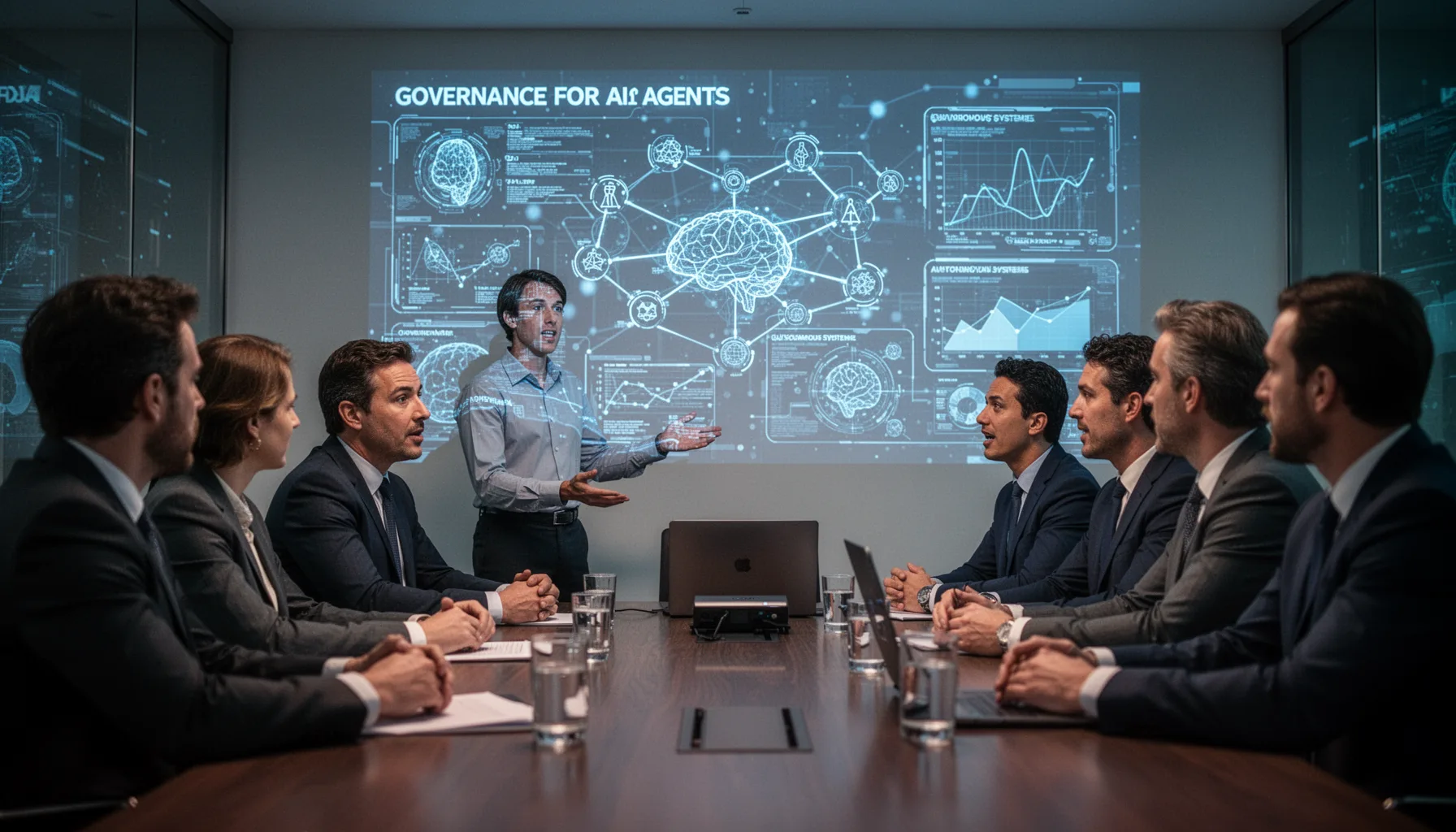
Ontology based governance for ai agents matters now because enterprises are shifting from chat assistants to systems that recommend, trigger, and sometimes execute business actions. That's a different risk profile. A summarizer can be wrong and merely irritate someone, but an operations agent can freeze an account, reorder inventory, or escalate a fraud case. Gartner estimated in 2024 that more than a third of generative AI pilots would move toward workflow integration, and that shift raises the bar for controls. Here's the thing. The paper arrives at a good moment because boards, risk teams, and internal audit groups are asking for decision provenance, approval logic, and policy alignment. We see a broader pattern here: enterprises don't just want agent autonomy; they want constrained autonomy. That's why auditable decisions in enterprise ai will likely become a buying criterion, not just a research talking point. Worth watching.
Key Statistics
Frequently Asked Questions
Key Takeaways
- ✓The paper targets a common flaw in agent systems: answering before modeling the live business context.
- ✓Ontology-governed graph simulation creates a traceable chain from business events to decisions.
- ✓That design could make enterprise AI easier to audit, govern, and debug.
- ✓The approach fits regulated settings where policy, lineage, and approvals actually matter.
- ✓For enterprise buyers, control beats cleverness when AI starts making consequential calls.