
⚡ Quick Answer
Building adaptive learning systems means combining learner modeling, retrieval, feedback loops, and strict production controls rather than just adding a chatbot to course content. Lessons from Sikho.ai suggest the winning architecture adapts in real time, measures outcomes continuously, and treats evaluation as a product feature.
Building adaptive learning systems sounds simple right up until you try to ship one. Then the rough edges show up fast. Learners shift pace, intent, and confidence minute by minute, while models still hallucinate, latency jumps at the worst times, and content quality drifts unless someone catches it. Lessons from Sikho.ai make that plain. And the bigger takeaway is tougher than most teams expect. An AI-native learning platform best practices playbook looks much more like systems engineering than edtech marketing. That's a bigger shift than it sounds.
What does building adaptive learning systems actually require in production?
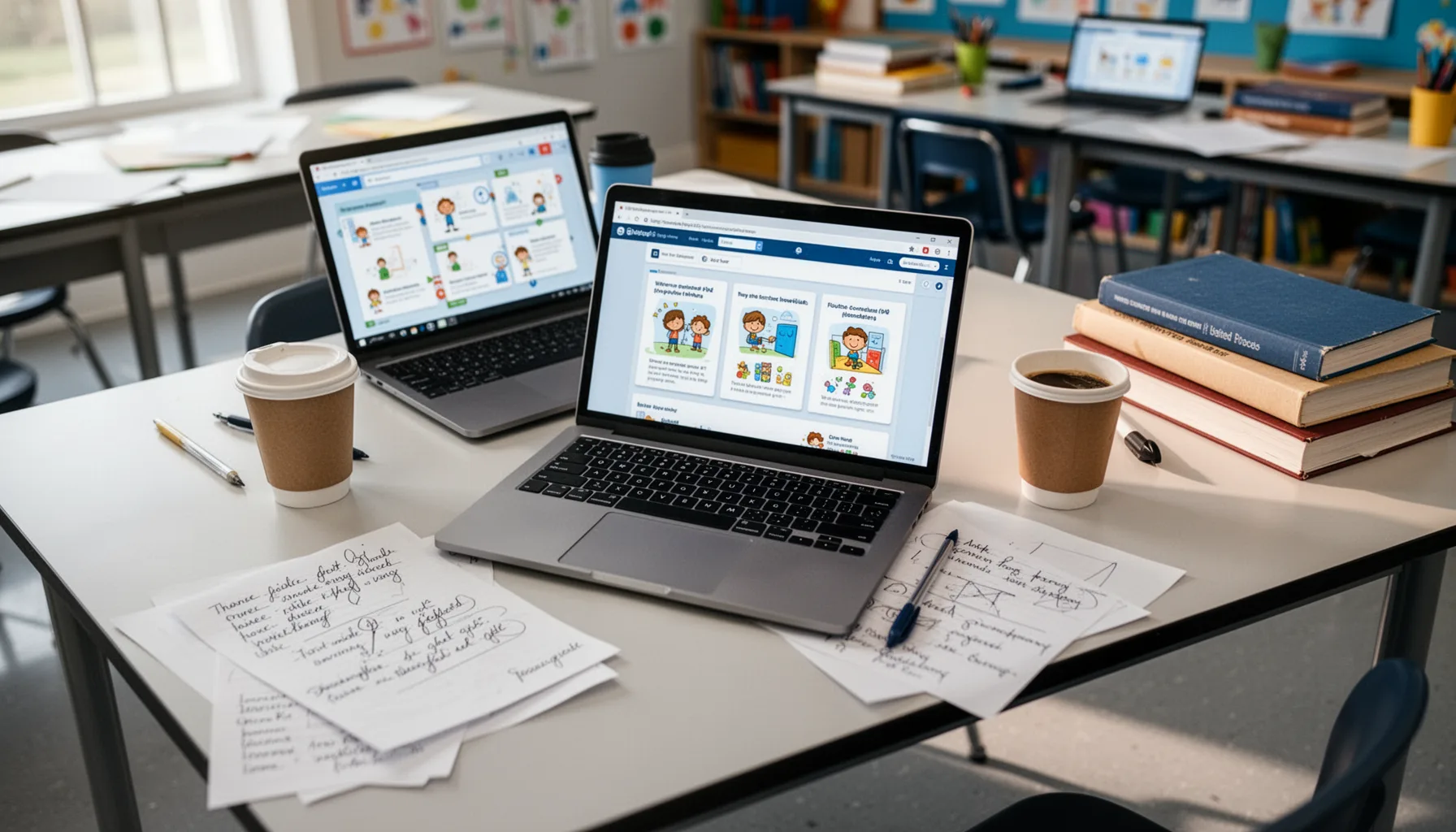
Building adaptive learning systems in production calls for a live learner model, a decision layer, retrieval that stays grounded, and nonstop evaluation. Simple enough. That may sound obvious, but plenty of teams still mistake adaptive learning for static recommendation logic wrapped around an LLM. Sikho.ai’s reported experience lines up with what we’ve seen across enterprise AI products: personalization only feels real when the system updates the next prompt, explanation, or quiz path from fresh behavior data. Not from yesterday’s batch job. In practice, that means tracking mastery estimates, time-on-task, hesitation signals, error types, and content interaction events as first-class product data. And platforms like Duolingo and Khan Academy point to the same pattern. Adaptation depends less on one perfect model and more on fast iteration across tutoring logic and feedback loops. Our view is blunt. If your architecture can’t revise learner state after each meaningful action, you probably don’t have adaptive learning yet. Worth noting.
How should adaptive learning platform architecture be designed?

Adaptive learning platform architecture should split learner state, content retrieval, policy decisions, and model inference into separate services. That split gives teams a clean way to tune latency, audit decisions, and swap components when a model or retrieval strategy falls short. Sikho.ai’s lessons suggest this isn’t optional. Not quite. A production system usually needs an event pipeline, a feature store or learner profile service, a retrieval layer for lesson assets, a scoring engine for mastery and confidence, and an orchestration layer that picks the next intervention. We'd also add strict observability from day one, because once you can't explain why a learner got a hint or skipped a module, trust erodes fast. Here's the thing. Think of it like a recommendation system crossed with a tutoring engine. Real-world example: if a learner keeps missing algebra word problems but solves symbolic equations, the system should pull language-simplified practice content and adjust explanation style without changing the core skill target. That's a bigger shift than it sounds.
Why do lessons from Sikho ai point to evaluation as the core product feature?
Lessons from Sikho ai point to evaluation as the core product feature, because adaptive claims fall apart when teams can’t prove better learning outcomes. Many AI products track clicks, session length, and completion, but those are flimsy proxies for mastery. The stronger method measures pre-assessment to post-assessment lift, concept retention, hint dependence, and recovery after error. And teams should run controlled experiments wherever possible. Researchers at Stanford’s Graduate School of Education and groups like ETS have argued for years that instructional systems need psychometric grounding, not just UX polish, and that advice still holds in the LLM era. We'd go further. Every adaptive policy should carry a measurable success condition tied to learning, not vibes. If the system adds more hints, does time-to-mastery drop, or do learners just become dependent on scaffolding? That question should shape the roadmap more than whatever model benchmark topped X this week. Worth noting.
What are the biggest production challenges in adaptive learning ai?
The biggest production challenges in adaptive learning ai are bad content grounding, slow response times, unstable personalization logic, and safety failures. These systems usually break in ordinary ways first. A retrieval index goes stale, a user profile writes duplicate states, a model over-explains easy material, or a region-wide latency issue wrecks lesson flow during peak study hours. Sikho.ai’s account is useful because it treats production scars as design inputs rather than embarrassment. That's the right instinct. In our analysis, adaptive products also face a tougher review bar than generic copilots because they influence learner confidence, pace, and perceived competence. So a wrong answer can do more than annoy someone. Example: a language-learning app like Duolingo that keeps lowering difficulty after two mistakes may improve short-term satisfaction while quietly hurting long-term progress. Teams need rollback rules, confidence thresholds, content versioning, and human review queues before they need them. Simple enough.
How to build personalized learning with ai without fooling yourself
How to build personalized learning with ai without fooling yourself starts with narrow adaptation goals and measurable policy changes. Pick one or two interventions first, such as hint selection or remediation sequencing, and instrument them obsessively. Then compare outcomes against a simple baseline like fixed lesson order or rules-only recommendations. This is where many teams stumble. They add a large model, see users say the product feels smarter, and mistake that for pedagogical value. A better playbook relies on offline evaluation on historical learner paths, online A/B testing, rubric-based response grading, and failure analysis by learner segment before widening scope. We'd argue the best AI-native learning platform best practices come from this kind of discipline. Make the system earn each new degree of autonomy, one policy at a time. That's a bigger shift than it sounds.
Key Statistics
Frequently Asked Questions
Key Takeaways
- ✓Adaptive learning works when the system updates learner state after every meaningful interaction.
- ✓Sikho.ai’s experience points to architecture discipline, not model novelty, as the real differentiator.
- ✓Retrieval, evaluation, and fallback design matter more than flashy personalization claims.
- ✓Production challenges in adaptive learning AI usually start with data quality and latency.
- ✓Teams need measurable before-and-after learning outcomes, not only engagement metrics.