
ChatGPT as Apple App Store rival: what’s realistic
ChatGPT as Apple App Store rival sounds bold, but the real fight spans discovery, agents, mini-apps, payments, and platform control.

Table of Contents
Quick Answer
ChatGPT as Apple App Store rival is possible only in specific layers of the software stack, not as a clean one-for-one replacement. OpenAI can compete in discovery, agentic execution, or mini-app distribution, but Apple still owns device defaults, billing rails, trust infrastructure, and operating system control.
"ChatGPT as Apple App Store rival" makes for a punchy headline. But it blurs the real story. OpenAI isn't rebuilding iOS from the ground up, and Apple doesn't sit exposed across every layer people cram into the term "app store." The better question is simpler: where can ChatGPT really compete: discovery, execution, payments, identity, or runtime? Split the stack up, and the picture gets more interesting. Also less breathless.
Is ChatGPT as Apple App Store rival the right way to frame the market?
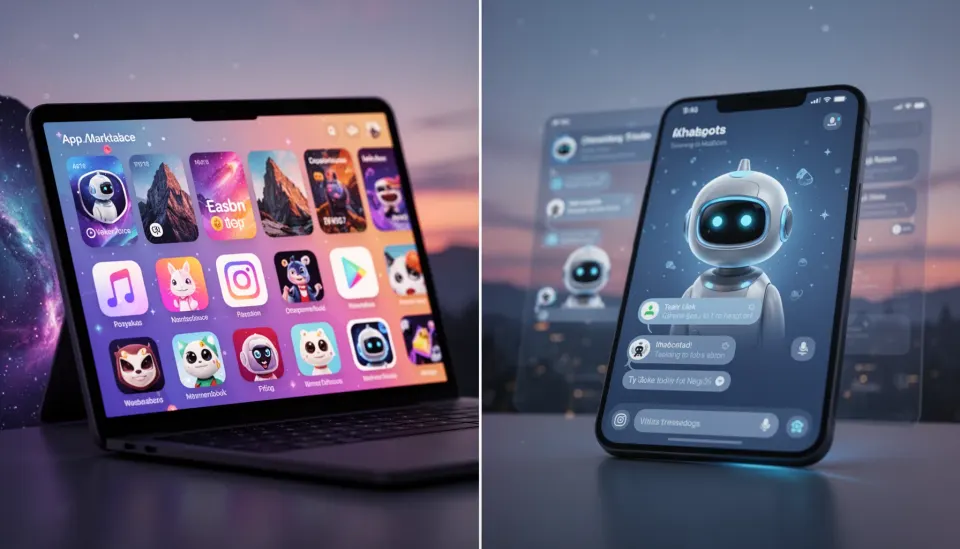
"ChatGPT as Apple App Store rival" works only up to a point, because the two platforms govern different layers of user behavior right now. That's the first fix. Apple's App Store handles distribution, billing, trust, and policy, all tied directly to iPhone, iPad, and Mac operating systems. ChatGPT, meanwhile, is mainly a conversational interface built around model-based reasoning, tool use, and a growing app-like ecosystem around it. We'd argue the media shorthand goes too far because it treats "app store" as one big block, when in practice it covers search, ranking, identity, payments, install, runtime permissions, and device integration. Apple controls default placement on billions of devices. That matters. OpenAI's edge sits elsewhere: people can state intent in plain language, which often beats poking through categories. That's competition, yes. Not a full-stack replacement. Worth noting.
How ChatGPT as Apple App Store rival could compete at the discovery layer

"ChatGPT as Apple App Store rival" makes the most sense at the discovery layer, where natural-language search can beat old-school app browsing. This is OpenAI's clearest opening. People don't always know which app they need, but they usually know the job they want done: book a flight, summarize a contract, compare CRM notes, or generate a test suite. ChatGPT can turn those requests into recommendations, almost like a smart broker between intent and software. Perplexity, Arc Search, and Microsoft's Copilot already suggest this pattern, where the interface narrows choices before anyone touches a store page. We'd argue Apple still holds the upper hand on trusted download and install mechanics, yet OpenAI could become the front door that shapes what users consider first. That's a bigger shift than it sounds. If OpenAI captures intent, it can steer value without owning the operating system. Simple enough.
Can ChatGPT as Apple App Store rival win as an agentic execution layer?

"ChatGPT as Apple App Store rival" gets more compelling when it acts as an agentic execution layer instead of a storefront. Here's why. In that setup, people stop opening many apps themselves and ask ChatGPT to complete tasks across services for them. OpenAI's Operator concept, along with agent systems from Google and Rabbit, points to a future where the assistant becomes the doer, not just the guide. That shifts the economics, because software providers may end up competing to be invoked by agents rather than installed by humans. We think this scenario is more plausible than a direct App Store copy, but it's also much harder to govern. Identity, delegated permissions, failed transactions, refunds, and audit logs get messy fast when an AI agent clicks, buys, submits, or edits across several services. Apple still has a huge moat here. Secure hardware matters. So do system permissions and billing protections people already trust. That's worth watching.
What happens if ChatGPT becomes a mini-app marketplace instead
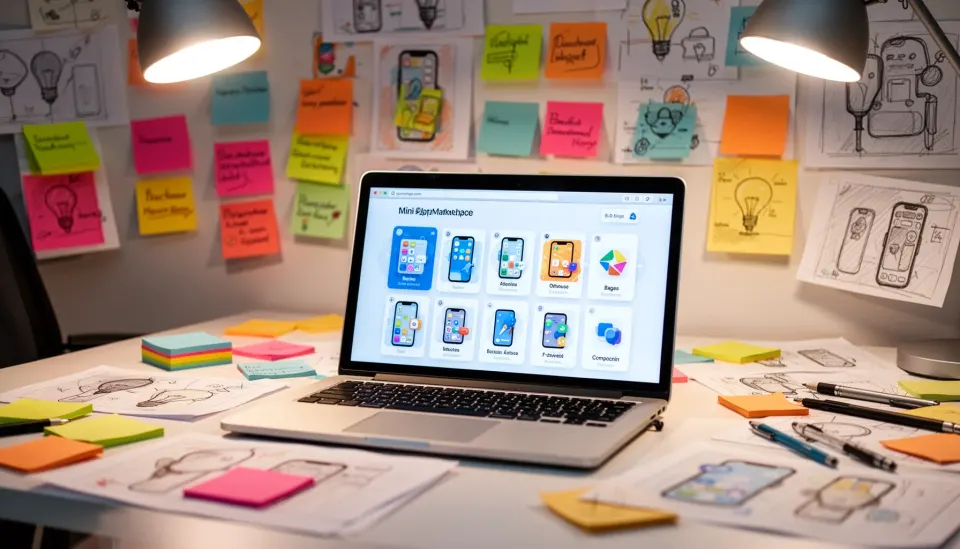
If ChatGPT turns into a mini-app marketplace, it may look more like WeChat-style services or Slack integrations than a classic mobile app store. That's the cleaner comparison. Mini-app systems work best when developers package narrow capabilities into lightweight experiences that people can invoke without leaving the host environment. Stripe, Shopify, and Slack all built healthy ecosystems by cutting friction between task, identity, and payment, though each kept tight platform control. OpenAI could try something similar inside ChatGPT with verified tools, action cards, subscriptions, and category pages. But we'd caution that a mini-app marketplace brings instant headaches around review queues, copycat apps, user data access, and ranking manipulation. Apple's long history of moderation fights makes clear how ugly this gets at scale. So yes, ChatGPT app marketplace future scenarios are real. But only if OpenAI accepts that it's signing up to become a platform governor, not just a model company. Not quite a small ask.
Why Apple still has durable moats against OpenAI app store challenges
Apple still has durable moats because it owns default distribution, device integration, trust rails, billing infrastructure, and policy enforcement across its hardware stack. That bundle matters more than the hype cycle. The App Store isn't just a catalog; it's tied to Face ID, Secure Enclave protections, parental controls, Screen Time, purchase history, and operating-system-level permissions. OpenAI has real consumer reach, but it doesn't control the iPhone home screen, push notifications, system APIs, or the native install path. And Apple can still reshape the field with App Intents, Siri upgrades, Spotlight integration, or tighter AI features at the OS level. A good example is Apple's grip on in-app purchases, which has survived years of legal and regulatory pressure even while rivals pushed alternatives. In our view, the biggest OpenAI app store challenges aren't only technical. They're structural. Apple starts with the device, and OpenAI starts with a destination app. Here's the thing.
Step-by-Step Guide
Define the layer you mean
Start by deciding whether you're talking about discovery, payments, runtime, identity, or execution. People often mash these together. That makes analysis sloppy and strategy worse. A company can threaten one layer without replacing the whole stack.
Compare user intent flows
Map how a person goes from need to action in both ecosystems. Keep the path concrete. On iPhone, users search, tap, install, authenticate, and pay. In ChatGPT, they describe a goal, review suggestions, grant access, and may never open a traditional app at all.
Audit platform moats
List the moats that actually matter: defaults, device hooks, trust, billing, and policy control. Then score them honestly. Apple wins most of those today. OpenAI's edge is stronger in intent capture and conversational orchestration.
Model three realistic futures
Build scenarios for ChatGPT as a discovery layer, an agentic execution layer, and a mini-app marketplace. Don't force one answer. Each future has its own revenue model, policy burden, and technical bottleneck. That's a better planning tool than dramatic winner-takes-all claims.
Track governance and safety costs
Estimate what moderation, fraud control, and customer support would look like at scale. This part gets ignored. The minute AI systems trigger purchases or access enterprise data, trust costs rise sharply. Platform economics depend on handling those costs without killing developer enthusiasm.
Plan for coexistence
Assume Apple and OpenAI will overlap rather than fully replace each other. That's the practical stance. Teams should build for both direct app usage and assistant-mediated usage. The winners will likely support installation, APIs, and agent access at the same time.
Key Statistics
- Apple said in January 2024 that the App Store ecosystem facilitated $1.1 trillion in developer billings and sales in 2022.That figure captures how large Apple's commerce layer already is. Any rival model has to account for billing, trust, and developer economics at that scale.
- OpenAI said ChatGPT surpassed 100 million weekly active users in 2023.That audience gives OpenAI a meaningful distribution base. Discovery-layer competition becomes plausible once user intent starts inside ChatGPT.
- Counterpoint Research estimated Apple held roughly 20% of global smartphone shipments in 2024, while capturing a much larger share of premium devices.This matters because premium device ownership often correlates with app spending. Apple's installed base remains unusually valuable for developers.
- Slack has maintained thousands of apps in its ecosystem, with more than 2,600 listed integrations in public directory counts.The comparison matters because mini-app models can thrive without replacing an operating system. OpenAI may follow that route more realistically than an App Store clone.
Frequently Asked Questions
Can ChatGPT become an app platform?
Why can’t ChatGPT replace the App Store yet?
What are the biggest OpenAI app store challenges?
Could ChatGPT become a better app discovery engine than Apple?
How should businesses prepare for a ChatGPT app marketplace future?
Key Takeaways
- ChatGPT probably competes with the App Store in layers, not as an outright replacement.
- Apple still owns defaults, billing, identity, and device-level trust.
- OpenAI's edge is conversational discovery and agent-driven task completion.
- Mini-app marketplaces bring tougher review, safety, and monetization problems.
- The most realistic future is coexistence with overlap, not total platform displacement.