
⚡ Quick Answer
Claude code dynamic workflows use orchestration to split software tasks across many subagents, then merge, critique, and refine their outputs. That can speed up large codebase analysis, but token costs, duplicate work, and context fragmentation can erase the upside fast.
Claude code dynamic workflows drew the reaction every AI coding feature hopes for. Awe first. Questions after. But once the demo glow fades, the more revealing story sits elsewhere: orchestration, scheduling, retries, critique passes, and a token bill that can swell faster than most teams expect. Not trivial. We pulled the system apart as an engineering workflow, not a marketing set piece.
What is claude code dynamic workflows actually doing

Claude code dynamic workflows looks, at heart, like a controller pattern that breaks one coding goal into many smaller jobs for specialized subagents. That's the plain-English cut. One agent maps the project structure. Others inspect files, trace dependency chains, suggest edits, or draft tests. Then a coordinating layer ranks the outputs, merges what fits, and throws out what doesn't. We see echoes of this in Microsoft AutoGen research, LangGraph-style orchestration, and open-source agent stacks built around planner-executor loops. But the real distinction is productization. Claude Code turns those ideas into a developer-facing feature that feels tidy, even if task queues, context packaging, and tool-invocation rules likely do the hard labor underneath. Here's the thing. A hundred subagents sounds dramatic, and sometimes it is. Yet we'd argue the consequential part isn't the count. It's the workflow graph: who gets context, who can edit, and who gets to push back. That's a bigger shift than it sounds.
How claude code dynamic workflows uses refutation loops and quality control

Claude code dynamic workflows also seems to rely on a refutation loop, so one agent's answer doesn't slide into accepted truth without a challenge. That's smart. Up to a point. In practice, a proposing agent makes a claim or patch. Then a reviewer, or even an adversarial agent, tests assumptions, flags contradictions, or asks the codebase for stronger evidence. We see the same instinct in self-critique and debate research, where models improve output by generating alternatives and checking them before a final answer lands. But this setup can go sideways. If the system keeps sending subagents after each other without tight stopping rules, you get thrashing: more tokens, slower runs, and no obvious lift in quality. Not quite. In a TypeScript monorepo, for example, two reviewers might argue over a package-boundary issue while a merge agent lacks enough whole-repo context to settle it. So the best version doesn't maximize debate. It bounds debate with confidence thresholds, test results, and hard iteration caps. Worth noting.
100 subagents on codebase ai orchestration: where parallelism helps and where it hurts
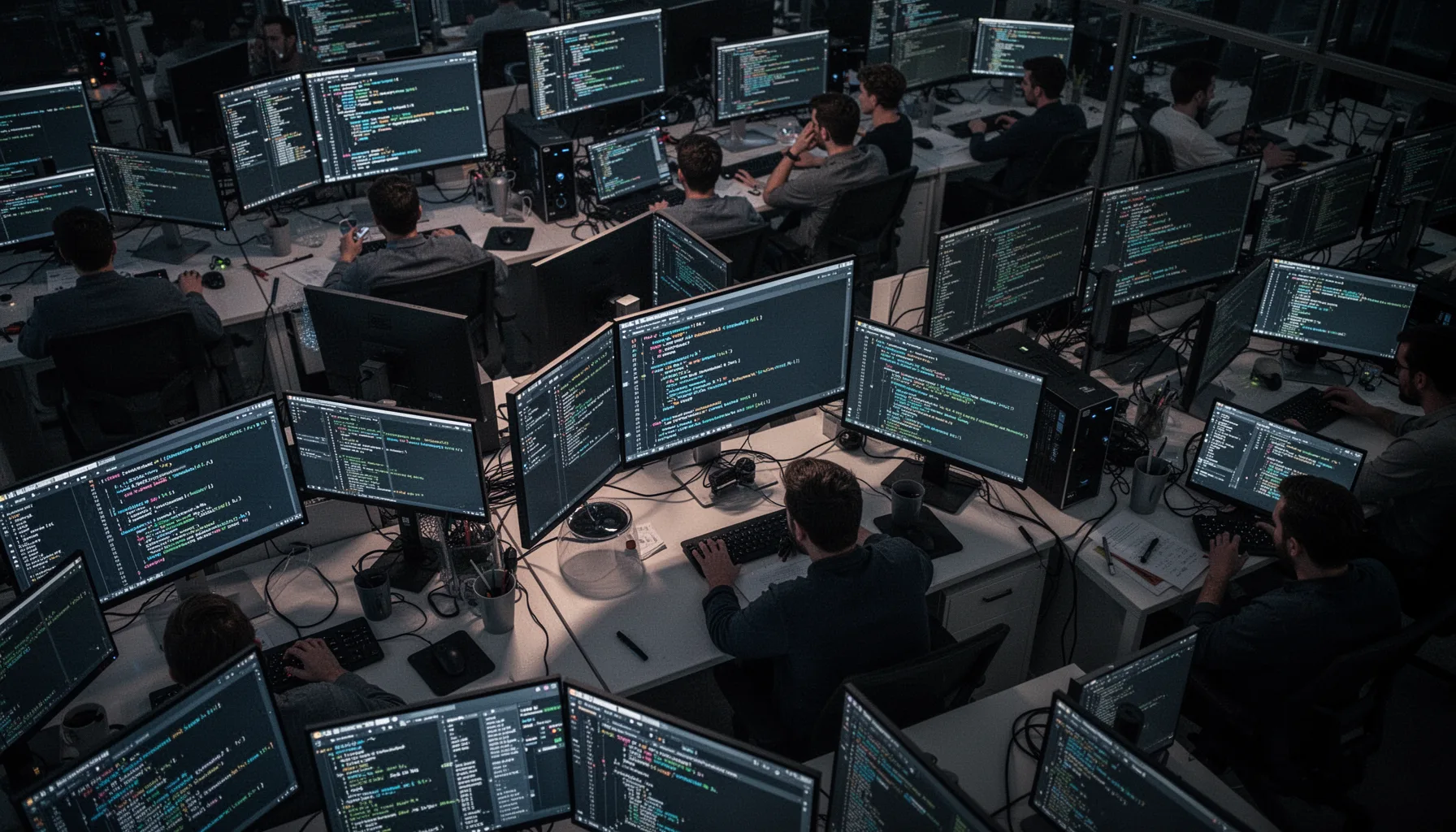
100 subagents on codebase ai orchestration makes the difference mostly when the task is broad, decomposable, and read-heavy, not tightly coupled and edit-heavy. That's the engineering rule we'd keep pinned to the wall. Parallel agents do well on inventory work: mapping services, tracing call paths, spotting duplicated logic, summarizing module risk, or pointing to test gaps across a large repository. They stumble when changes collide. If five agents touch neighboring Python modules or shared interfaces, teams can wind up paying for duplicated reasoning, conflicting edits, and a miserable reconciliation pass. Simple enough. This lines up with old distributed-systems tradeoffs. Parallel work raises throughput only when coordination overhead stays lower than the labor saved. In our read, the sweet spot looks more like discovery plus recommendation, followed by a smaller set of tightly constrained editing agents with strong file-ownership rules. And if your repo already has weak module boundaries, multi-agent coding will expose that mess before it fixes much. Ask anyone who's wrestled with a legacy Django service.
Ai coding agent token cost analysis for a representative repo
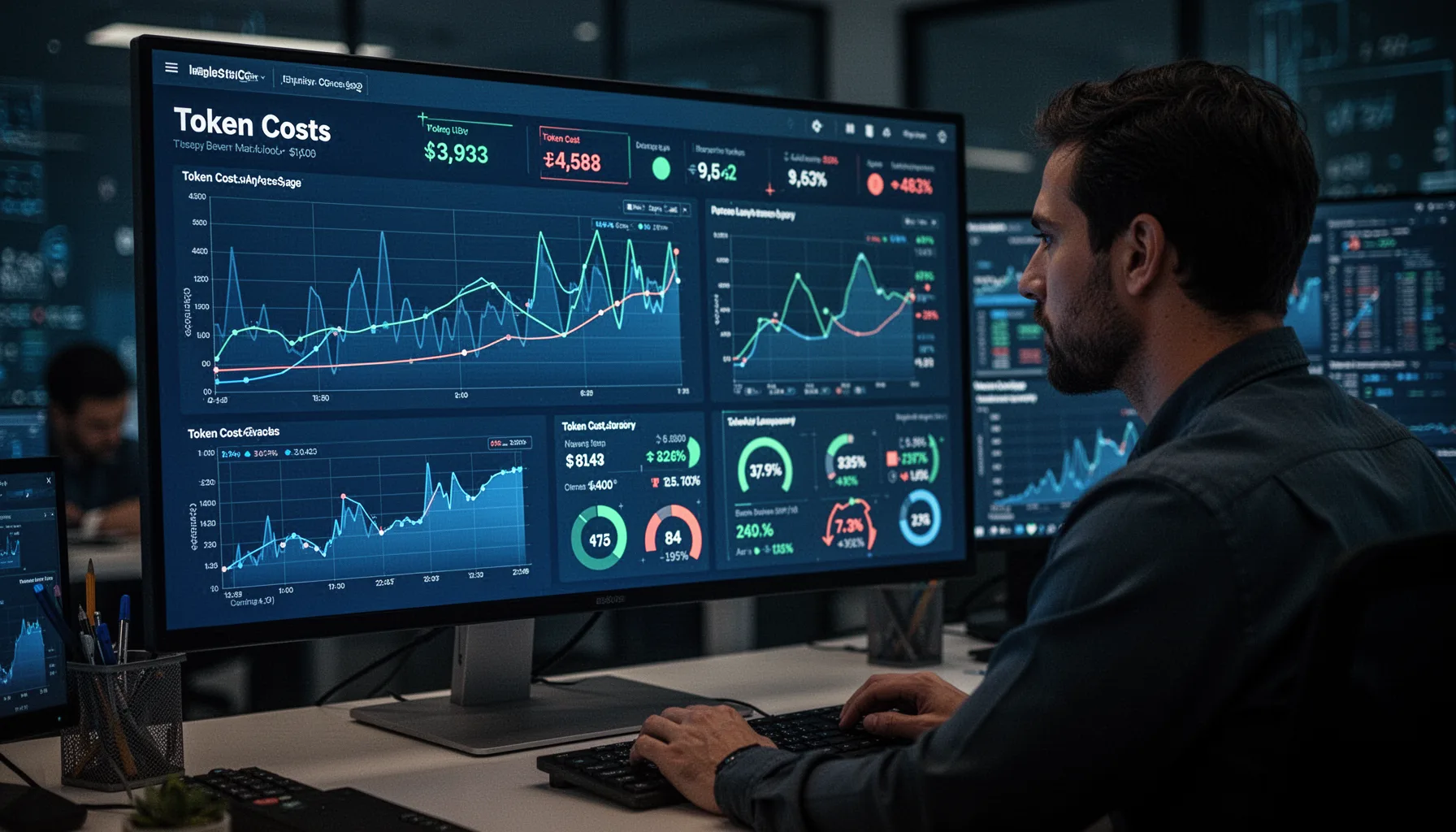
Ai coding agent token cost analysis matters because orchestration design, not only model pricing, decides whether a workflow stays affordable. Here's a realistic sketch. Imagine a 250,000-line codebase, 75 subagents doing discovery and localized reasoning, 15 reviewer agents, and 10 merge or test agents in one substantial analysis cycle. If each worker burns through 25,000 to 60,000 tokens across prompts, file excerpts, tool results, and critique passes, total usage can climb into several million tokens before final edits even land. That's not fantasy. At current frontier-model prices, that can jump from a few dollars to tens or even low hundreds per run, depending on model tier, context size, and retry behavior. We think teams routinely miss the hidden bill from rereading overlapping context and from refutation loops that never quite converge. So if you want the upside, meter token spend by stage. Cache codebase summaries aggressively. And cap expensive reviewer passes to the tasks that truly warrant them. GitHub Copilot users have seen a lighter version of this already. That's worth watching.
How engineering teams should use claude code dynamic workflows in production

Claude code dynamic workflows belongs in production only when teams treat it like a governed system, not an eager intern with root access. That's the blunt version. Start with bounded tasks such as architecture mapping, flaky-test triage, migration planning, or dead-code discovery before you allow broad write permissions. Give each subagent a narrow scope, stable prompts, file-ownership constraints, and structured outputs that a merge controller can validate. Then rely on the same operational controls you'd apply to CI: audit logs, unit-test gates, diff review, rollback paths, and cost telemetry. Sourcegraph is a useful concrete example here. It has long pointed to the value of explicit context retrieval and governance in code intelligence, rather than magical hand-waving. And if you borrow one idea from this wave, make it the orchestration discipline: clear task graphs, limited debate, and human approval when code changes touch core business logic. We'd argue that's the part that sticks.
Key Statistics
Frequently Asked Questions
Key Takeaways
- ✓Claude code dynamic workflows shine on broad discovery tasks, not every coding job.
- ✓Parallel subagents can cut analysis time. But they often inflate token spend sharply.
- ✓Refutation loops improve quality when bounded, yet they can thrash without strict stopping rules.
- ✓Teams should instrument merge conflicts, duplicated work, and context drift before wider rollout.
- ✓The right lesson isn't copy 100 agents. It's copy the control-plane discipline.