
Claude code leak analysis: what Anthropic exposed
Claude code leak analysis for developers: memory, orchestration, tools, safety, and the product lessons Anthropic accidentally revealed.

Table of Contents
Quick Answer
Claude code leak analysis points to a modern coding agent built from familiar parts: orchestration layers, bounded memory, tool wrappers, guardrails, and developer-centric UX. What Anthropic accidentally gave away is less a secret algorithm and more a practical playbook for shipping a usable terminal-based AI assistant.
Claude code leak analysis begins with an awkward fact: the most revealing bits probably aren't the flashy ones. A 512,000-line dump sounds like a vault door blowing open. Maybe not. What developers seem to have received, based on reported findings, is a rare view into how a commercial coding agent gets assembled in practice. And once you sort the material by function, the picture sharpens fast. It also gets a lot less mystical.
What does Claude code leak analysis say about the system architecture?
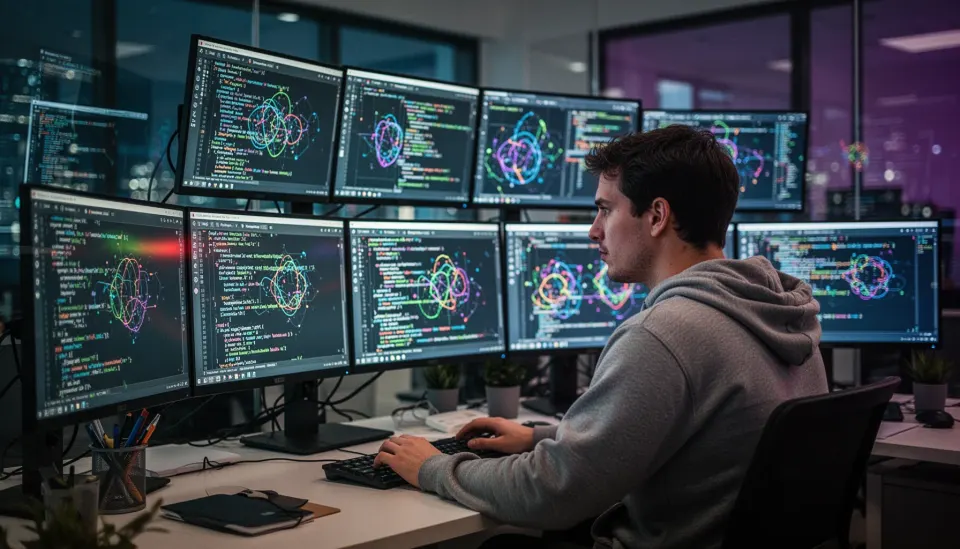
Claude code leak analysis suggests the system architecture looks more like a layered agent product than a monolithic super-intelligence. That distinction is consequential for builders. The reported pieces include request orchestration, prompt templates, context assembly, memory retrieval, tool invocation paths, safety checks, and terminal UX logic, which is pretty much how enterprise AI products usually ship. Not quite magical. And if you've spent time with Microsoft AutoGen, LangGraph, or OpenHands, the pattern feels familiar: specialized glue code carries a huge share of the load. We'd argue that's the right lens. Anthropic appears to have built a disciplined software shell around Claude instead of asking the model to improvise every step. For developers, that's reassuring because many useful behaviors come from design choices you can inspect, benchmark, and improve. Worth noting.
Inside the Claude code leak: how memory appears to work
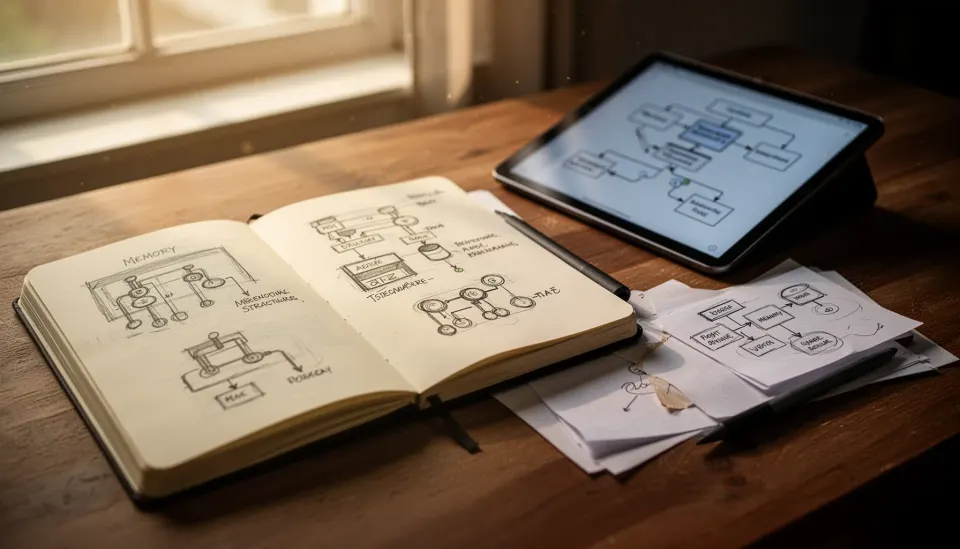
Inside the Claude code leak, memory seems to rely on constrained retrieval and summarization rather than rich persistent cognition. That's a feature, not a bug. Reported details point to indexed notes, grep-like search, line caps, and selective recall as central mechanisms, which mirrors approaches in open-source coding agents that must stay inside context-window and latency limits. And that fits the economics of real deployment: every token you retrieve and feed back into the model costs money and time. Simple enough. A concrete comparison makes this clearer. Sourcegraph Cody has long stressed codebase search and retrieval quality because raw model context alone starts to fail on large repositories. We'd argue Anthropic's apparent design points the same way. The upshot is straightforward: Claude's memory, at least in this product layer, looks engineered for usefulness under pressure, not for human-like continuity. That's a bigger shift than it sounds.
Claude code leak analysis of orchestration and planning
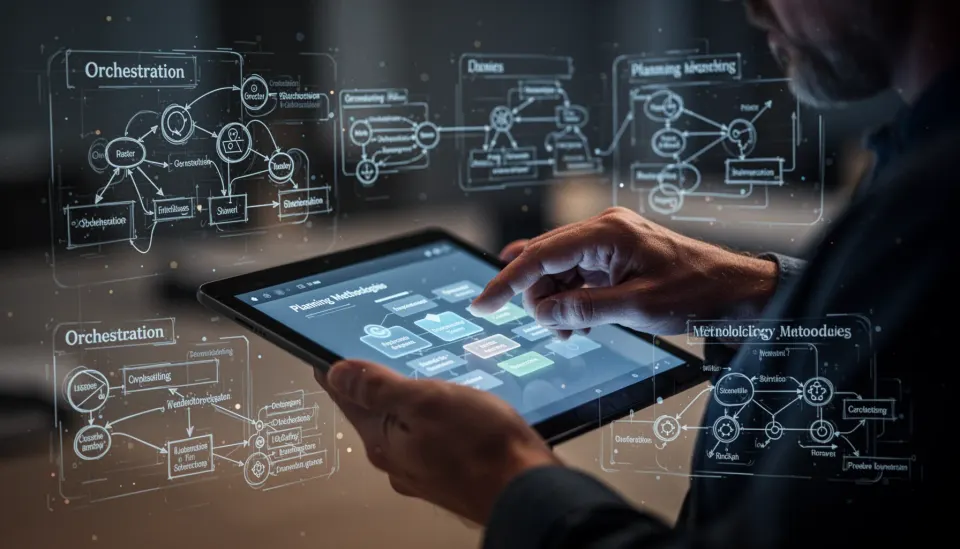
Claude code leak analysis of orchestration and planning suggests Anthropic favored bounded workflows over elaborate autonomous planning. That's probably the right call for terminal agents. Reports tied to the leak describe routines for handling tasks in stages, recovering from tool failures, and packaging state carefully before each model call, but they don't point to some exotic long-horizon planner reasoning like a staff engineer. Here's the thing. And that's in line with what benchmarks like SWE-bench have pointed to: reliability usually improves when systems break work into narrower loops. A useful real-world example is Devin's public demos from Cognition, which sparked debate partly because long-run autonomy is hard to sustain outside curated cases. So what Anthropic may have accidentally shown is this: practical agent design often means limiting ambition on purpose. Fancy planning stories sell headlines, but narrow loops ship products. We'd say that's worth watching.
How tool use and safety controls show up in Anthropic leaked coding assistant internals
Anthropic leaked coding assistant internals appear to show that tool use and safety controls sit near the center of the product. That's where production risk actually lives. In a terminal-based coding assistant, the dangerous actions aren't generated words; they're shell commands, file edits, network calls, and permission boundaries, so it makes sense that execution wrappers and checks would consume a lot of code. Not trivial. And this design logic matches enterprise patterns from GitHub Copilot Enterprise and Amazon Q Developer, where administrators care deeply about what the assistant can access and execute. We see a broader industry rule here: safer agents come from explicit action surfaces, not from trust in model intent alone. The leak, to that extent, backs Anthropic's public stance around cautious deployment. It also suggests the company knows the real product battle gets won in action governance, not chat fluency. Worth noting.
What Anthropic accidentally gave away about developer experience
What Anthropic accidentally gave away about developer experience may be more valuable than any single technical trick. The reported code appears to reflect a lot of effort around terminal ergonomics, prompt flow, context trimming, error messaging, and iterative task handling, which is exactly where developer trust gets won or lost. And that mirrors the history of tools like Warp, Cursor, and Continue: small UX decisions often make the difference between daily reliance and getting switched off after a week. Our take is blunt. Anthropic seems to understand that coding agents don't win because they sound smart; they win because they feel predictable when deadlines get tight. So if you're building in this category, study the workflow choices as closely as the memory and tool systems. Product polish often hides in the boring bits. That's a bigger shift than it sounds.
Step-by-Step Guide
Map the system into builder-friendly categories
Sort any leaked or documented agent stack into memory, orchestration, tool use, safety, and UX. This avoids getting lost in utility files and wrappers. And it creates a reusable taxonomy for reviewing your own product architecture.
Identify what the system does not contain
Look for missing pieces such as shared long-term memory, strong autonomous planning, or cross-agent coordination. Absence carries signal. In many AI systems, the gap between the marketing story and the shipped mechanics sits in what isn't there.
Trace the context lifecycle
Follow information from user prompt to retrieval layer to tool output to model call. That path explains more than screenshots do. Teams that instrument this flow with tracing often discover why a system feels clever in one repo and lost in another.
Evaluate action boundaries
Inspect which commands the agent can run, what requires confirmation, and how failures get handled. That’s where product risk clusters. A coding agent with weak action boundaries can impress in demos and still be unusable for enterprise adoption.
Compare against open-source alternatives
Benchmark the revealed patterns against OpenDevin, Aider, Continue, and LangGraph-based agents. This helps separate standard industry practice from genuinely differentiated execution. And it keeps teams from worshipping proprietary systems that may be less exotic than advertised.
Extract reusable product lessons
Turn each observed pattern into a design rule your team can apply. For example, cap memory aggressively, expose tool actions, and build clear recovery paths. Those rules travel better than any one vendor’s implementation details.
Key Statistics
- According to the 2024 Stack Overflow Developer Survey, 76% of developers said they are using or plan to use AI tools in their workflow.That adoption rate explains why a detailed Claude code leak analysis resonates far beyond Anthropic watchers; coding assistants now affect mainstream software practice.
- SWE-bench Verified leaderboards in 2024 showed top systems still solved well under half of curated real-world GitHub issues.This benchmark matters because it highlights the distance between polished agent UX and dependable autonomous software engineering.
- GitHub reported in 2024 that Copilot surpassed 1.8 million paid subscribers and was used by over 77,000 organizations.Commercial scale has turned coding-agent architecture into a high-stakes product discipline, which is why leaked implementation patterns attract intense scrutiny.
- Anthropic’s original Constitutional AI research in 2022 described supervised and reinforcement stages guided by a written constitution for safer model behavior.That context helps explain why visible runtime controls in Claude-related code would not be surprising; they fit Anthropic’s published safety philosophy.
Frequently Asked Questions
What is Claude code leak analysis really about?
What did Anthropic accidentally give away in the Claude leak?
How should developers read the 512000 line Claude code leak?
Why does the Claude Code leak for developers matter if model weights were not exposed?
What was missing from the Anthropic leaked coding assistant internals?
Key Takeaways
- Claude code leak analysis suggests ordinary engineering carries much of the real load.
- The exposed system appears strongest in workflow design, orchestration, and tool discipline.
- What's missing may matter more than what's present when people make autonomous-agent claims.
- Developers can reuse several patterns without copying Anthropic's exact implementation choices.
- The leak reminds us that polished AI products hide a lot of plain software.