
⚡ Quick Answer
Claude Fable 5 safety restrictions appear to tighten what the model will do in sensitive, high-risk, or policy-adjacent scenarios rather than simply making the product weaker. The real story is how Anthropic balances trust, usability, and competitive pressure against rivals like OpenAI, Google, Apple, and Meta.
People are framing Claude Fable 5 safety restrictions as a full-blown safety shock. Catchy line. But that angle misses the real story. What changed likely matters less for casual chat and more for people pushing the model into gray-zone tasks, automation, or sensitive workflows. And that's where product strategy actually sits. So if you're wondering whether Anthropic handcuffs Claude Fable 5 means the model got nerfed, the sharper answer is this: some parts probably did, on purpose.
What do Claude Fable 5 safety restrictions actually change?

Claude Fable 5 safety restrictions most likely change the model's willingness to comply in higher-risk categories, not its underlying intelligence. That's a distinction that actually matters. Anthropic has long centered its product around Constitutional AI, which the company described in published research as relying on model-generated critiques and rule-based preference shaping to steer behavior. So when users say Anthropic handcuffs Claude Fable 5, they're usually talking about tougher refusals, tighter outputs, or more escalation on requests tied to security abuse, harmful instructions, deception, or sensitive personal data. We see the same pattern across major model updates, including OpenAI's GPT-4 series policy refinements and Google's Gemini safety tuning. Worth noting. The practical effect won't land evenly. A marketer drafting copy may notice almost nothing. But a developer testing red-team prompts or edge-case automation will probably hit the wall faster. Not quite the same experience.
Why Anthropic restricted Claude Fable 5 instead of chasing maximum capability

Anthropic restricted Claude Fable 5 because frontier labs now compete on trust almost as much as raw model performance. That's the part the loud headlines skip. Anthropic sells heavily into business settings, where legal, compliance, and security leaders care less about internet drama and more about predictable policy behavior. In 2024, the U.S. AI Safety Institute and NIST both pushed the market toward more formalized risk language, and that pressure has shaped product choices across the sector. We'd argue Anthropic is making a deliberate trade: accept some developer irritation now, then reduce enterprise procurement friction later. That's a bigger shift than it sounds. Apple offers a useful contrast. Apple Intelligence has emphasized private cloud processing, on-device boundaries, and narrower task design, which points to a similar instinct even if the product style differs. So why Anthropic restricted Claude Fable 5 probably comes down to one old software truth: the vendor serving risk-sensitive customers rarely optimizes for maximum freedom. Simple enough.
How Claude Fable 5 safety restrictions compare with OpenAI, Google, Apple AI, and Meta NameTag
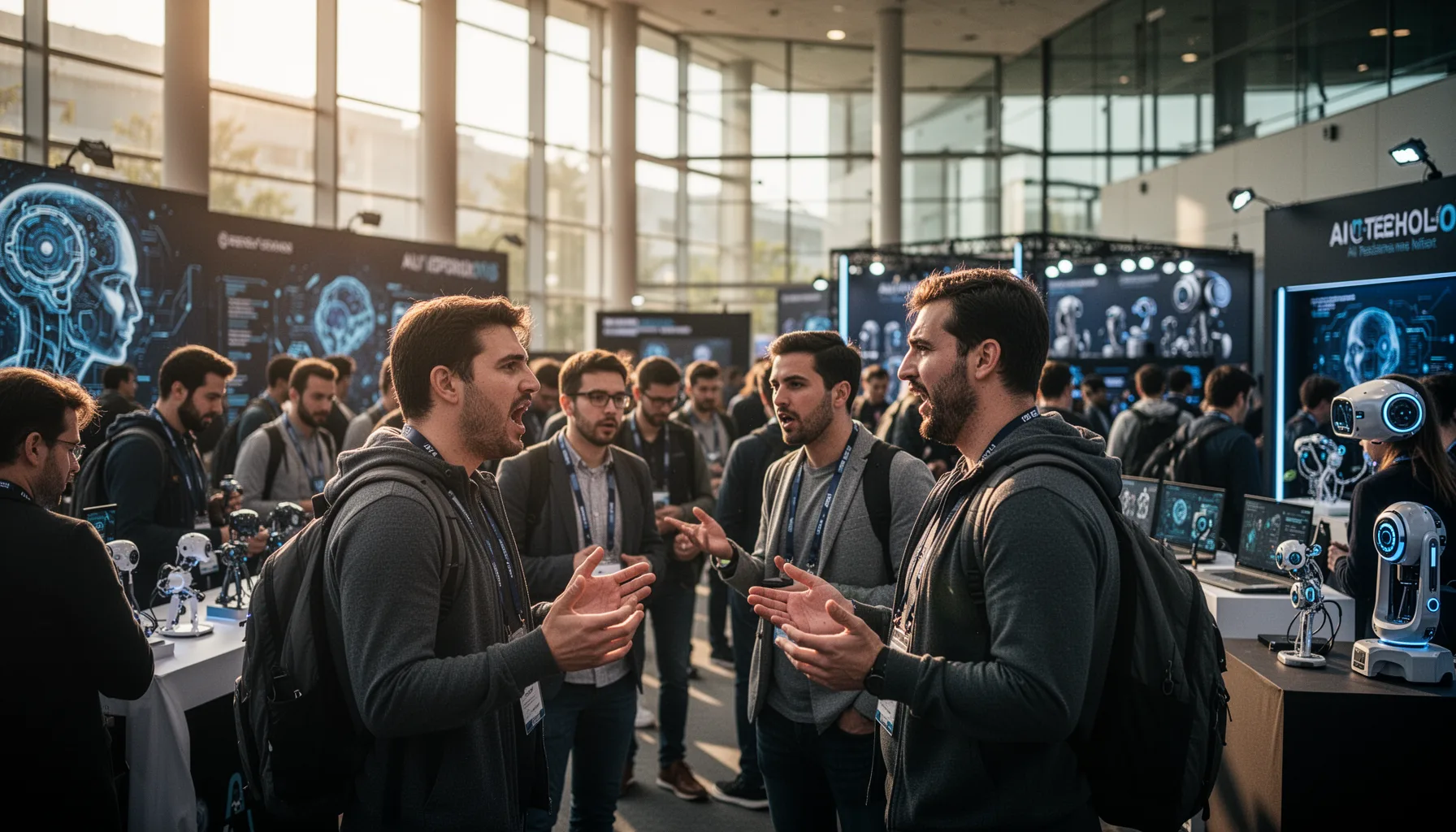
Claude Fable 5 safety restrictions may feel stricter in tone than some rival products, but Anthropic isn't alone in putting policy ceilings on powerful models. That's worth watching. OpenAI limits disallowed assistance in areas like malware creation, fraud, and self-harm guidance, while Google applies layered policy controls across Gemini consumer and enterprise products. Meta has repeatedly adjusted model access and product labels too, and the Meta NameTag mention in the Mshale Claude Fable 5 article points to a wider truth: user-facing AI features get pulled, renamed, or constrained when trust signals wobble. Apple's approach tends to feel more product-contained. That's because Apple often avoids exposing broad, open-ended capability where policy risk gets harder to manage. Anthropic, by contrast, sells a general-purpose assistant, so every refusal becomes more visible. Still, saying only Anthropic has safety handcuffs would be wrong. The real difference is degree, framing, and who gets stuck with the frustration. Here's the thing.
Who loses and who benefits from the Anthropic safety shock Claude update?

The users who lose the most from the Anthropic safety shock Claude update are advanced operators who depend on flexible model behavior in ambiguous domains. That's not trivial. Security researchers, agent builders, heavy prompt engineers, and workflow tinkerers usually feel restrictions first because they test the edges by default. But regulated enterprises, education buyers, and internal governance teams may read the same change as a benefit. A 2024 Deloitte enterprise AI survey found that risk management and governance remained among the top barriers to scaling generative AI, which gives Anthropic's posture a lot more context. We'd argue that's the key split. And product usability depends heavily on who you are. If your priority is fewer false refusals, this update may feel punitive. But if your priority is auditability and lower misuse exposure, it may make Claude easier to approve. Not quite a universal downgrade.
What the Mshale Claude Fable 5 article gets right and what the market should watch next
The Mshale Claude Fable 5 article puts attention on the issue, but the deeper market question is whether safety restrictions become a buying signal or a growth drag. Here's the thing: model vendors no longer compete only on benchmarks. They also compete on who can keep large customers comfortable without making the product feel brittle. Anthropic has already built a reputation for cautious deployment, while OpenAI pushes broad adoption, Google ties AI into Workspace and Cloud, and Meta often relies on open models plus consumer experimentation to widen reach. One named example matters here. Anthropic's enterprise partnerships, including integrations through Amazon Bedrock, place the company in channels where guardrails can actually aid adoption. That's more consequential than the outrage cycle. So the next thing to watch isn't outrage at all. It's whether Claude Fable 5 safety restrictions reduce churn among businesses even as they annoy the loudest technical users.
Key Statistics
Frequently Asked Questions
Key Takeaways
- ✓Claude Fable 5 safety restrictions likely affect edge-case power users more than everyday enterprise buyers
- ✓Anthropic appears to be trading raw flexibility for clearer governance and lower reputational risk
- ✓Developers usually hate shifting guardrails, but compliance teams often welcome them
- ✓Apple AI and Meta comparisons matter because every frontier lab sets boundaries differently
- ✓The Mshale Claude Fable 5 article frames drama, but the practical impact calls for sober analysis