
⚡ Quick Answer
The Claude Opus 4.7 release matters because it appears to pair a stronger flagship model update with a second move into AI-assisted design workflows. Together, those signals suggest Anthropic isn't just improving Claude's intelligence; it's pushing closer to productized creation where tools like Figma and Canva start to feel exposed.
Claude Opus 4.7 grabs the headline. But that's not the whole picture. Anthropic seems to have slipped out two signals at the same time: a model update that tightens Claude's flagship standing, and a design-leaning move that creeps into ground Figma and Canva have owned for years. Most people caught the first signal. The second one may prove more consequential. That's a bigger shift than it sounds.
Claude Opus 4.7 release: what actually changed?

The plain answer: Claude Opus 4.7 looks built to push quality, reliability, and premium use cases, not chase a bargain-bin commodity tier. That's in step with Anthropic's recent playbook. For much of the past two years, the company has built its name around long-context work, coding support, and an enterprise-friendly safety posture, especially through Claude on Amazon Bedrock and in direct enterprise deployments. Simple enough. A jump to 4.7 matters less because of the number and more because of the behavior users actually feel in writing, analysis, and agentic task completion. That's the benchmark smart buyers care about now. If the release sharpens instruction-following, steadies consistency, and cuts weird detours, it strengthens Claude's case against OpenAI's top-tier models and Google's Gemini in higher-value knowledge work. We'd argue buyers no longer pay up for “slightly smarter” in the abstract. They pay for fewer bad handoffs inside real workflows. Worth noting.
Claude Opus 4.7 vs previous version: is this a meaningful jump?
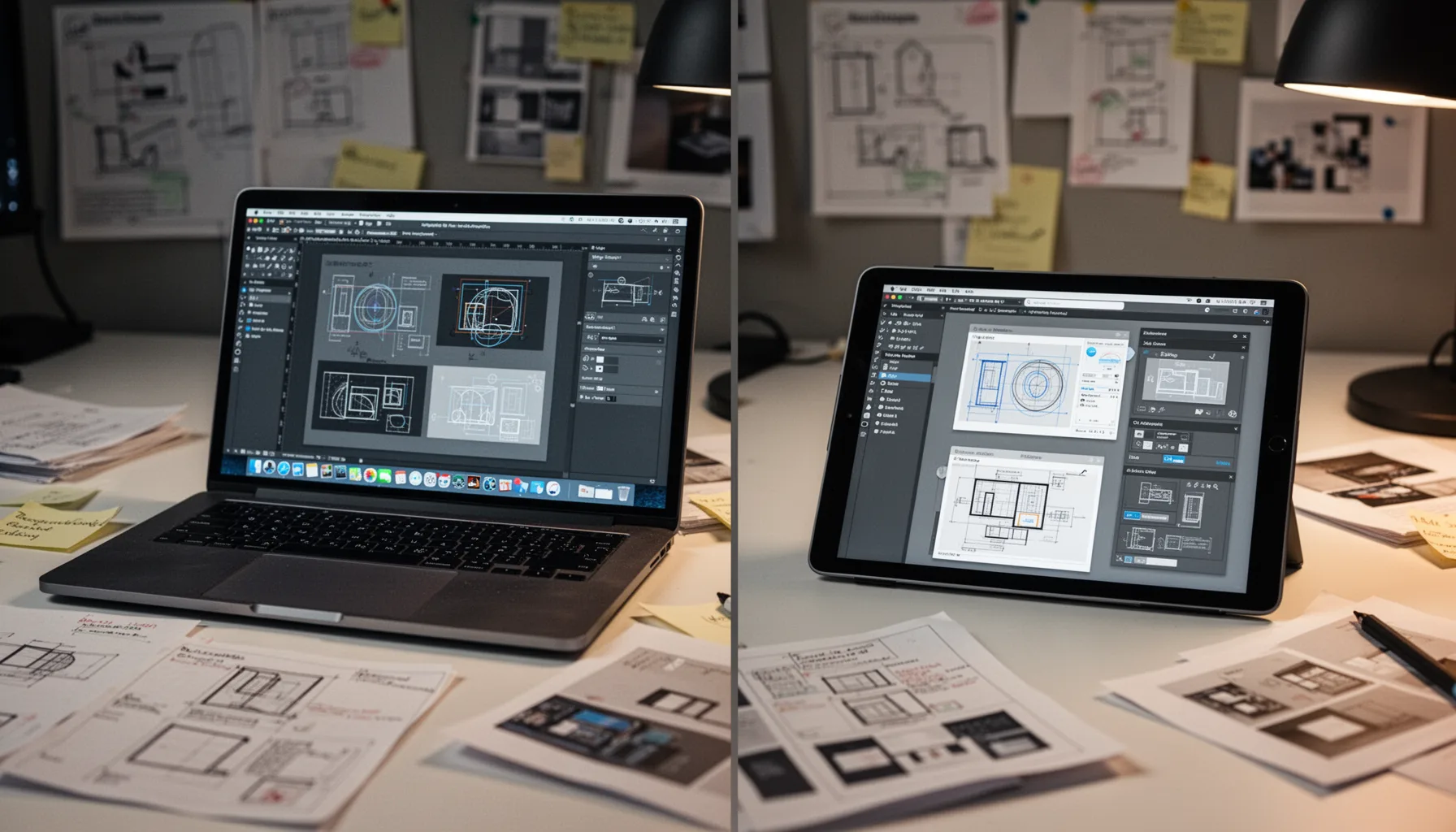
The better way to judge Claude Opus 4.7 against the prior version is through workflow gains, not benchmark theater. Anthropic has usually framed capability around reasoning quality, coding, and safer enterprise work instead of obsessing over leaderboard vanity alone. Here's the thing. Users will test 4.7 in blunt, practical ways: longer project memory, cleaner structured output, stronger artifact generation, and fewer refusals in legitimate business settings. Those comparisons stick. If 4.7 trims revision loops even a little, teams in product, legal ops, research, and content production will spot it quickly. Think about Notion or Quora. In products like those, model reliability shapes the user experience rather than a one-off chat window. A model update becomes truly meaningful the moment it cuts human cleanup time. That's when procurement talks start to shift. We'd say that's not trivial.
Anthropic dropped two bombshells: why the AI design tool angle matters
The bigger surprise is Anthropic's apparent move past text intelligence and toward AI-mediated design creation. And that deserves attention. If Claude can turn prompts, briefs, or rough concepts into presentation-ready layouts, landing-page mockups, brand assets, or interface drafts, it starts collapsing work that used to pass through ChatGPT, Figma, Canva, and then a human designer in sequence. That's the real threat. Not quite. Canva has already pushed hard into AI creation, and Figma has rolled out AI features for interface generation and content fill, so Anthropic isn't walking into empty space. But if Anthropic enters from the model layer, design could start to feel like a native output of reasoning instead of a separate software category. That's why investors keep watching. The company that owns the generation step often grabs the workflow too. We'd argue Adobe is watching this as well, even if it doesn't say so out loud.
AI tool making Figma and Canva investors nervous: is that overblown?
The honest answer is no, though the threat looks medium-term rather than immediate. Figma and Canva still hold real product advantages in collaboration, editing control, team workflows, templates, and distribution. Those moats aren't trivial. Canva said in 2024 that it had more than 185 million monthly active users, while Figma's enterprise reach gives it deep workflow gravity across product teams. Still, AI keeps compressing categories from the top down: first ideation, then drafting, then editable output, and then full workflow ownership. Simple enough. If Anthropic connects Claude Opus 4.7 to a design-capable surface with strong iteration and export behavior, the pressure turns real. We don't think Claude suddenly replaces Figma or Canva. But it could change what users expect to happen before either tool even opens. That's a subtle shift. And it's worth watching.
Key Statistics
Frequently Asked Questions
Key Takeaways
- ✓The Claude Opus 4.7 release looks bigger than a routine model refresh.
- ✓Anthropic seems to be pairing model quality gains with interface ambition.
- ✓Design tooling is the second story, and many readers missed it.
- ✓Figma and Canva won't panic, but they should pay attention.
- ✓The real shift is workflow compression from idea to polished asset.