
⚡ Quick Answer
Distill belief inverse source localization is a method for helping mobile agents choose measurements that locate a source and infer hidden field parameters under tight time limits. The paper’s core idea is to optimize in belief space more efficiently so robots can gather better data before the opportunity disappears.
Distill belief inverse source localization goes after a tricky question: where's the source, and what sort of source is it, when you can only grab a handful of measurements? Not trivial. This isn't some tidy lab exercise. It turns up in gas leak detection, radiation mapping, pollutant tracing, and industrial inspection. The new paper takes a closed-loop route in belief space, where a mobile agent revises its view after every measurement. Fast enough, hopefully. Because out in real physical fields, slow inference can hurt almost as much as being wrong. Worth noting.
What is distill belief inverse source localization?
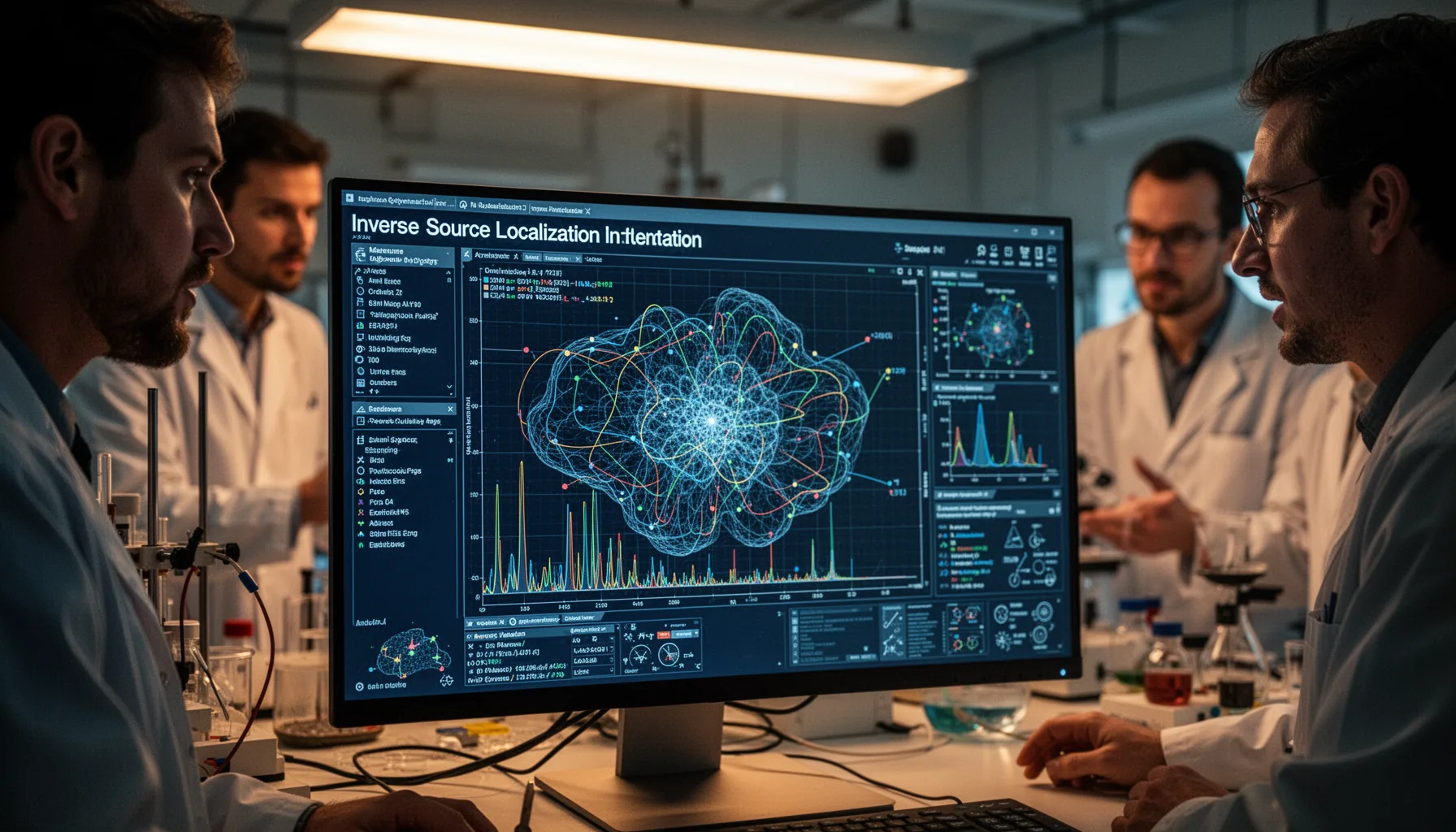
The short version: distill belief inverse source localization is an AI method that guides a mobile agent toward measurements that uncover both source position and hidden field traits. ISLC, or inverse source localization and characterization, asks a system to estimate where a signal originates while also inferring latent parameters of the physical field. That's tougher than ordinary navigation. The robot can't just cover ground; it has to pick observations that sharpen belief. And the paper treats this as a closed-loop problem under hard time limits, which lines up far better with real deployments than offline path planning does. Picture a drone hunting a chemical leak in a Shell or BP refinery: each sensor reading reshapes the next smart move, and delays cost money. We'd argue that's the real draw here. It treats sensing as an adaptive decision process, not a prewritten survey route.
Why does closed loop inverse source localization ai matter in physical fields?
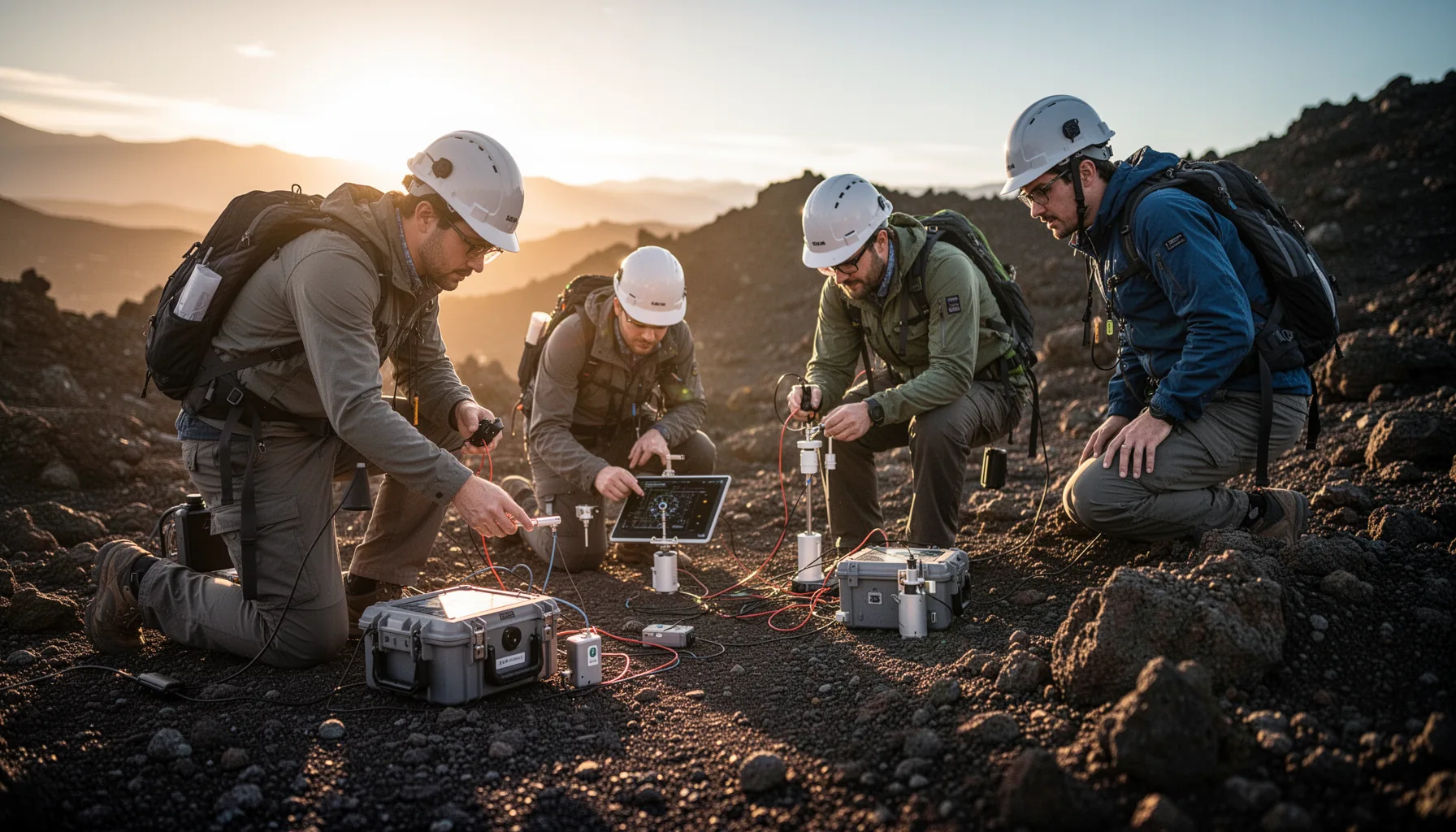
The short version: closed loop inverse source localization ai matters because physical fields are uncertain, noisy, and expensive to sample. A fixed measurement plan might look fine in a clean simulation, but real environments pile on turbulence, sensor noise, occlusion, and shifting gradients. Not quite. Closed-loop control lets the agent update belief after each reading, then pick the next measurement where it can make the biggest dent in uncertainty. That's especially handy in radiation search, airborne contaminant tracking, and underwater plume detection, where a mobile platform runs on limited time and battery. And robotics researchers have pointed to this edge for years; active sensing work from Carnegie Mellon and MIT repeatedly found adaptive planning can beat fixed routes in uncertain search tasks. Here's the thing. Belief-space methods often get computationally heavy, so any approach that distills that planning load is worth watching. That's a bigger shift than it sounds.
How does belief space optimization for source localization work here?
The short version: belief space optimization for source localization plans over probability distributions about the source, not over one guessed state. Instead of asking, "Where should the robot go next?" the method asks, "Which next measurement will cut uncertainty fastest while keeping motion feasible?" That swap sounds abstract. But it's operationally useful. The paper treats belief-space objectives as the central difficulty, which suggests the authors want to make this expensive planning problem easier to solve when time is tight. In a real setup, say methane leak detection with a Boston Dynamics robot carrying sensors, that could mean fewer wasted measurements and faster containment calls. We think that's the right direction. Raw path efficiency isn't the main objective; information efficiency is. And in source localization, the best route often isn't the shortest one. It's the one that learns fastest.
What does this mean for mobile agent measurement planning in physical fields?
The short version: mobile agent measurement planning in physical fields is drifting toward inference-first systems and away from route-first systems. That sounds minor. It isn't. Engineers can't keep treating sensing, estimation, and motion as separate modules stitched together at the end, because a path's value depends on what it teaches the agent. And NVIDIA, Clearpath Robotics, and field robotics labs already build stacks where perception and planning keep feeding each other, and this paper fits squarely inside that broader shift. For industrial operators, the appeal is plain: faster localization can shrink inspection time, lower safety exposure, and sharpen incident response. A 2023 International Energy Agency methane report stressed that quicker leak detection sits near the center of emissions control, which gives this research a very concrete policy angle. We'd say that's consequential. So while the method sounds academic, the payoff is practical and measurable.
Key Statistics
Frequently Asked Questions
Key Takeaways
- ✓Distill Belief targets fast source localization when each measurement decision carries real weight.
- ✓The method centers on belief-space optimization rather than plain path planning.
- ✓Mobile agents need this approach in radiation, gas, and leak detection work.
- ✓Closed-loop sensing can outperform static sampling when the field shifts or time is tight.
- ✓The paper reads technical, but the use case is concrete and practical.