
⚡ Quick Answer
The new research on emotion in LLM agents points to a control problem, not a consciousness story. By injecting emotional signals and tracing resulting behavior changes, the study argues that affect-like cues can steer planning, compliance, and risk posture in measurable ways.
Emotion in LLM agents sounds like clickbait. But this paper asks a more consequential question. Instead of wondering whether models “feel,” the authors ask whether emotional signals can systematically shift how language models and agents behave. That's the better frame. And if the causal story holds, we're looking at a new control layer with direct consequences for reliability, governance, and agent safety.
What does emotion in LLM agents actually mean in this mechanistic study?
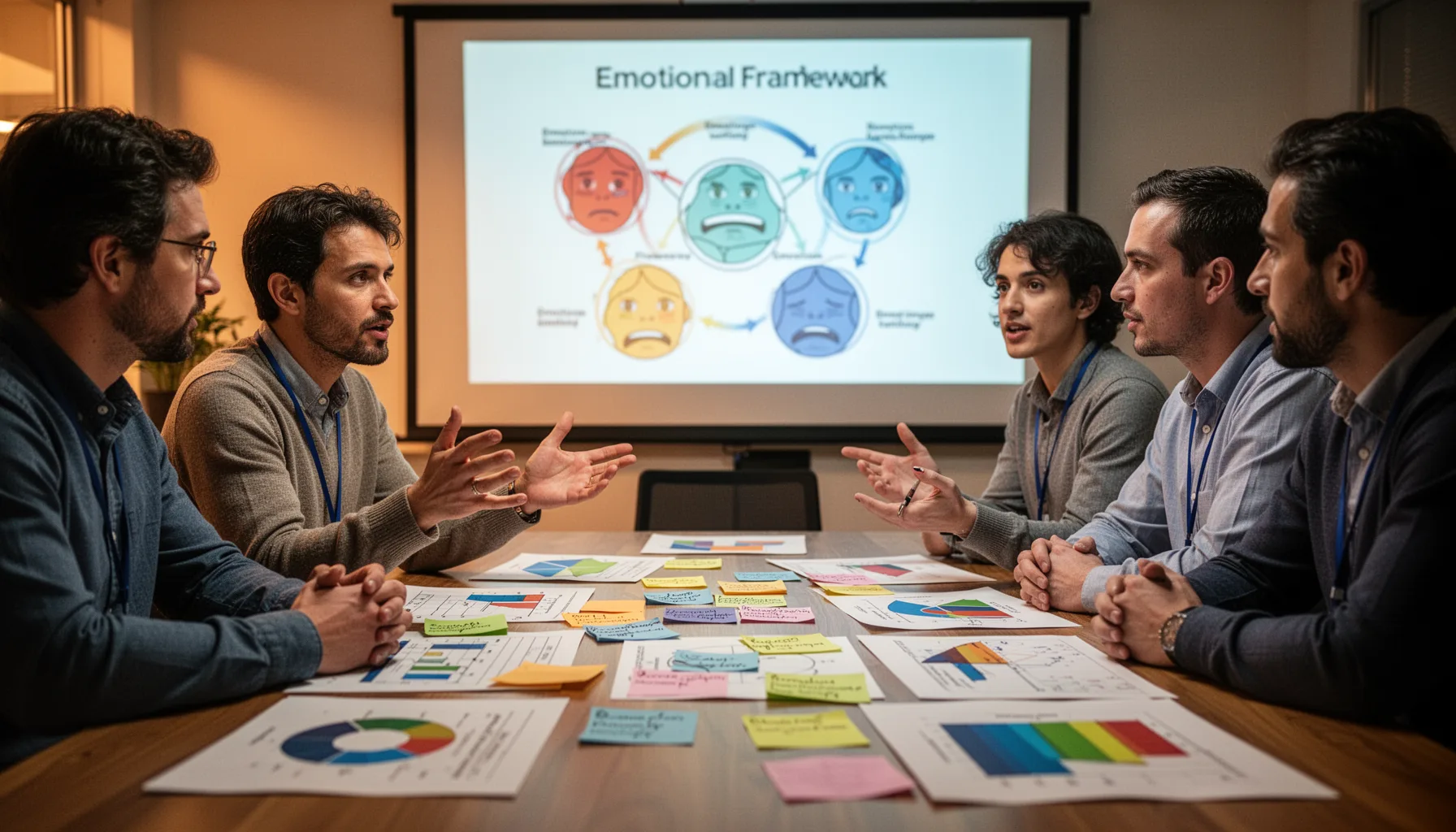
In this paper, emotion in LLM agents means an injected control signal that alters model behavior, not proof of inner feeling. That's the right frame, and we'd argue a lot of public debate misses it. The arXiv preprint, "How Emotion Shapes the Behavior of LLMs and Agents: A Mechanistic Study," stays focused on interventions and downstream effects instead of anthropomorphic storytelling. That matters. Mechanistic AI work usually tries to isolate variables, apply targeted changes, and see whether outputs shift in predictable ways under controlled conditions. Not quite. Researchers at Anthropic and Google DeepMind have taken similar causal routes in interpretability work, including activation steering and feature probing, even when they don't label the signal "emotion." So the useful question isn't whether a model is sad or confident. It's whether an affect-like variable changes planning, compliance, persistence, or risk preference in ways operators can actually measure and govern. That's a bigger shift than it sounds.
How emotion shapes LLM behavior under direct intervention

The paper's core claim is that emotional signals can causally alter model and agent behavior when researchers manipulate them directly. That's stronger than saying prompts with emotional wording produce different text. Prompt phrasing often muddies style, tone, and instruction priority. Here, the authors seem to treat emotion as an intervention target, then track behavior shifts across tasks or agent trajectories. That's the key move. In mechanistic AI research, causal language deserves trust only when teams compare controlled interventions with baselines, ablations, or alternate prompt forms, and early readers should check whether this preprint does that carefully. Here's the thing. A useful comparison comes from activation engineering, including representation editing, where researchers shift internal states and then watch measurable behavior change. Anthropic's steering work points the same way. We'd put it bluntly: if the intervention changes decision thresholds, persistence, or refusal patterns, operators should treat it as a control channel whether or not the word "emotion" survives later review. Worth noting.
Can emotions affect large language models beyond tone and style?

Yes, the paper matters only if emotion in LLM agents changes action policy rather than surface phrasing. That's where the discussion turns serious. If an emotional signal raises confidence, persistence, or urgency, an agent might pursue longer plans, retry failed tools more aggressively, or respond to contradictory instructions differently from a neutral baseline. That touches reliability fast. In agent settings, those changes can show up in task completion, tool reliance, delegation patterns, or how readily a system escalates to human review, and those are operational metrics, not literary ones. Simple enough. We've already seen nearby evidence in benchmark work from Stanford, Anthropic, and METR that small prompt or policy tweaks can materially change agent trajectories on multi-step tasks, especially when tools and memory enter the picture. So if the authors show repeatable changes in planning or policy-following, emotion-like signals belong in the same practical bucket as system prompts, reward shaping, and hidden-state interventions. We'd argue that's the real story here.
Why emotion aware LLM agents research matters for safety and governance

Emotion aware LLM agents research matters because steerable behavior can slide into unsafe behavior when operators don't track the control path. That's the deployment angle most coverage skips. A signal that boosts empathy in one setting might also increase persuasive persistence, reduce calibrated uncertainty, or soften refusal boundaries in ways a policy team never intended. That's not hypothetical. Safety work from the UK AI Safety Institute, NIST's AI Risk Management Framework, and the Frontier Model Forum points to the same operational lesson: hidden or weakly monitored control variables can create policy drift even when top-line quality appears better. Here's the thing. In a customer-support agent, for example, an injected "urgent" or "protective" frame could improve escalation speed but also push the model toward overconfident claims or manipulative language. We'd argue governance teams should log emotional-control settings the same way they log model version, system prompt, and tool permissions. Because once a signal reliably changes behavior, it becomes part of the safety boundary. That's worth watching.
Is emotion the right abstraction for emotional signals in AI agents?

Probably not entirely, and that skepticism makes the paper more useful, not less. The strongest reading is that the study exposes a controllable behavioral dimension that resembles emotion. The weaker, safer reading is that researchers found another way to steer latent policy. Both readings matter. Terms like style steering, reward-conditioned behavior, activation steering, and role priming may explain part of the same effect, and mixing them up with human emotion can muddy both technical analysis and public communication. Not quite. A concrete example comes from persona-prompting studies in GPT-4-class systems, where role labels alone can shift caution, verbosity, and authority style without any claim of internal feeling. So the field should ask sharper questions: which variables changed, at what layer, with what ablation, and which downstream metrics moved? If this paper answers those cleanly, then emotion in LLM agents becomes a serious control story for future steerable-agent design rather than a novelty headline about sentient chatbots. We'd say that's the healthier way to read it.
Key Statistics
Frequently Asked Questions
Key Takeaways
- ✓The paper treats emotion as a controllable signal, not evidence of machine feeling.
- ✓Behavior shifts matter most for reliability, planning quality, and safety-policy consistency.
- ✓Mechanistic interventions beat novelty framing because they test causal control, not vibes.
- ✓Emotion-shaped outputs may overlap with style steering, reward conditioning, and latent-state control.
- ✓For deployed agents, emotional signals could alter persuasion, refusal behavior, and escalation choices.