
⚡ Quick Answer
Explainable planning for hybrid systems is research focused on making automated planning decisions understandable in systems that mix discrete actions with continuous dynamics. It matters because autonomous vehicles, robots, and industrial controllers need plans that engineers and regulators can inspect, not just execute.
Explainable planning for hybrid systems may sound like campus jargon, but the headache is very real. When an autonomous machine does something odd, somebody has to account for it. And in hybrid systems, that choice usually lives where software logic collides with physical behavior. That's when debugging turns messy, certification slows to a crawl, and trust starts to fray. So this new arXiv paper lands on a question people are already wrestling with.
What is explainable planning for hybrid systems?

Explainable planning for hybrid systems aims to make planning decisions legible in machines that mix discrete choices with continuous state changes. Simple enough. These systems both decide and move through physics. A warehouse robot, say one from Amazon Robotics, flips between tasks in discrete steps while still dealing with acceleration, space, and timing as continuous variables. The arXiv paper 2604.09578v1 belongs to a planning lineage shaped by AAAI, ICAPS, and formal methods researchers. That's a useful pedigree. We'd argue the topic is consequential because black-box autonomy looks a lot less acceptable once machines govern motion, energy, or safety-critical equipment. Consider Waymo. Route and behavior planning always meet continuous vehicle dynamics, not just symbolic rules. Explainability there isn't a bonus feature; it's basic operational hygiene.
Why does explainable planning matter for autonomous systems?
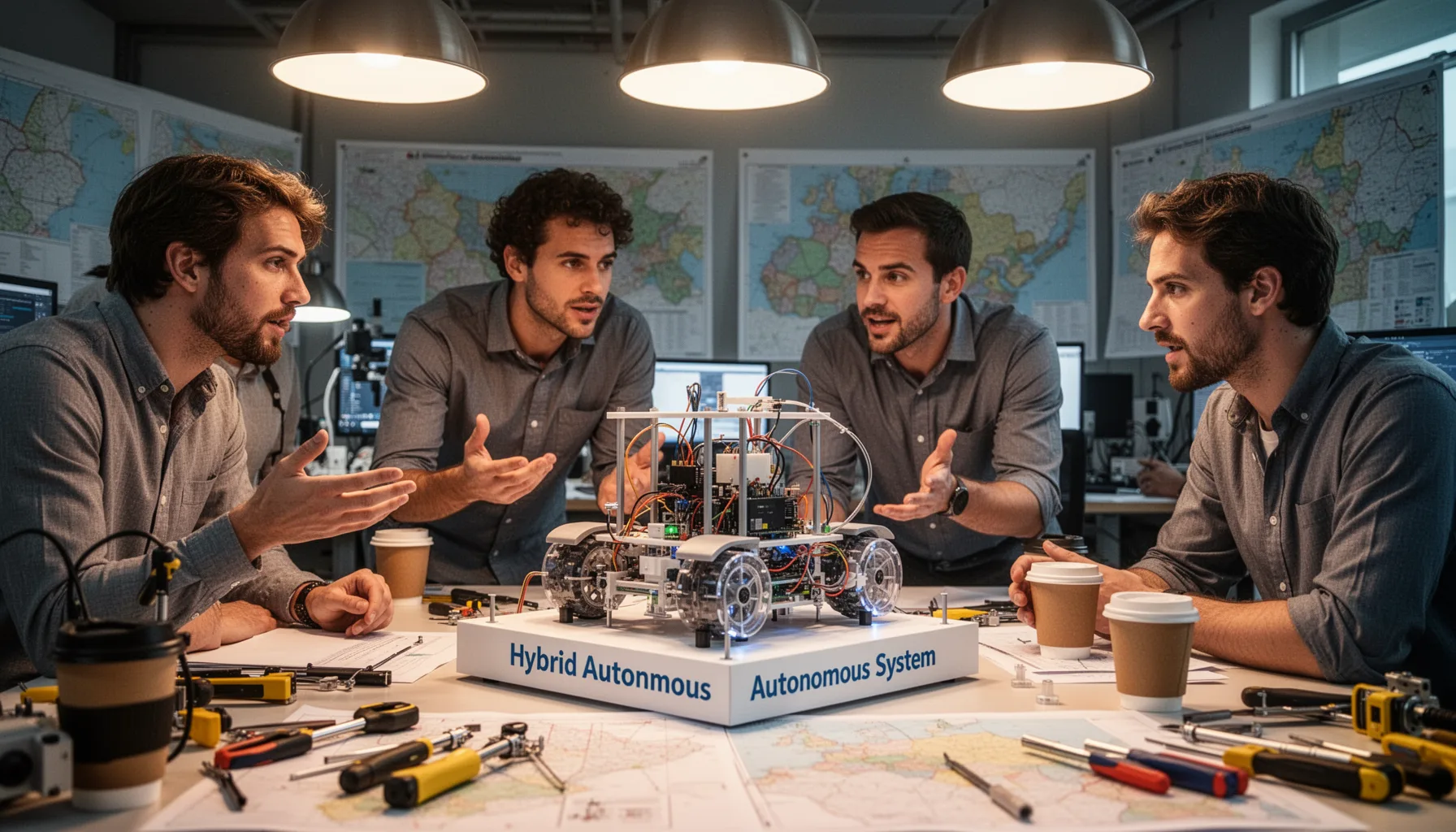
Explainable planning matters for autonomous systems because teams need to justify why a system picked one course of action instead of another. And they need that explanation quickly. According to European Union AI Act compliance debates and related safety work, high-risk AI systems face stiffer expectations around transparency, traceability, and human oversight. Planning sits very close to that pressure point. If an industrial controller or autonomous drone makes a poor move, engineers need more than a confidence score; they need causal reasoning they can inspect. We'd go further. Systems that can't explain their plans will run into deployment drag even when raw performance looks strong. Airbus, Siemens, and ABB all work in domains where behavior has to be audited against engineering constraints. That's a bigger shift than it sounds. So explainable planning for hybrid systems keeps edging from theory toward deployment relevance.
How is automated planning in hybrid systems different from ordinary AI planning?

Automated planning in hybrid systems differs because it has to reason about symbolic decisions and continuous dynamics such as time, motion, temperature, or energy. That's a much tougher problem. Classical planning can often assume tidy state transitions, but hybrid settings pull in differential equations, hard constraints, and timing dependencies. Researchers in model checking and cyber-physical systems have been wrestling with this for years, especially through work tied to temporal logic and reachability analysis. Here's the thing. Explanations get tougher as the planning substrate gets more mathematical. A factory robot arm, like one deployed by FANUC, doesn't just choose an action; it also has to satisfy geometric and timing constraints without crossing safety margins. So hybrid systems planning explainability needs explanations that make sense to software engineers and control engineers alike. Worth noting. That's a higher bar than most consumer AI will ever face.
What does the arxiv explainable planning hybrid systems paper signal for research?

The arXiv explainable planning hybrid systems paper suggests planning research is answering a broader demand for autonomy people can inspect. And that demand won't fade. According to McKinsey's 2024 survey on AI adoption, organizations keep expanding AI in operations, yet governance worries remain among the top constraints on adoption. Planning explainability sits squarely in that gap between technical capability and operational confidence. We see this paper as part of a wider shift: not away from autonomy, but away from autonomy that can't account for itself. That's an overdue correction. In academia, expect tighter links among explainable AI planning research, formal verification, and human-in-the-loop interfaces. In industry, teams in robotics and mobility will likely ask whether planning traces can support debugging, audits, and safety cases before they ask about benchmark speed. Not quite a niche topic anymore.
Key Statistics
Frequently Asked Questions
Key Takeaways
- ✓Explainable planning for hybrid systems targets trust, debugging, and safer autonomy
- ✓Hybrid systems planning explainability matters where software logic meets physical dynamics
- ✓The arXiv paper reflects growing pressure for inspectable autonomous decision-making
- ✓Clearer planning explanations could support certification, operations, and post-incident analysis
- ✓This research speaks directly to robotics, mobility, aerospace, and industrial automation teams