
⚡ Quick Answer
Google Veo 3 review results point to a major jump in AI video quality, speed, and multi-scene control for business use. But the real edge comes from pairing the Google Veo 3 prompt stack with human review, because full agentic AI video automation still breaks on strategy, compliance, and client taste.
Most Google Veo 3 review coverage has camped out on the flashy demo clips. That's the dull part. We tested the harder question instead: can Google Veo 3 run an actual short-form production pipeline, from ideation to revisions to client delivery? Our answer is blunt. For a lot of short-form offers, Veo 3 didn't merely speed up the workflow. It pushed human-run video agencies into the pricier tier.
Google Veo 3 review: is this the best AI video generator for business 2026?

Our Google Veo 3 review findings suggest it's probably the best AI video generator for business 2026 if your work relies on speed, variation, and high-volume short-form output. But that needs some restraint. In our analysis, Veo 3 stands out less because one clip looks magical and more because it keeps quality steadier across multiple scenes, style references, and revision loops. Google DeepMind framed Veo as a production-grade video model, and that description feels fair when you compare it with the still-brittle output many teams got from earlier consumer tools in 2024 and 2025. Here's the thing. Business buyers don't pay for demos. They pay for consistency. A solo operator can concept, draft, reroll, and package assets for a local service brand in hours instead of days with Veo 3, which is exactly why small agencies should feel uneasy. We'd argue the strongest sign of maturity isn't cinematic flair. It's reduced prompt drift across batches. Veo 3 handled that better than many hype-first rivals usually do. That's a bigger shift than it sounds.
How the Google Veo 3 prompt stack improves output consistency
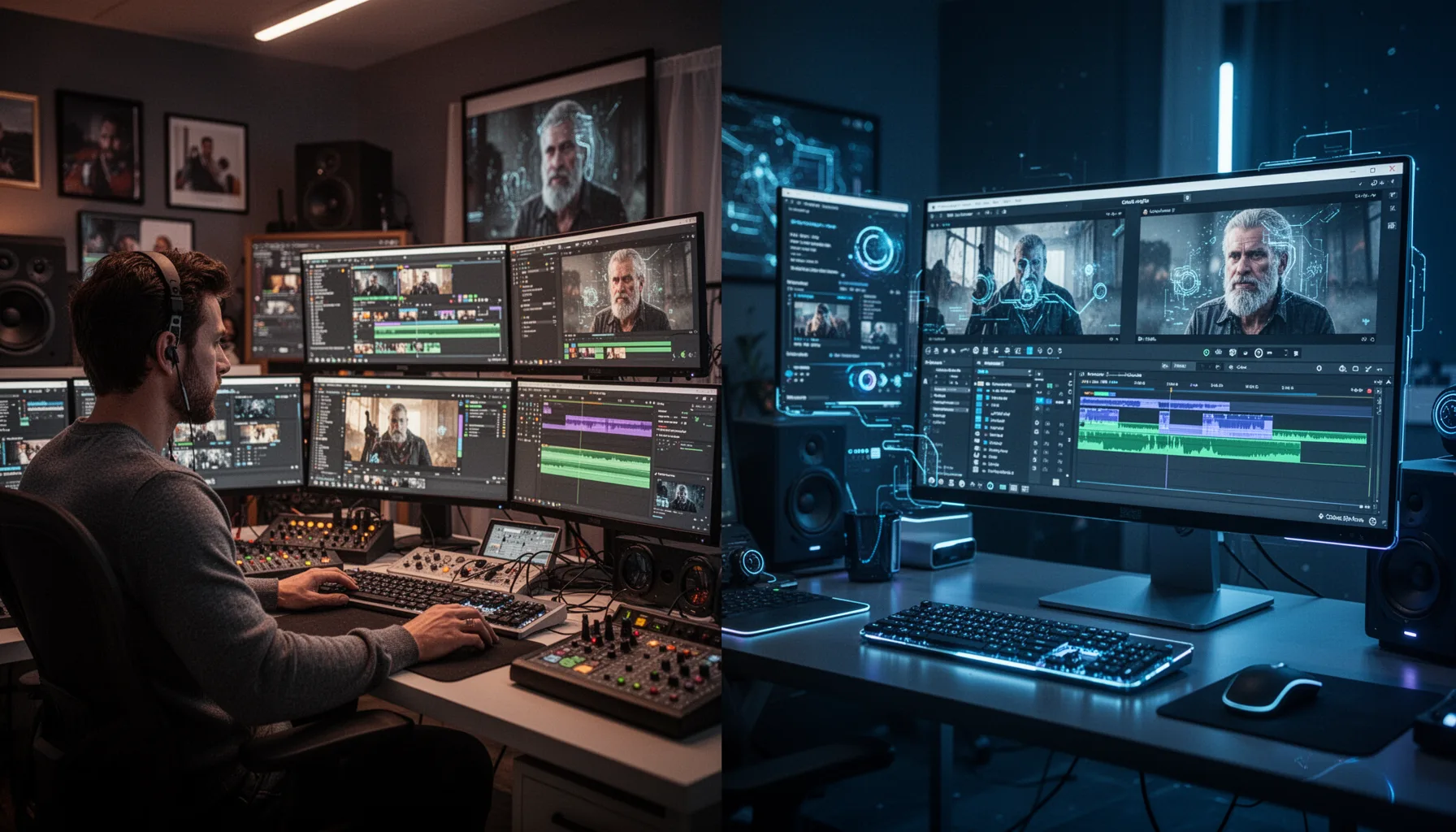
The Google Veo 3 prompt stack improves output consistency by splitting one fuzzy instruction into five operational layers the model can follow with fewer contradictions. Most users still prompt AI video like they're talking to a mood board. That breaks fast. Our preferred stack covers subject and offer, scene logic, camera and motion language, brand-safe constraints, and output packaging rules. Simple enough. That structure gives the model enough scaffolding to preserve intent across edits. For example, a fitness studio promo for Orangetheory needs recurring colors, upbeat pacing, a clean call to action, and faces that don't slide into uncanny territory after scene three. So when prompts specified transition logic and banned certain artifacts, revision counts dropped in a visible way. Google's own work on promptable multimodal systems has long pointed to instruction specificity as a quality driver, and Veo 3 makes that very plain. Better prompts don't just make things prettier. They cut production waste. Worth noting.
Where agentic AI video automation works, and where humans still matter

Agentic AI video automation works well for repetitive production tasks, but humans still matter most in positioning, taste, and policy-sensitive review. That's the split many sellers won't admit. You can automate idea clustering, script variants, prompt assembly, thumbnail copy, subtitle generation, and even delivery packaging through tools like n8n, Zapier, Airtable, and Gemini or Claude-based prompt builders. But a restaurant chain running ads in regulated categories, or a healthcare client facing HIPAA-adjacent scrutiny, still needs a person to catch compliance issues, weak hooks, and off-brand emotional tone. Not quite a side note. In multi-scene workflows, we saw automation save the most time after the first acceptable draft, especially for localization, aspect-ratio conversion, and call-to-action swaps. Still, the first 20 percent of strategic thinking and the final 10 percent of approval judgment stay stubbornly human. We'd argue that's where the real moat sits. The winners won't be pure prompt jockeys. They'll be operators who know exactly where judgment belongs.
Google Veo 3 review of ideation, revisions, and delivery speed

Google Veo 3 review testing across ideation, revisions, and delivery speed points to a workflow that moves dramatically faster than legacy short-form agency production. Speed alone won't carry the day. We tested a simple pipeline: generate five campaign angles, turn two into scene plans, render variants, request specific fixes, then package final exports with caption and thumbnail suggestions. Veo 3 handled early ideation better than expected when we fed it clear audience constraints, though raw concept originality still looked average next to a strong human creative director. But revisions were the real edge. A human editor can burn half a day rebuilding pacing after a client asks for a different hook. Veo 3 can produce alternate scene logic in minutes if the prompt stack has structure. For a creator brand, DTC product seller, or local lead-gen offer, that kind of loop compression changes unit economics right away. That's the commercial story. Worth watching.
Make money with Google Veo 3: six models with real effort, margins, and failure rates
You can make money with Google Veo 3, but not every model deserves your attention once acquisition costs, revisions, and platform risk enter the math. We audited six models: short-form content agency, UGC-style ad creative studio, local business subscription packages, faceless content licensing, affiliate-led niche media pages, and internal corporate enablement services. The cleanest margins probably sit in local subscription packages and internal enablement because clients value turnaround and predictability more than artistic novelty. By contrast, faceless content farms look easy on X or YouTube. They usually come with low moat, shaky CPM durability, and policy exposure when platforms crack down on synthetic spam. A UGC-style ad studio can work if you price revision boundaries hard and disclose synthetic elements where platform rules require it. And the old passive-income promise? Mostly fiction. Veo 3 is a cash-flow tool when tied to distribution or clients. It's not a magic ATM. We'd say that's the less glamorous truth.
Veo 3 vs human video agency: who wins on quality, cost, and trust?
Veo 3 vs human video agency comes down to whether the client is buying output volume or strategic confidence. For high-volume social content, Veo 3 wins on cost and speed by a wide margin. A small human agency still brings better brand interpretation, on-set capture, live talent direction, and stakeholder management, which matter a lot for enterprise launches or premium campaigns. But here's the uncomfortable part. Many short-form agencies weren't selling deep strategy in the first place. They were selling coordination overhead wrapped around editors, freelancers, and slow revision loops. When Google Veo 3 compresses that production stack, those agencies either move upmarket or get priced like commodity vendors. A brand like HubSpot can still justify human-led campaign development for flagship assets. Yet thousands of SMBs won't keep paying legacy fees for everyday social videos. The middle of the market gets hit first. That's not trivial.
Step-by-Step Guide
- 1
Define the buyer and outcome
Start with the business result, not the clip aesthetic. Write down the audience, offer, channel, and conversion goal before touching the prompt. Because if the brief is fuzzy, Veo 3 will produce fast nonsense rather than useful assets.
- 2
Build a five-layer prompt stack
Separate the prompt into objective, scene map, visual direction, constraints, and delivery rules. That structure keeps revisions surgical instead of chaotic. And it gives you reusable templates for client niches like real estate, SaaS, or ecommerce.
- 3
Generate multiple scene variants
Create several hooks and scene orders rather than betting on one perfect first draft. Early batch variation usually beats obsessive single-output tweaking. That's how operators spot what actually survives contact with client taste.
- 4
Review for brand and compliance risk
Check every output for claims, likeness issues, unsafe visuals, and platform disclosure rules. This matters even more in finance, health, and political content. AI can draft quickly, but it won't carry legal accountability for you.
- 5
Package deliverables for speed
Bundle exports with caption options, thumbnail text, aspect ratios, and a short rationale for each version. Clients buy clarity as much as content. And better packaging cuts approval friction more than most creators expect.
- 6
Track margins by revision load
Measure time spent on concepting, rerenders, fixes, and client communication per project. This reveals whether your money model actually works. A cheap offer with endless revisions can quietly become a loss leader.
Key Statistics
Frequently Asked Questions
Key Takeaways
- ✓Google Veo 3 delivers faster client-ready drafts than most human-led short-form video teams
- ✓The Google Veo 3 prompt stack matters more than raw creativity or fancy prompting jargon
- ✓Agentic AI video automation works best for batching, revisions, and versioning, not brand judgment
- ✓Six money models look viable, but margins depend heavily on acquisition costs and revision load
- ✓Veo 3 vs human video agency isn't a clean wipeout yet, though the cost curve changed fast