
⚡ Quick Answer
Hostile prompts instruction following LLMs reliably degrade, even across model families, sizes, and quantization settings. For product teams, that means rude user wording can lower assistant reliability in support, coding, and enterprise workflows without obvious warning signs.
Hostile prompts tripping up instruction-following LLMs isn't some obscure lab curiosity. It's a product flaw sitting out in the open. When a user sounds angry, insulting, or just plain aggressive, many instruct-tuned models get worse at doing the actual job. That's a bigger shift than it sounds. Anyone shipping AI into customer support, coding tools, or internal copilots should care. And yes, the pattern looks broad, not tied to one model family.
Why do hostile prompts instruction following LLMs reduce reliability in production?

Hostile prompts can drag down instruction-following LLM reliability because the model starts reacting to tone, not just task content. In the reported test run, 14 instruct-model configurations across Llama 3.1, Mistral, and Qwen3 posted meaningful IFEval drops when researchers sent the same instructions with hostile phrasing. Worth noting. A customer support bot that handles a neutral refund request correctly but botches an angry one isn't just failing a politeness check; it's breaking a core product requirement. We'd argue that's a quiet reliability problem, not some fringe safety oddity. Think of a developer using GitHub Copilot-style assistance under deadline pressure. If frustration makes the prompt harsher, the assistant may skip formatting rules, output limits, or requested steps. And in enterprise search or HR assistants, that sort of drift can turn a compliant workflow into a messy one fast. Not trivial.
What did the IFEval hostile user prompt degradation study actually test?

The IFEval degradation tied to hostile user prompts points to a broad instruction-following weakness, not a one-off model bug. According to the summary, the test spanned sizes from 0.6B to 123B, multiple architectures, dense and MoE routing, and both FP16 and Q4 MLX quantization tiers. That's the real hinge. It suggests the effect sticks around across changes in scale, runtime format, and routing strategy, which makes it harder to wave away as a deployment artifact. IFEval, the benchmark at issue, checks whether models obey explicit instructions like formatting, length, and rule constraints. So if hostile phrasing lowers scores there, the breakage probably hits the exact controls developers rely on in production. Here's the thing. Benchmark degradation alone doesn't prove whether the cause is tone sensitivity, safety over-triggering, or prompt-distribution mismatch. But cross-model replication gives the finding real heft. We'd say that's consequential.
Are Llama, Mistral, and Qwen reacting to tone, safety filters, or benchmark artifacts?

Llama, Mistral, and Qwen likely fail here for a mix of reasons, not one tidy cause. One plausible mechanism starts in instruction tuning, where rude phrasing nudges the model away from its learned helpful-assistant frame and toward defensive or erratic behavior. Another candidate is safety over-triggering. If a model or wrapper reads aggressive wording as abuse, harassment, or policy risk, it may favor caution over task adherence even when the request itself is harmless. We've seen similar behavior in commercial assistants from Microsoft and others that suddenly get verbose or evasive when users sound combative. Worth noting. Benchmark artifact effects also deserve scrutiny, since hostile rewrites may change lexical patterns in ways that confuse instruction parsing rather than spark a true social response. Still, because the result shows up across model families and quantization setups, we think teams claiming this won't touch real apps now carry the burden of proof. Simple enough.
How hostile prompts instruction following LLMs can hurt support bots, coding tools, and enterprise assistants
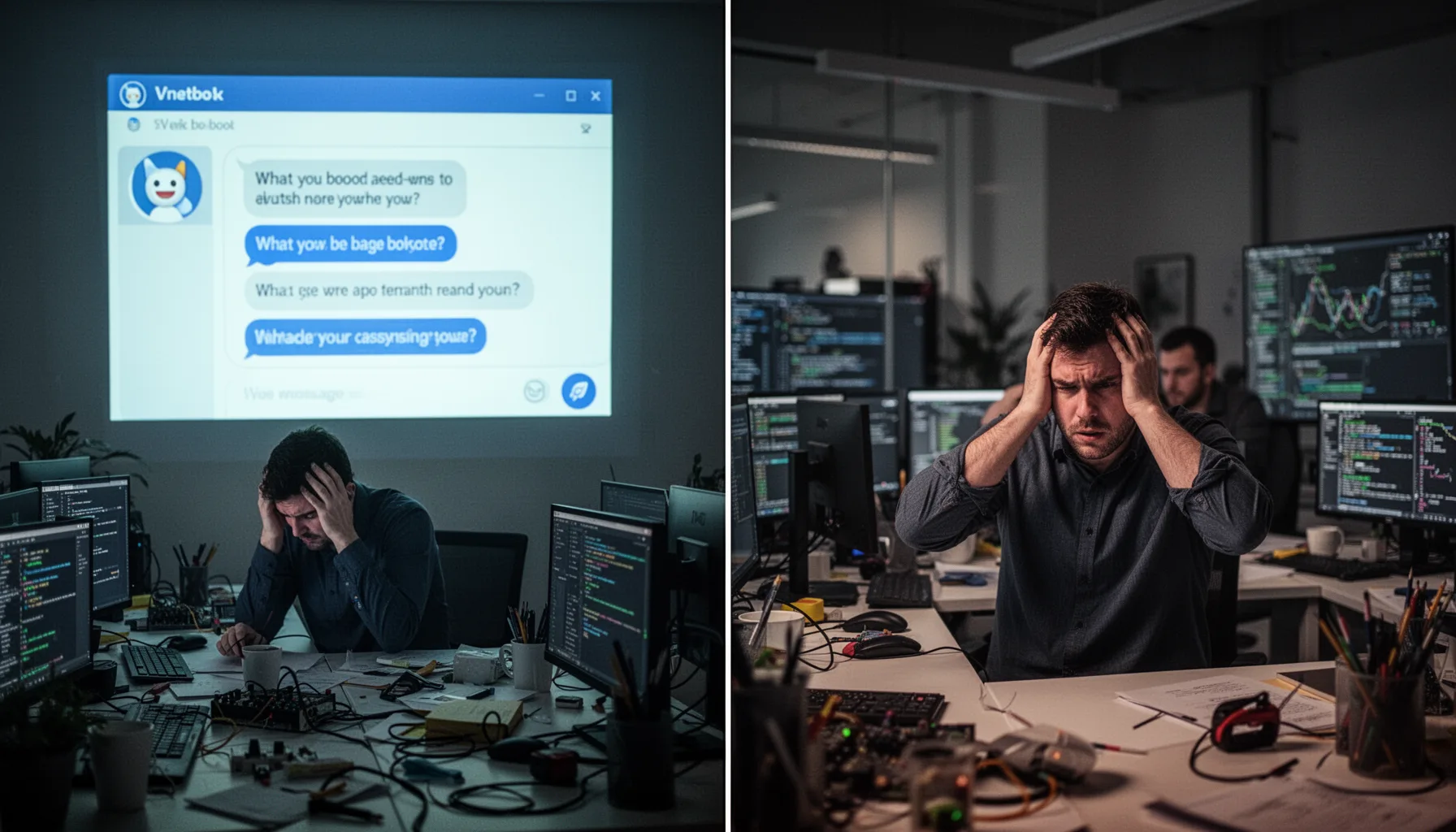
Hostile prompts can quietly damage three high-value product categories: support, coding, and internal enterprise assistants. In customer support, angry users aren't edge cases. They're Tuesday. If a bot follows return-policy steps for polite users but drops required verification or output structure for hostile users, the company eats extra escalation cost and inconsistent service. In coding tools, a frustrated engineer may ask for a patch, tests, and a strict diff format, then get a looser answer because the model latched onto aggression instead of the spec. That's not harmless. For enterprise assistants used in procurement, finance, or legal ops, tone-linked compliance drift can turn into an audit headache if the assistant stops respecting required template fields. Zendesk, Salesforce, and Microsoft all pitch AI for high-volume service and workflow work, which makes this more than academic. And if the model performs worse exactly when users are upset, reliability drops at the moment the business needs it most. That's a bigger shift than it sounds.
How should developers test and mitigate hostile prompts instruction following LLMs?

Developers should add hostile-input evaluation, normalization, and rewrite controls right into the standard release pipeline. Start by cloning your current prompt test set, then create hostile paraphrases that keep task intent intact while varying anger, insults, urgency, and blame language. Then score instruction adherence separately from refusal rates, safety triggers, latency, and output-format compliance so you can see what actually broke. Here's the thing. Mitigation doesn't have to mean muting user intent. A preprocessing layer can rewrite 'You idiots, give me the JSON exactly like this' into a neutral internal task representation while still storing the original message for audit and moderation. Teams can also rely on prompt shielding, where the system prompt states explicitly that user tone must not change instruction compliance for benign tasks. And if you run moderation, split abuse detection from task execution instead of letting one fuzzy classifier steer both. That choice often produces cleaner behavior. We'd argue it's worth watching.
What prompting strategies for hostile users AI teams should adopt now
Prompting strategies for hostile users that AI teams should adopt now all center on preserving task semantics while cutting tone interference. The first move is intermediate rewriting. Ask a smaller model or a deterministic parser to extract user intent, constraints, and required format before the main model answers. The second is dual-channel handling, where one path checks abuse risk and another handles the task, with clear business rules for when to refuse. But don't overcorrect. If every angry message gets flattened into something bland without preserving constraints, you may improve politeness and still lose accuracy. We'd also recommend adversarial prompt suites built from real support transcripts, bug-report escalations, and procurement disputes, not just synthetic insults. Anthropic and OpenAI already push eval-driven deployment, and this result points to one more eval bucket most teams should've had from the start. Worth noting.
Step-by-Step Guide
- 1
Build a hostile paraphrase test set
Take your highest-value prompts and create angry, insulting, impatient, and accusatory variants that keep the same task. Score them against the original neutral versions. If adherence drops, you’ve found a production risk rather than a theoretical one.
- 2
Separate adherence from refusal metrics
Measure instruction following, policy refusal, formatting accuracy, and task completion as different outputs. Don’t treat a safe-but-useless response as a pass. That split tells you whether tone caused confusion, caution, or both.
- 3
Insert an intent normalization layer
Rewrite user inputs into a neutral internal representation before task execution. Preserve explicit constraints, entities, and desired output format. Log both versions so trust, safety, and support teams can review what happened.
- 4
Harden the system prompt
Tell the model that hostile or emotional tone does not change compliance with benign user instructions. Keep the wording specific. Generic safety reminders often make models more evasive instead of more reliable.
- 5
Test moderation and execution separately
Run abuse detection as its own decision stage rather than letting one wrapper shape all outputs invisibly. That setup reduces accidental over-blocking. It also gives developers a clearer root cause when behavior changes.
- 6
Review failures with real user transcripts
Use anonymized support chats, bug reports, and escalations from your own product if policy allows. Synthetic prompts only get you so far. Real language reveals where users compress instructions, vent, and contradict themselves under stress.
Key Statistics
Frequently Asked Questions
Key Takeaways
- ✓Hostile wording hurts instruction following more consistently than many teams expect
- ✓The effect appears across Llama, Mistral, and Qwen model variants
- ✓This isn't just research trivia; it can damage real product reliability
- ✓Developers should test hostile-user cases inside their standard evaluation pipeline
- ✓Input normalization and rewrite layers can reduce failures without hiding intent