
⚡ Quick Answer
How artists protect themselves from AI starts with matching each creative asset to the right legal and business tool. Artists can use voice rights, copyright, trademarks, contracts, metadata, and platform enforcement to reduce AI copying and strengthen licensing control.
How artists protect themselves from AI has moved from abstract policy chatter to plain business hygiene. Fast. Eleonora Rosati's comments to EL PAÍS arrive at exactly the right time, because plenty of artists aren't just bracing for lawsuits after damage lands. They're putting defenses in place before the next clone, fake duet, or synthetic endorsement shows up. And here's the practical part: no single right covers the whole mess, so artists need layers. Not one silver bullet.
How artists protect themselves from AI in practice
How artists protect themselves from AI works best when artists treat voice, likeness, recordings, and branding as different assets with different shields. That's the part many headlines skip. Rosati, an intellectual property scholar at Stockholm University and a regular voice on EU copyright, has argued for years that creators need to know which rights attach to which output. We'd argue that's the only sensible way to size up AI risk. A song recording may trigger copyright and neighboring rights, while a fake endorsement may pull in trademark, publicity, or unfair competition instead. Universal Music Group has publicly pressed platforms over unauthorized AI-made tracks, and that points to a real mix of law and business pressure. That's a bigger shift than it sounds. So the smart move isn't sitting around for one giant AI statute; it's building a rights inventory and using it.
AI voice rights for artists: what protects a voice from cloning?
AI voice rights for artists usually rest less on copyright and more on publicity, contract, trademark, and location-specific identity rights. That's why the Taylor Swift registered her voice AI conversation gets so much attention. Whether the press frames it as voice registration or as a broader rights-management play, the business logic is plain enough: artists want formal control over identity markers the market instantly recognizes. In the United States, voice imitation disputes often point back to Midler v. Ford and Waits v. Frito-Lay, where courts treated unauthorized vocal imitation in ads as misappropriation. That's a big clue. If an AI-made track sounds like a celebrity and hints at endorsement, the claim may turn on false endorsement or right of publicity instead of classic music copyright. And for newer artists, the lesson is pretty simple: document ownership, spell out consent in contracts, and keep proof that a voice carries market association before a fight begins. Worth noting.
AI copyright protection for musicians: what copyright can and cannot do
AI copyright protection for musicians is strong when we're talking about songs and recordings, but far thinner when the issue is style alone. That split frustrates artists. Fairly so. Copyright can protect original lyrics, melody, arrangement choices, and sound recordings when someone copies them or makes unlawful derivatives, but it usually won't cover the broad vibe of sounding like an artist. The U.S. Copyright Office's 2025 reports on copyright and artificial intelligence reinforce that narrower, work-by-work approach instead of granting ownership over aesthetics. Here's the thing. If an AI model spits out a track that copies a protected chorus or samples a master without permission, musicians have a cleaner case than they do when a model merely mimics an era, tone, or songwriting posture. The Drake and The Weeknd-style viral fake song episode made that painfully obvious, because public reaction centered on impersonation even as the legal theories split in different directions. So artists should register compositions and recordings quickly, keep split sheets, and save dated session files because evidence can make the difference when copyright actually applies. That's not trivial.
How artists protect themselves from AI with trademarks, likeness, and style-adjacent branding
How artists protect themselves from AI often comes down to trademark and brand law when copyright runs out of road. That's especially true for names, logos, slogans, visual signatures, and merchandise cues. If an AI-generated campaign uses an artist's name or creates confusion around endorsement, trademark law may offer a cleaner route than arguing about style. We see it already. Estates and major acts police merch, tour branding, and visual identity across TikTok, YouTube, and Instagram. Elvis Presley Enterprises has long shown how hard-edged brand enforcement can stretch beyond music rights alone, and newer artists now echo that playbook with logos, catchphrases, and persona marks. But style-adjacent branding takes foresight. A creator who consistently uses a visual motif, phrase, or character universe can strengthen later claims by registering marks and showing real commercial use across websites, ticketing, and social channels. We'd say that's worth watching.
Legal protection against AI voice cloning through contracts and platform rules
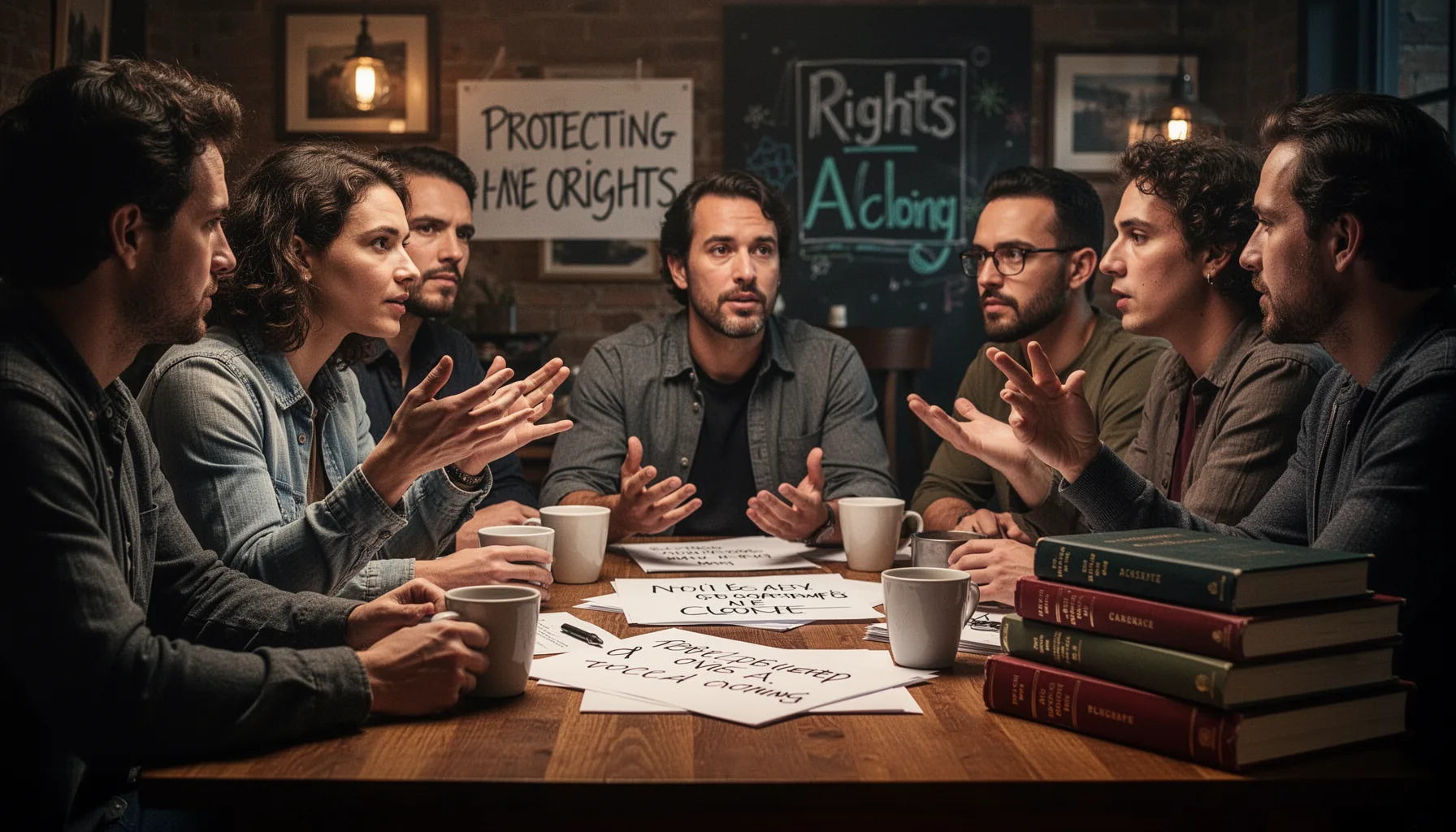
Legal protection against AI voice cloning increasingly starts in contracts because regulation still varies too much by country and by platform. That's not glamorous. It works. Recording agreements, producer deals, sync licenses, session musician contracts, and talent agreements can all define whether vocals, stems, likeness, and performance data may train models or generate synthetic outputs. SAG-AFTRA's recent bargaining over digital replicas pushed this issue into plain view, especially for performers whose voice and image earn money well beyond one session. And labels are adjusting too: distribution terms, platform policies, and content ID systems now sit inside the anti-cloning stack. For independent musicians, a basic clause that bans AI training on stems without separate written consent can head off ugly ambiguity later. We'd go a step further and say the market is already drafting de facto AI law through deal terms, even before legislators finish the job. Simple enough.
Artists rights and generative AI law: what creators should do now
Artists rights and generative AI law remain unsettled, but creators can still do concrete things right now. Start with an asset map. A voice may need publicity-right analysis, a catalog needs copyright registration, a stage name needs trademark review, and commercial collaborations need AI-specific contract language. The EU AI Act, adopted in 2024, doesn't solve artist compensation on its own, yet it does raise transparency expectations that may shape platform behavior and enterprise compliance downstream. Meanwhile, the U.S. patchwork means creators should expect different outcomes across California, Tennessee, New York, and federal copyright channels. The tactical edge goes to artists who keep clean records, watermark or tag files when they can, monitor platforms, and respond quickly with counsel or rights-management partners like SoundExchange, ASCAP, BMI, or PPL depending on market. That's probably the central lesson behind how artists protect themselves from AI: don't wait for perfect law when stronger paperwork and faster enforcement can already change the outcome. Here's the thing: that's more power than many artists think they have.
Step-by-Step Guide
- 1
Audit your creative assets
List every asset an AI system could copy or simulate, including voice, name, logo, image, songs, stems, videos, and signature phrases. Separate what you own personally from what a label, publisher, or manager controls. And note which assets already have registrations, contracts, or licensing history behind them.
- 2
Register the rights you can register
File copyright registrations for compositions and recordings where available, and review trademark filings for stage names, logos, and branded phrases. If you work across borders, ask counsel which rights matter most in each market. Early registration often improves enforcement speed and damages options.
- 3
Add AI clauses to your contracts
Update recording, production, session, endorsement, and licensing contracts to address model training, synthetic voice use, digital replicas, and derivative content. Make consent explicit rather than implied. Because vague language usually benefits the party with the larger distribution machine.
- 4
Document provenance and authorship
Keep dated session files, stems, drafts, split sheets, and communications that show who created what and when. Preserve metadata rather than stripping it out during delivery. This record becomes valuable when you need to prove copying, ownership, or unauthorized training inputs.
- 5
Monitor platforms and marketplaces
Search major streaming, video, and social platforms for clones, fake features, and misleading endorsements. Use platform reporting tools and preserve screenshots, URLs, and upload dates before content disappears. And set a regular review cadence instead of waiting for fans to flag problems.
- 6
Build a licensing position
Decide what AI uses you might allow and at what price, rather than treating every use as forbidden. A clear licensing policy gives agents, labels, and brand partners something actionable. It also turns AI from a pure threat into a controlled commercial category.
Key Statistics
Frequently Asked Questions
Key Takeaways
- ✓Voice, likeness, and songs each require different legal protections and contract terms.
- ✓The Taylor Swift registered her voice story points to a wider rush toward identity-based AI safeguards.
- ✓Copyright rarely protects artistic style alone, but branding and unfair competition sometimes offer another route.
- ✓Labels and managers are drafting AI clauses now instead of waiting for perfect regulation.
- ✓Emerging creators can do a lot today with metadata, takedowns, registrations, and licensing records.