
⚡ Quick Answer
llm-cli-gateway updates center on three backend shifts: tracking five upstream vendor CLIs, fuzzing parser layers, and adding a cleaner front door for requests. The big story isn’t a flashy feature, but the engineering needed to keep a multi provider LLM CLI gateway stable as each vendor changes on its own schedule.
llm-cli-gateway updates aren't about flashy commands. They're about avoiding the kind of failure that wakes operators at 2 a.m. That's not trivial. When one wrapper sits in front of five vendor CLIs, every upstream release becomes a moving target. Then the risk shifts. Not quite. The obvious bugs matter less than quiet incompatibilities, brittle parsers, and interface drift that only shows up under messy production input. We've watched this movie before in package managers and browser automation stacks. But this corner moves faster, and AI CLI tools often change with very little ceremony. Worth noting.
What changed in llm-cli-gateway with five upstreams?

The main llm-cli-gateway updates tighten tracking across five upstream providers so the gateway can match each vendor's release rhythm. That's the core job. In practice, a wrapper over OpenAI, Anthropic, Google, xAI, and local or OSS-facing CLIs survives or breaks based on how fast it catches changed flags, shifted JSON fields, or new auth prompts. And when one provider tweaks its output shape, the failure may look small at first. It can quietly poison routing logic, cache hits, or retry behavior. We'd argue this is where plenty of AI infrastructure projects get caught out, because the happy path looks fine in demos while real command surfaces keep sliding underneath. Anthropic and OpenAI offer a plain example here, since frequent SDK and CLI iteration can snap brittle shell parsers over a tiny output change. According to GitHub's 2024 Octoverse data, open source projects pushed release cadence faster than ever, which makes upstream watching a discipline rather than a nice extra. So llm-cli-gateway five upstreams isn't just a scaling footnote. It's an operational promise. That's a bigger shift than it sounds.
Why fuzzing parsers for AI CLI tools matters in llm-cli-gateway updates
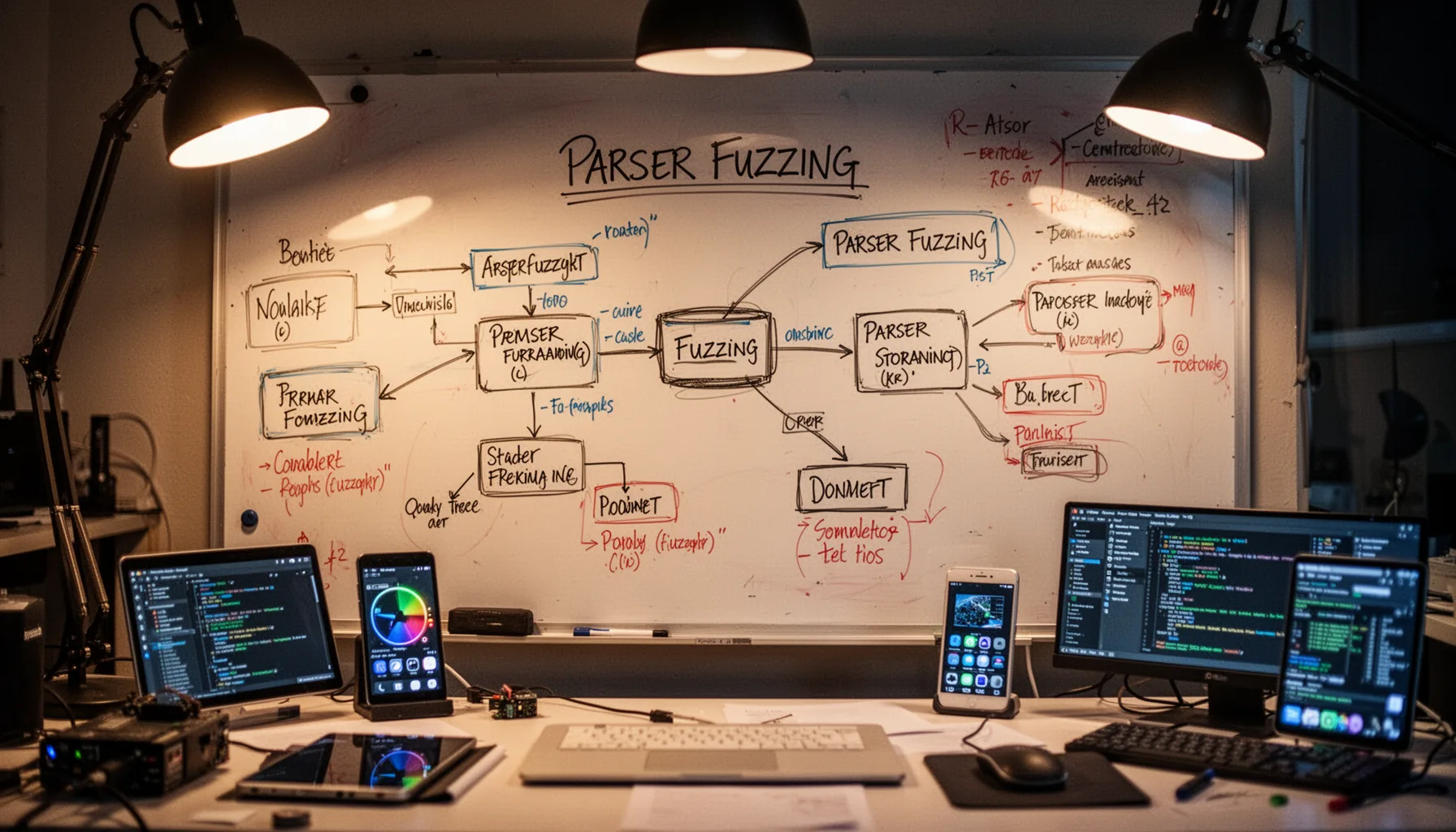
Fuzzing parsers for AI CLI tools matters because parser bugs often become the first thing to fail in a multi provider LLM CLI gateway. And parser bugs are slippery. If one vendor emits malformed JSON, noisy stderr, or some odd unicode sequence, a wrapper can read success as failure, leak partial responses, or send a bad cache key down the wrong branch. The sensible move is fuzzing. Simple enough. You feed parsers random, adversarial, and semi-valid input until they crack in a test lab instead of inside a customer workflow. Google's OSS-Fuzz has pointed to this pattern for years by uncovering thousands of memory-safety and parser flaws across foundational open source packages, and the same lesson carries over even when the parser lives in a higher-level CLI adapter. We think this ranks among the smartest changes in the latest llm-cli-gateway updates because parser reliability rarely gets praise until something blows up. jq gives a useful outside example, since its users know tiny input edge cases can produce outsized effects when JSON tooling sits inside automation chains. So yes, fuzzing sounds unglamorous. But it's exactly the work that keeps AI wrappers from turning into fragile little traps. Worth noting.
How the new front door changes multi provider LLM CLI gateway behavior

The new front door changes behavior by adding a cleaner entry layer for validation, request shaping, and provider routing before upstream CLIs do any real work. That's a bigger deal than it sounds. In gateway design, the entry point sets the rules for auth handling, normalized parameters, provider capability checks, and sane defaults. A bad front door turns every backend difference into user-facing chaos. But a good one absorbs variation and gives operators one place to apply policy. We've seen the same pattern in API gateways like Kong and Envoy, where front-door consistency often matters more than backend elegance because users judge the contract they touch, not the plumbing they never see. We'd argue the likely payoff here is lower cognitive load for teams juggling multiple AI vendors behind one interface. And that matters even more once cache aware spawning across five providers enters the picture. Because cache reuse only stays safe when the request boundary is precise and normalized. Here's the thing.
How cache aware spawning across five providers depends on boring engineering

Cache aware spawning across five providers only works when process control, parser stability, and upstream tracking line up cleanly. Here's the thing: caching sounds like a speed feature, but in a CLI gateway it's also a correctness problem. If the wrapper calculates identity differently across provider adapters, or if one upstream sneaks in a hidden field that changes semantics, a stale cache hit can return the wrong result with total confidence. That's worse than slow. We'd argue the recent llm-cli-gateway updates point to a mature infrastructure view, where spawning logic, cache keys, parser hardening, and provider capability maps act as one system instead of a pile of separate tweaks. Bazel offers a practical comparison, since modern build tooling only earns trustworthy cache hits when inputs get normalized with near-obsessive care. According to Google Cloud's 2024 DORA research, elite software teams tend to invest in reliability mechanics that users barely notice but that sharply cut failed changes, and this update fits that pattern. So the visible feature may look like multi-provider speed. The real product is predictability. Worth noting.
Key Statistics
Frequently Asked Questions
Key Takeaways
- ✓llm-cli-gateway updates focus more on reliability plumbing than visible end-user features
- ✓Tracking five upstream CLIs reduces drift risk when vendors change flags and output formats
- ✓Fuzzing parsers for AI CLI tools catches strange edge cases before users hit them
- ✓The new front door gives teams a cleaner entry point for routing and validation
- ✓Cache aware spawning across five providers only works if the surrounding glue stays disciplined