
⚡ Quick Answer
A llm debugging systematic approach means separating failures by layer, instrumenting each layer, and testing hypotheses in a fixed order instead of endlessly tweaking prompts. The best teams debug data, retrieval, tools, reasoning, memory, and serving as distinct systems with distinct signals.
An LLM debugging systematic approach sounds dull right up until a model breaks in production at 2 a.m. Then it feels like triage. One user says the bot made up a refund policy, another says the agent ignored fresh CRM data, and your traces look clean enough to fool you. But the bug often isn't in the prompt at all. The latest paper on a systematic approach to large language model debugging hits that exact nerve: teams need a repeatable way to find failures by layer, not by gut feel.
What is a llm debugging systematic approach and why do teams need one?

A llm debugging systematic approach gives teams a repeatable way to sort symptoms, isolate the likely failure layer, and pair that layer with the right diagnostics. That's far better than opening the prompt editor and guessing. The arXiv paper suggests debugging stays messy because LLM apps mix model behavior with retrieval systems, orchestration logic, tools, memory stores, and serving infrastructure. So the same user-visible problem can come from very different places. A hallucinated answer might come from stale retrieval, a broken tool call, weak grounding, or a latency timeout that quietly skipped a step. Worth noting. We'd argue this is the core error in current practice. Teams keep treating every failure as a model-quality issue, even when the model is just the last visible link in a much longer failure chain.
How to debug large language models by failure layer, not by prompt alone
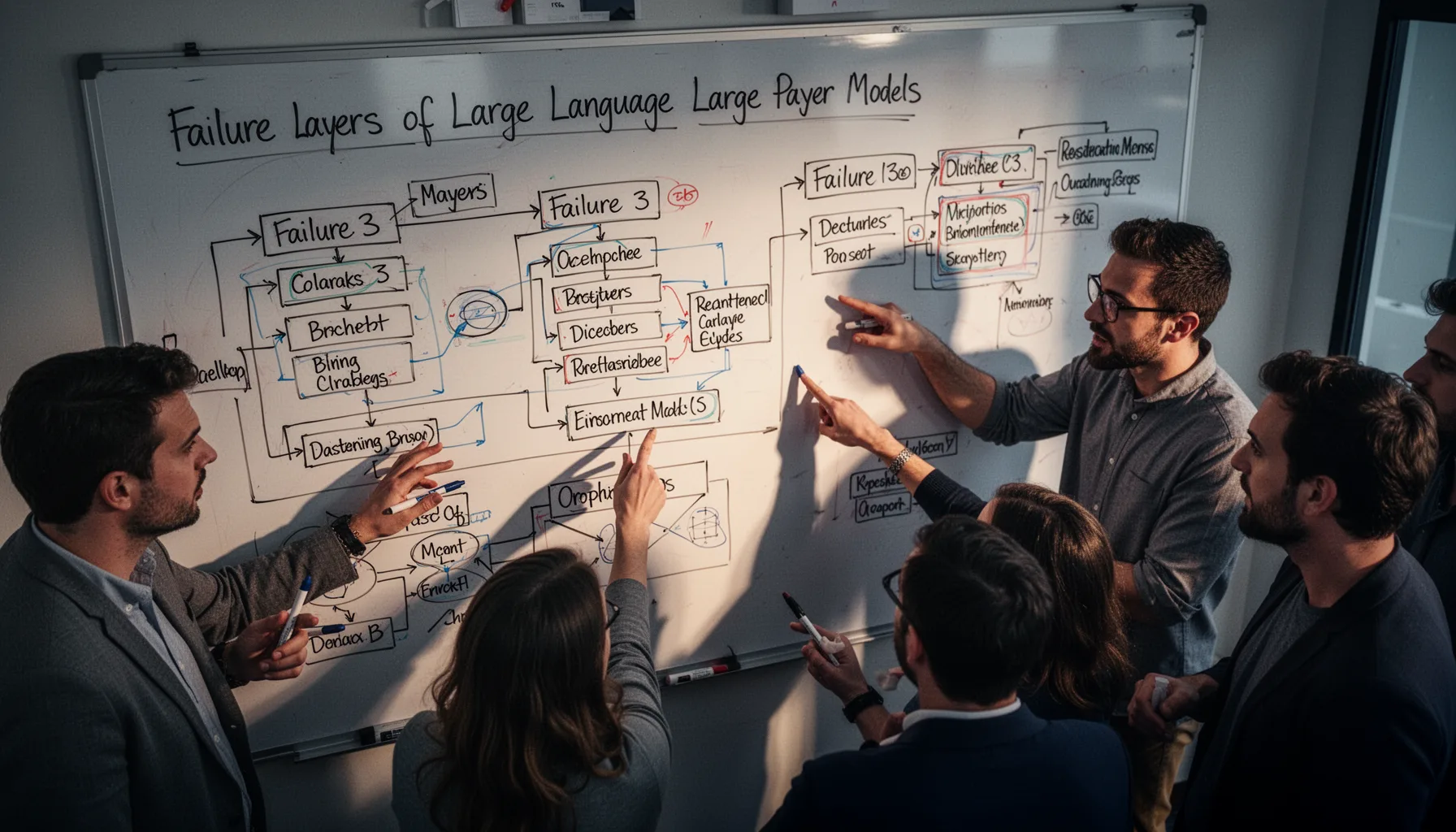
How to debug large language models properly starts with mapping the issue to a layer: data, retrieval, tool use, reasoning, memory, or serving. Simple enough. Data-layer bugs include mislabeled examples, weak fine-tuning mixtures, or policy drift between training data and current product rules. Retrieval bugs appear when the right document never gets fetched, gets ranked too low, or arrives with chunking so broken that key context disappears; anyone who's worked with RAG systems on Pinecone, Weaviate, or Elasticsearch has seen that mess. Tool-use bugs have their own signature. Malformed API calls. Wrong function selection. Bad parameter binding. Thin retry logic around rate limits. Then you get reasoning and planning failures, where the model has the facts but still runs the steps in the wrong order. Memory bugs show up in agent products that store user context across turns, often in Redis, Postgres, or vector databases, and then pull back stale preferences. And serving bugs can masquerade as intelligence problems when truncated context windows, caching mistakes, or model-routing mishaps make a healthy model look clueless. That's a bigger shift than it sounds.
Which llm observability and evaluation signals actually catch root causes?

LLM observability and evaluation work best when teams pull offline tests, online metrics, traces, and user complaints into a single diagnostic view. A dashboard alone won't save you. Prompt logs point to what the model saw, but traces make clear whether the retriever, ranker, planner, and tool executor actually did what the orchestrator expected. Structured evals catch regressions before launch, especially when teams score factuality, grounding, citation quality, tool accuracy, and refusal correctness separately instead of crushing everything into one fuzzy quality number. That's the difference. LangSmith, Arize Phoenix, Weights & Biases Weave, and OpenTelemetry-based stacks keep gaining traction because they expose intermediate steps, not just final outputs. That matters when the pager goes off. In our view, the most consequential signal isn't the final answer grade. It's the gap between what the system should've known and what each component actually handed downstream. Once those handoffs are visible, root causes stop looking mystical. Here's the thing.
What are the common llm failure modes debugging teams should classify first?

Common llm failure modes debugging teams should classify first include hallucination, grounding failure, instruction conflict, tool misuse, memory corruption, latency-induced degradation, and safety overreach. Not quite one bucket. Hallucination isn't a single thing, and treating it that way burns time. A model might hallucinate because retrieval returned nothing, because the prompt asked for unsupported synthesis, because temperature amplified weak evidence, or because a tool call failed and the assistant improvised. Safety overreach gets misread too; a support bot may refuse to summarize a harmless HR policy because a policy classifier flags keywords without reading context. We've seen the same pattern in enterprise rollouts of Microsoft Copilot and custom customer-support bots built on GPT-4-class models. So the operator's move is simple, though not easy: write the symptom in user language, translate it into a failure class, then test only the hypotheses that match that class before changing anything else. Worth watching.
Step-by-Step Guide
- 1
Classify the symptom precisely
Write the failure in plain language first, then tag it by layer and failure class. 'Wrong answer' is too vague to debug. 'Cited outdated pricing because retrieval returned a superseded policy document' is actionable.
- 2
Freeze the failing example
Capture the exact prompt, context, retrieved passages, tool results, model version, and latency profile before the issue changes. Production systems drift fast. If you can't replay the incident, you probably can't isolate it.
- 3
Inspect intermediate artifacts
Review retrieval candidates, ranking scores, function calls, chain traces, and safety filter outputs instead of only reading the final response. This is where most root causes hide. Good traces often cut hours from incident response.
- 4
Build a hypothesis tree
List the smallest set of plausible causes by layer, then order them by likelihood and blast radius. And avoid mixing layers too early. A retrieval failure and a reasoning failure need different tests and different fixes.
- 5
Run targeted counterfactual tests
Swap one variable at a time: better documents, fixed tool outputs, a shorter prompt, a different model, or a deterministic temperature. The goal isn't broad experimentation. It's to find the first intervention that flips the failure reliably.
- 6
Choose the cheapest durable fix
After you identify the cause, decide whether prompt changes, retrieval redesign, guardrails, fine-tuning, or infrastructure changes best solve it. Fine-tuning is often the wrong first answer. Durable fixes usually improve instrumentation and system design along with model behavior.
Key Statistics
Frequently Asked Questions
Key Takeaways
- ✓Prompt tweaks alone won't fix retrieval, tool, memory, or serving bugs.
- ✓Strong LLM debugging starts with failure classification before any changes.
- ✓Logs, traces, evals, and user reports each catch different defect types.
- ✓Use hypothesis trees to decide whether to fine-tune or redesign.
- ✓A repeatable playbook beats heroic debugging during production incidents.