
⚡ Quick Answer
OpenAI Codex integration in ChatGPT signals a shift from conversational assistance toward action-taking software that can execute coding tasks inside a workflow loop. If that direction holds, ChatGPT stops being just a chat box and starts looking like an execution platform for developers, operators, and business teams.
OpenAI Codex integration in ChatGPT may look like a routine product update at first glance. It isn't. What we're seeing is a turn away from chat as the final stop and toward chat as the entry point for execution, where the model doesn't just suggest code but works through a loop with tools, context, and feedback. That's a far bigger wager than adding one more coding feature. And it changes how people judge accuracy, speed, trust, and value.
Why OpenAI Codex integration in ChatGPT is more than a coding feature

OpenAI Codex integration in ChatGPT matters because it hints at a platform redesign built around execution, not just sharper code autocomplete. Traditional chat products aim for strong answers and smooth back-and-forth. Execution-first systems aim for planning, tool use, retries, state handling, and outcomes you can actually verify. That's a different product philosophy. GitHub Copilot made AI coding assistance mainstream inside the IDE, but ChatGPT reaches across browser tabs, files, team workflows, and multimodal inputs, giving OpenAI a shot at tying ideation and action together in one place. Worth noting. A 2024 Microsoft Work Trend Index found that employees increasingly want AI to reduce task load, not merely summarize information. That appetite lines up neatly with execution-oriented assistants. We'd argue this is where the "assistant" label starts to fray. When users ask ChatGPT to inspect a repo, write tests, run fixes, and explain the diff, they aren't chatting anymore. They're supervising software behavior.
How ChatGPT Codex execution features could change developer workflows

ChatGPT Codex execution features could pull developers away from simple prompt-response habits and toward supervised delegation of coding work. In a practical setup, a developer working on a Next.js service might ask ChatGPT to trace a failing API route, inspect the relevant files, patch the validation logic, generate tests, and summarize what changed before opening a pull request. That's a loop. The payoff isn't only faster text generation. It's fewer jumps between the ticket, terminal, docs, and editor. GitHub reports that Copilot users finish certain coding tasks faster in controlled studies, but execution-capable workflows raise the ceiling because the system can chain multiple steps instead of stopping after one suggestion. That's a bigger shift than it sounds. Still, trust gets trickier. Once the model can act across files and tools, teams need logs, diff visibility, permission controls, and rollback paths. That feels a lot closer to CI/CD governance than chatbot safety settings.
How OpenAI shifting from chat to execution affects ops and business teams

OpenAI shifting from chat to execution will probably matter just as much for ops and business users as it does for software engineers. Think about a revenue operations manager asking ChatGPT to reconcile CRM fields, draft a new ruleset, create a report, and flag anomalies for review, or an SRE asking it to triage alerts against known runbooks before escalation. Not exotic anymore. Google, Microsoft, and Anthropic have all pushed deeper into tool use and workflow depth in their AI products, which means the race is shifting toward who can manage execution safely across enterprise systems. And that changes pricing logic. Users may stop paying for better answers and start paying for completed tasks, controlled autonomy, and integrations that shrink a workflow from 20 clicks to two approvals. We'd say that's not trivial.
OpenAI Codex vs GitHub Copilot and other execution-first rivals
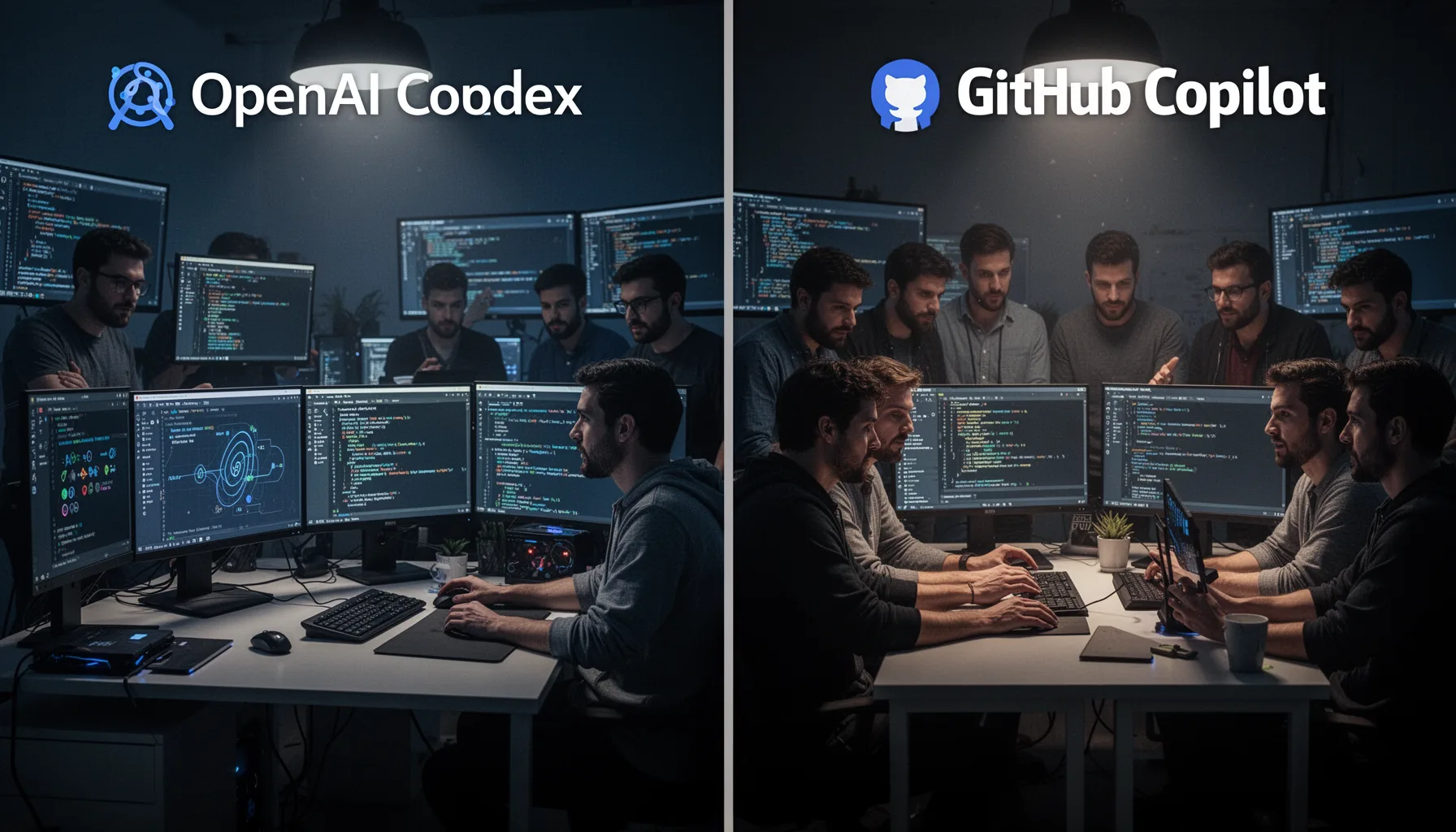
OpenAI Codex vs GitHub Copilot is no longer just a debate over code quality. It's turning into a fight over runtime, context, and workflow ownership. GitHub Copilot keeps the home-field edge inside developer environments, especially with enterprise policy controls and repository-native usage, while Anthropic's Claude has earned a strong name for long-context coding and reasoning tasks. Google, meanwhile, keeps tucking Gemini deeper into Workspace and developer tooling, aiming for the same assistant-to-operator move. Positioning matters here. If OpenAI can make ChatGPT the place where users plan, execute, inspect, and refine work across coding and non-coding tasks, it competes less like a single-feature app and more like a horizontal execution layer. That's ambitious. Maybe necessary, too, because standalone chat is getting commoditized fast.
Key Statistics
Frequently Asked Questions
Key Takeaways
- ✓Codex inside ChatGPT matters because execution changes trust, pricing, and product design.
- ✓The bigger shift is from prompting for advice to delegating real work loops.
- ✓Developers gain speed, but auditability and rollback become much more consequential.
- ✓This move puts pressure on Anthropic, Google, and GitHub Copilot alike.
- ✓Execution-first UX will probably reshape how non-technical teams rely on ChatGPT too.