
⚡ Quick Answer
A self healing PRD system Claude Code workflow uses an AI agent to inspect a codebase, ask missing questions, draft a PRD, and then revise that document as the code and requirements change. The key idea is not one-shot generation; it’s a feedback loop that detects gaps, repairs them, and keeps the plan aligned with reality.
At first glance, a self healing PRD system Claude Code can sound like gimmicky marketing. It isn't. For teams stuck with half-finished product docs and engineering plans that went stale months ago, the pitch is pretty grounded: let an AI agent read the code, question the gaps, draft the PRD, then revisit that document when the product shifts. That's a better loop than polishing a spec once and shelving it. And it works best when you treat the PRD as a living artifact, not a ceremonial PDF. Worth noting.
What is a self healing PRD system Claude Code workflow?

A self healing PRD system Claude Code workflow creates a planning loop where Claude Code generates, checks, and refreshes product requirements from prompts and the real codebase. Not quite a writing tool. Instead of asking an AI to produce a generic PRD from a fuzzy idea, you give it repository access, project context, constraints, and a structured template that spells out what a solid requirement document needs. That's the difference. Claude Code can inspect source files, infer architecture choices, summarize current behavior, and flag requirements that are missing, contradictory, or stale. So in practice, the agent feels less like a copywriter and more like a junior product analyst with terminal access. We'd argue that's the bigger shift here, not the document alone. Think about a team inheriting an aging SaaS app, say an old HubSpot-style internal tool, with weak documentation: the agent can reverse-engineer routes, services, and feature dependencies into a usable PRD baseline.
How does Claude Code generate a PRD from a codebase?
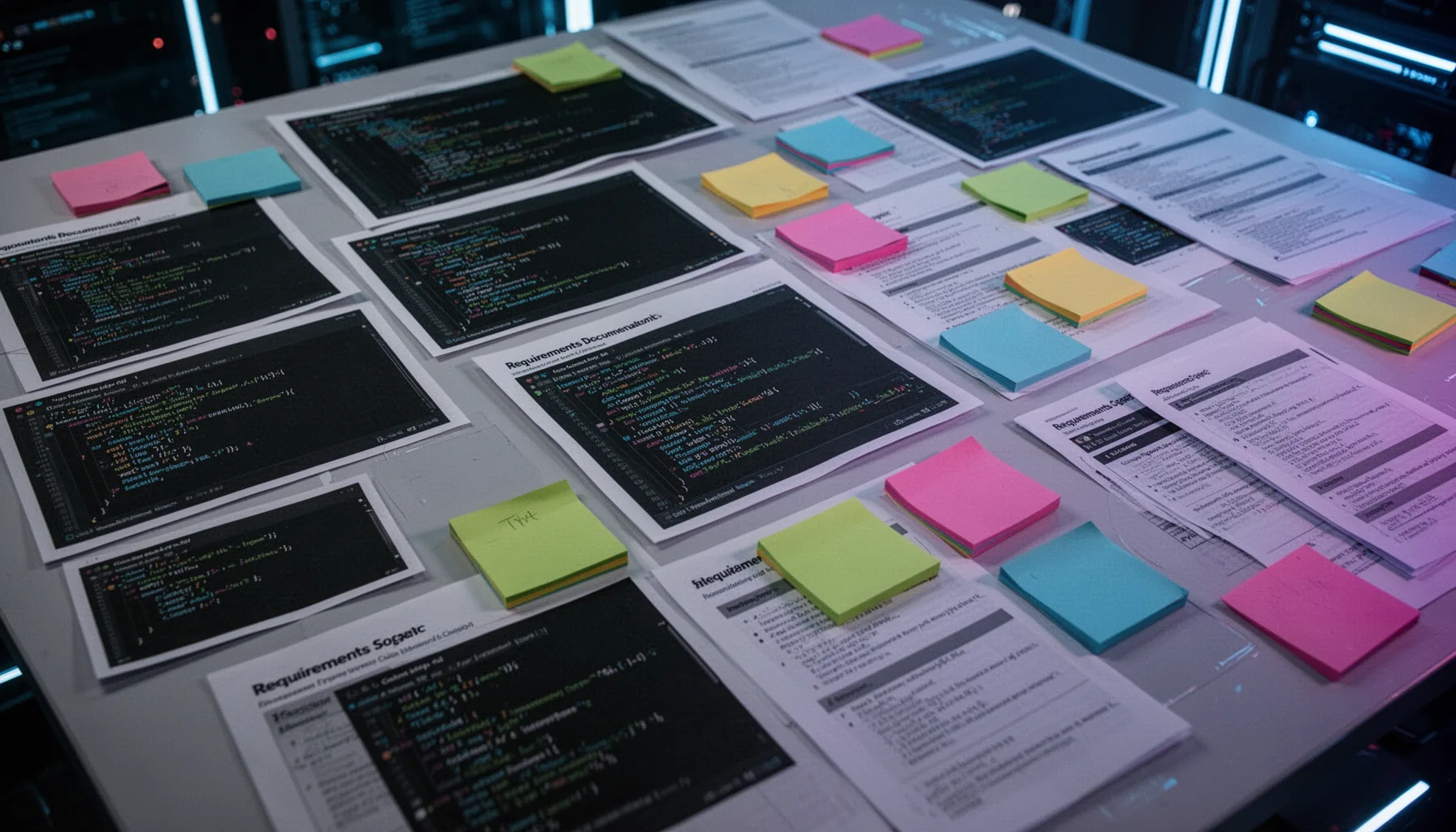
Claude Code PRD generator setups usually combine repository inspection, prompt scaffolding, and iterative questioning. Simple enough. First, the agent scans folders, reads README files, traces key modules, and identifies product-facing behavior from API endpoints, UI components, tests, and config files. Then it drafts a structured PRD with sections for goals, users, requirements, constraints, edge cases, and success metrics. That's the easy part. But the useful part comes next: the system asks clarifying questions when the code leaves room for doubt, like whether a rate limit reflects a business rule or just a temporary implementation detail. For example, if a Next.js app includes billing components tied to Stripe webhooks, the agent can infer subscription flows and then ask whether proration, refunds, and failed-payment retries belong in scope. That question loop is what turns generic AI writing into real product planning. That's a bigger shift than it sounds.
Why does a self healing PRD system Claude Code approach work better than static docs?
A self healing PRD system Claude Code approach beats static docs because software changes faster than most teams refresh requirements. It happens constantly. Product managers ship a new flow, engineers add feature flags, designers rework onboarding, and suddenly the PRD describes a product that no longer exists. So a self-healing system can rerun against the repo, compare new behavior with earlier assumptions, and mark sections that need revision or human sign-off. Think of it as drift detection for planning. Teams already rely on similar discipline in infrastructure through policy-as-code and CI checks; bringing that habit to product documentation feels overdue. We'd put it plainly: stale PRDs don't just annoy people, they cause delivery mistakes, because teams keep arguing from documents that stopped being true three sprints ago. Jira boards won't fix that by themselves. Worth noting.
What are the biggest risks in AI PRD generation from codebase analysis?
AI PRD generation from codebase analysis can go sideways fast if teams confuse inferred behavior with intended behavior. That's a real hazard. Code often contains dead paths, experimental flags, legacy workarounds, and unfinished features, so an agent may describe what sits in the repository rather than what the product should be. Claude Code can also sound more certain than it should, especially when naming user journeys or business logic that the code only partly reveals. And security matters too, because broad code access may expose secrets, internal architecture, or customer-specific logic when safeguards are weak. Here's the thing. The answer isn't to throw out the approach; it's to impose validation rules, human checkpoints, and cleaner repository hygiene. If your codebase is messy, the PRD generator will echo that mess with polished prose. We've seen the same pattern in old Salesforce integrations. Worth watching.
Step-by-Step Guide
- 1
Define the PRD schema
Start by deciding what every PRD must contain before Claude Code writes a single sentence. Include sections such as problem statement, user types, workflows, constraints, non-functional requirements, dependencies, and success metrics. If you skip this structure, the system will generate fluent but uneven documents.
- 2
Connect the codebase safely
Give Claude Code scoped access to the repository, not blanket access to every internal system. Exclude secrets, rotate credentials, and provide a clear map of which folders matter most for product behavior. Safe context beats unlimited context.
- 3
Prompt for inference and uncertainty
Tell the agent to separate observed behavior from inferred intent in every draft. Ask it to label unknowns, contradictions, and assumptions clearly. That one instruction reduces a lot of fake confidence.
- 4
Force clarifying questions
Require the system to ask follow-up questions before finalizing the PRD whenever it detects ambiguity. Good examples include pricing logic, permission models, analytics events, and error handling. This is where the workflow becomes self-correcting instead of merely generative.
- 5
Add validation checkpoints
Run the generated PRD through checks for missing sections, unsupported claims, stale references, and mismatches with tests or API contracts. You can do this with another Claude Code pass or a scripted rules engine. Validation is what makes the system self-healing.
- 6
Re-run on every major change
Trigger the workflow after meaningful product or code updates, such as new features, architecture shifts, or revised business rules. Compare the new PRD against the prior version and surface diffs for human review. That keeps the document alive rather than archival.
Key Statistics
Frequently Asked Questions
Key Takeaways
- ✓A self-healing PRD updates itself when code and requirements drift apart.
- ✓Claude Code works well because it can inspect files and reason across context.
- ✓The best setup mixes codebase analysis, structured prompts, and review checkpoints.
- ✓You need validation rules, not just generation, to avoid polished nonsense.
- ✓This workflow saves time most when projects change fast and specs lag behind.