
⚡ Quick Answer
Why people resist using AI often comes down to trust, status, habit, and fear of losing human judgment. Most resistance to AI for daily tasks is less about the tool itself and more about what people think using it says about competence, ethics, and effort.
Why people push back on AI says more than most slick demos let on. It isn't just about software. It's about identity, trust, and whether a machine is edging into ground people still want to label fully human. And when someone says, "you used Claude for that?" they usually aren't reacting to the output alone. They're reacting to what AI seems to stand for. We've watched this play out in comment threads, offices, and classrooms. Someone relies on AI to organize a consumer dispute, draft a complaint, or condense research, and another person reads that as laziness or dishonesty. Not quite. Using AI responsibly for research and work isn't the same as handing your brain to a bot, and treating every case like cheating misses the deeper friction. We'd argue that's the real story.
Why people resist using AI for daily tasks even when it saves time

People resist AI for daily tasks because they often equate effort with legitimacy. That's the core problem. In plenty of cultures, especially at work and in school, a result still feels valid only if it came with visible struggle, late hours, or manual grind. So when AI strips out friction, some people feel relief. Others think the whole thing got cheapened. And this pattern isn't new. Calculators, spellcheck, and Wikipedia set off their own moral panic years ago, and Pew Research Center has repeatedly pointed to a familiar trend: comfort with digital tools rises once social rules catch up with usefulness. That's worth watching. The difference now is that AI doesn't just automate arithmetic or grammar. It reaches into writing, judgment, and analysis. That's closer to the self. Take customer advocacy. If someone uses Claude or ChatGPT to structure a complaint against a telecom provider, critics often assume they pasted in a machine-made argument and called it done. But the reality is often the reverse. The person already had the facts, the timeline, and the goal, and the model simply helped shape that material into a usable draft. We'd argue the real irritation, for some people, is that AI makes competence look easier than they'd prefer. So resistance to AI for daily tasks feels emotional, not merely practical. It threatens an old social script. Work should look hard. Research should look solitary. Help should come from a tutor, manager, or friend, not a model trained on internet-scale text. Simple enough. That belief still carries weight, even when the final output is stronger.
Why some people hate AI tools in education and work
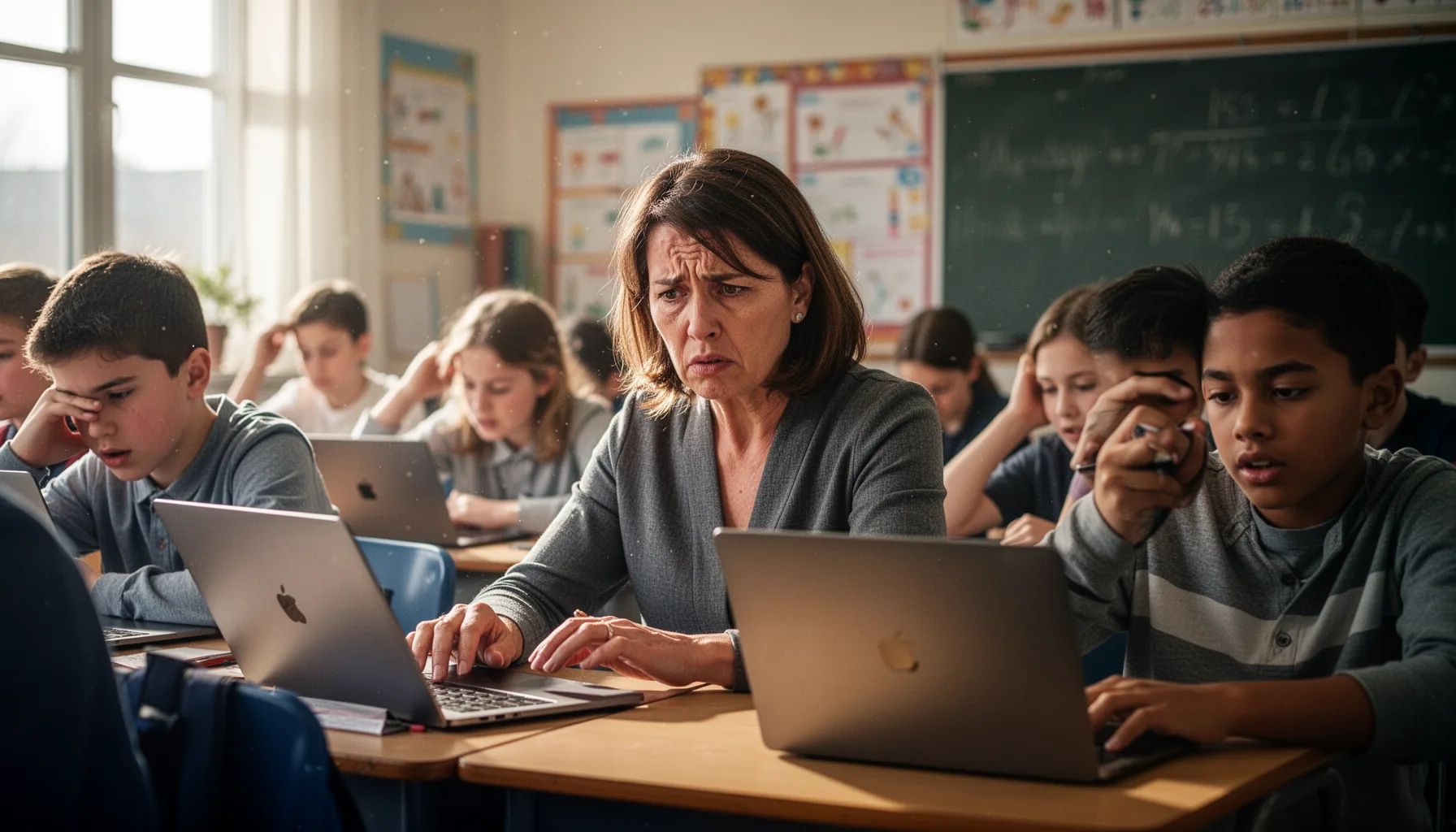
Some people dislike AI tools because they blur the boundary between assistance and authorship. That boundary matters. In schools and offices, people want clear signals about who did the thinking, who earned the credit, and whether the process stayed fair. AI muddies all three. UNESCO's 2023 guidance on generative AI in education made this plain: institutions need rules that separate support, co-creation, and substitution. Fair enough. But until those rules become common knowledge, people fill the gap with suspicion. They assume any AI use means cheating, shortcutting, or ducking real learning. Because of that, AI stigma in education and work often catches careful users too. A student might rely on an AI tool to explain a dense economics paper in plain English before reading the original. An analyst might work with Microsoft Copilot to summarize a chaotic internal thread before writing an actual recommendation. Neither move removes human judgment. Yet both can draw criticism because AI still carries a whiff of hidden help. Here's the thing. The stigma sticks because many institutions reward polished output more than transparent process. If a teacher, editor, or manager can't see how the work got done, they may jump to the worst conclusion. That's a governance issue, not just a user issue. And until workplaces define acceptable AI use with real precision, people will keep talking past one another. We'd say that's a bigger shift than it sounds.
Is it bad to use AI for personal tasks, research, and admin

No, it isn't bad to use AI for personal tasks if you still own the judgment. That's the line that counts. AI becomes a problem when people treat it as unquestioned authority, not when they rely on it as a drafting partner, explainer, or organizer. The better question is whether the task calls for verification, expertise, or personal accountability. If you're asking an AI to draft a complaint letter, compare insurance language, summarize return policies, or outline a dispute timeline, the risk stays manageable if you check facts and edit with care. If you're relying on AI for legal, medical, or financial advice without review, the risk rises fast. Not subtle. This distinction matters because using AI responsibly for research and work comes down to method. Good users cross-check citations, verify dates, inspect claims, and rewrite in their own voice. Anthropic, OpenAI, and Google all warn about hallucinations for a reason. Large language models produce plausible text. Not guaranteed truth. Take a familiar case. Someone uses Claude to help draft a complaint to an airline after a canceled flight and lost reimbursement. If the passenger supplies receipts, policy excerpts, and dates, the AI can turn a pile of frustration into a coherent letter. That's not intellectual failure. It's administrative efficiency with oversight. And frankly, people already reach for templates, forums, and scripts written by strangers online. AI just makes that assistance interactive. The panic sounds sharper because the helper is a machine. Worth noting.
How AI stigma in education and work got so strong

AI stigma in education and work got strong because the tools arrived before the norms did. That's why the reactions feel so uneven. One manager praises productivity gains from Copilot, while another treats any AI-assisted draft as suspect. Same tool category. Opposite social meaning. History explains some of it. New knowledge tools often get framed first as threats to skill. Search engines were accused of eroding memory. Wikipedia got dismissed as unserious. Grammarly was mocked as a crutch. Yet once those tools became ordinary, resistance softened because people built rules around them. The current AI cycle feels harsher because generative models imitate reasoning and voice, not just retrieval. Still, media coverage has shaped the mood too. Stories about fabricated citations, deepfakes, cheating scandals, and reckless deployment have trained public instinct. According to the Reuters Institute's 2024 digital news research, public trust in algorithmic systems remains uneven, especially when transparency is thin. So when users say they don't trust AI, they aren't inventing that anxiety from thin air. But we think stigma also comes from status protection. If AI can give a less experienced person a real leg up on a decent first draft, a summary of a difficult article, or a business case outline, expertise becomes less visible. Experts still matter. Maybe more than ever. But their edge shifts toward evaluation, taste, and correction. Some people welcome that. Others really don't. That's consequential.
Using AI responsibly for research and work without outsourcing your brain

Using AI responsibly for research and work means treating it as an assistant, not a substitute. That's the practical answer. If you keep control of the facts, the reasoning, and the final call, AI can save time without hollowing out the thinking. Start with bounded tasks. Ask AI to summarize source material, build a timeline, suggest counterarguments, rewrite for clarity, or surface questions you may have missed. Then verify every consequential claim against primary sources such as court filings, company policies, academic papers, or standards documents. The National Institute of Standards and Technology's AI Risk Management Framework points in the same direction: assess context, monitor output, and keep humans accountable. And be honest about where AI falls down. It can flatten complexity, invent references, and speak with fake confidence. We've all seen it. So the safest users put some friction back into the workflow by checking links, comparing outputs, and rewriting crucial sections themselves. Slower, yes. Smarter too. A concrete example makes this clearer. A freelancer researching a contract dispute could use Claude to organize notes, spot missing evidence, and draft a calm first letter. But they should still read the contract, confirm deadlines, and strip out any claims they can't prove. That's the real standard. So why do some people react so strongly to AI in everyday tasks and research? Because they fear a loss of authenticity, fairness, and human agency. But the best answer isn't denial or blind enthusiasm. It's visible, disciplined use that makes clear assistance and independent thinking can coexist. We'd argue that's the part institutions need to catch up with.
Key Statistics
Frequently Asked Questions
Key Takeaways
- ✓People often treat AI use as a character question, not merely a workflow choice
- ✓Resistance to AI for daily tasks usually mixes ethics, fear, status concerns, and plain habit
- ✓Using AI responsibly for research and work still requires judgment, verification, and restraint
- ✓AI stigma in education and work grows when people confuse assistance with cheating
- ✓The best response isn't blind adoption or panic, but clearer norms, visible process, and better practice