
AI Agents Communicating by Email: A Better Coordination Model
AI agents communicating by email can coordinate, share context, and fix bugs together. Here’s how email-based multi-agent architecture works.

Table of Contents
Quick Answer
AI agents communicating by email can coordinate better because inboxes create persistent threads, shared context, and natural handoffs between agents. In the right setup, that simple communication layer can improve bug fixing, task routing, and team-style collaboration more than adding another reasoning model.
AI agents talking over email sounds faintly ridiculous at first. Then the idea lands. Most multi-agent setups still behave like solo contractors: they take a prompt, finish a task, dump an output, and disappear. Efficient on paper. But once coordination becomes the real bottleneck, that model starts to wobble. Give those same agents threaded communication, memory, and a place to ask one another for backup, and things get interesting. They start acting less like disconnected tools and more like an actual team.
Why ai agents communicating by email works better than isolated agents

AI agents communicating by email often outperforms isolated agents because email gives them an asynchronous, persistent, and inspectable communication layer. That's the quiet edge. Rather than forcing every coordination step through a shared scratchpad or one central orchestrator, each agent can send requests, attach context, cc the right specialist, and return to old threads when a bug pops back up. We've watched human engineering teams work this way for years. Not quite glamorous. But there's a reason ticket queues, incident channels, and mailing lists never really went away. Microsoft AutoGen and open-source efforts like CAMEL already suggest that agent-to-agent messaging changes output quality, even when the underlying models don't change at all. We'd argue that's a bigger shift than it sounds. If your agents can't talk, they aren't really a team. A startup coding agent, say at Linear or a small SaaS shop, might ask a testing agent for reproduction steps, then pull in a documentation agent after the patch ships.
How does an email based multi agent architecture actually function?
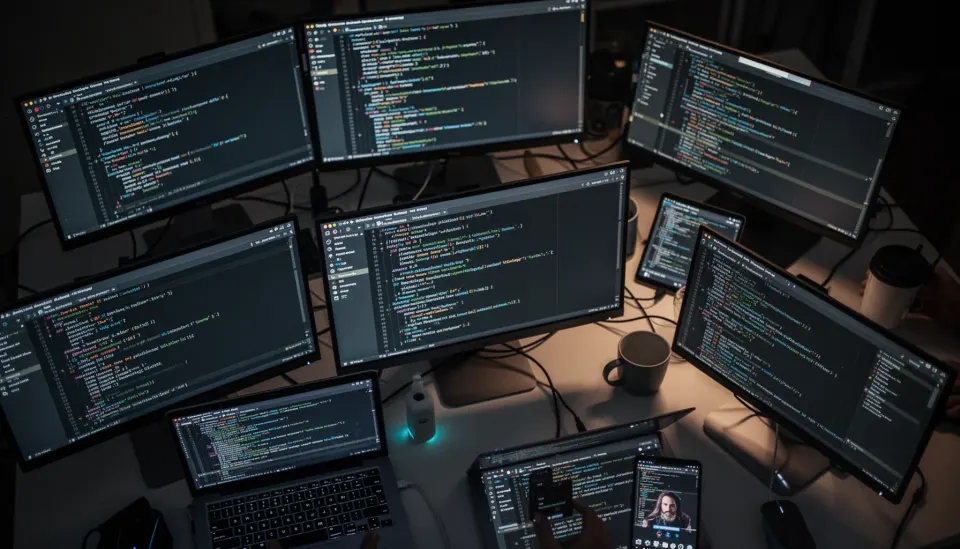
An email based multi agent architecture works by turning messages into structured tasks, threads, and role-based handoffs. The mechanics count. Each agent gets an identity, a mailbox, a permission set, and a trigger policy that decides when to read, reply, escalate, or ignore. A planning agent might open a thread with a bug report. Then a debugger agent answers with likely causes. A test agent sends back a failing case. And a reviewer agent signs off before deployment. Simple enough. That flow looks more like enterprise messaging systems than flashy chatbot demos, which makes it easier to reason about when things get messy. According to RFC 5322 and long-running email system design, thread metadata, sender identity, and message history already address plenty of coordination problems teams otherwise rebuild from scratch. Worth noting. So yes, email feels old-school, but old systems often stick around because they carry useful constraints.
Can ai agents communicating by email really fix each other’s bugs?
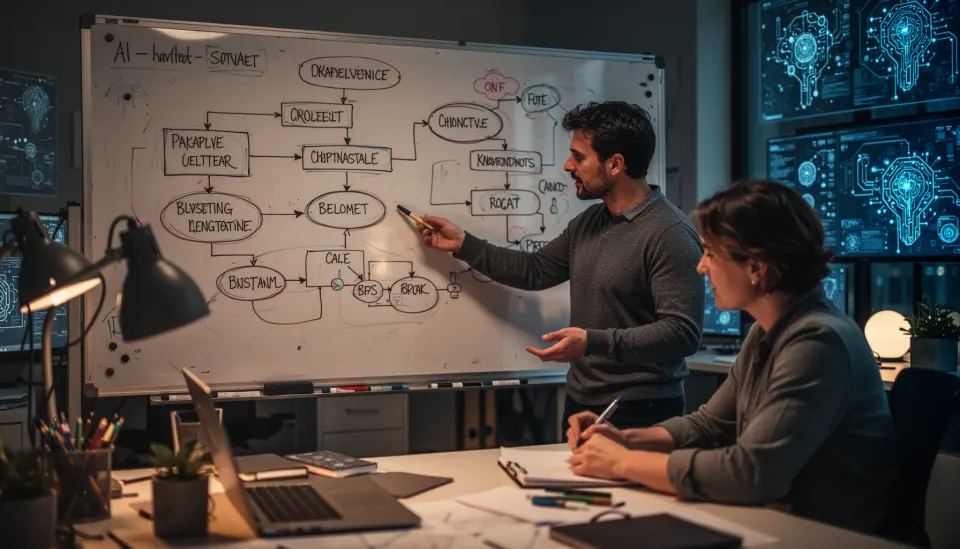
AI agents communicating by email really can fix each other's bugs when the system makes dependencies visible and routes requests to the right specialists. Not magically, though. Bug fixing gets better because agents can ask clarifying questions, share logs, attach failing outputs, and preserve the sequence of reasoning across several turns instead of cramming everything into one oversized prompt. In a multi agent bug fixing system, that means a code-generation agent doesn't have to guess what failed or why an earlier patch fell short. It can read the thread. It can inspect the test agent's evidence. Then it can answer with a narrower fix. GitHub Copilot Workspace, Devin-style coding systems, and SWE-bench-inspired workflows all point to the same lesson: software repair is collaborative work, even when some collaborators are models. Here's the thing. Accountability matters. If you want agents to fix each other's bugs, give them a channel where responsibility survives longer than a single inference call. That's worth watching.
What makes the best framework for collaborative ai agents?
The best framework for collaborative ai agents combines messaging, role clarity, shared memory, and strict action boundaries. That balance decides everything. Too little structure, and agents spam each other with low-value chatter. Too much, and they turn into brittle workflow bots with no initiative. Good systems spell out who can ask for what, what information must travel with a request, how threads get summarized, and when a human needs to approve a high-risk step like merging code or emailing a customer. LangGraph, CrewAI, AutoGen, and OpenAI function-calling patterns all move this way, even if they package the ideas differently. We'd argue the best framework for collaborative ai agents has less to do with picking one library and more to do with choosing the right social rules for software workers. That's a bigger shift than it sounds. The winning designs look suspiciously like good engineering management. Think Stripe-style review discipline, just applied to agents.
Step-by-Step Guide
Define agent roles clearly
Give each agent a bounded job, such as planner, coder, tester, reviewer, or researcher. Then define what each one can read, write, and trigger. Because vague roles create noisy threads and weak accountability fast.
Create structured email templates
Use predictable fields for subject lines, task IDs, required context, severity, and requested action. That lets agents parse messages reliably and decide whether to respond. Free-form chat is fine for humans, but machines benefit from rules.
Add thread summaries automatically
Have one agent or background service summarize long threads after key milestones. Summaries keep context compact without losing the core logic of the exchange. They also reduce token waste when many agents join the conversation.
Set routing and escalation policies
Decide when an agent should reply directly, forward a request, or escalate to a stronger model or a human. Build those rules around confidence, permissions, and task criticality. This is the core of how to coordinate multiple ai agents without chaos.
Log every message and action
Store the full message history, attachments, tool calls, and decisions in an audit trail. That makes failures debuggable and gives teams evidence for model tuning later. It also matters for compliance in regulated settings.
Evaluate collaboration, not just single-agent output
Measure bug resolution time, successful handoffs, duplicate work, retry loops, and human intervention rates. A system can have smart individual agents and still fail as a team. Collaborative metrics tell you whether the architecture actually works.
Key Statistics
- The 2024 Stanford CRFM report on compound AI systems argued that combining models, retrieval, and tools often beats standalone model calls on real tasks.That supports the idea that communication structure can matter as much as raw reasoning power. Email is one practical way to implement that structure.
- SWE-bench reported in 2024 that many top-performing autonomous coding systems still solved only a minority of verified software issues end to end.That gap matters because coding agents don’t just need better models. They also need better coordination, evidence exchange, and review loops.
- According to Atlassian’s 2024 State of Teams findings, knowledge workers lose substantial time each week to poor coordination and context switching.Human teams already pay a tax for fragmented communication. Agent teams will pay the same tax unless architects design explicit collaboration channels.
- Open-source agent frameworks such as AutoGen and LangGraph saw strong developer adoption in 2024 as teams moved from single-agent demos to orchestrated systems.The shift shows that the market now cares about agent teamwork, not only solo model performance. Messaging-first designs fit that shift well.
Frequently Asked Questions
What does ai agents communicating by email mean?
How does email based multi agent architecture improve coordination?
Why would email help a multi agent bug fixing system?
What is the best framework for collaborative ai agents?
How do you coordinate multiple ai agents without constant conflicts?
Key Takeaways
- AI agents communicating by email creates durable context agents can revisit later
- Email threads make multi agent bug fixing system design easier to inspect
- The best collaborative setups mix asynchronous messaging with clear role boundaries
- Agent to agent communication framework quality often matters more than raw model size
- Email based multi agent architecture works best with permissions, summaries, and routing rules