
LLM scheduling agent benchmark: DynaSchedBench explained
DynaSchedBench explained: why this LLM scheduling agent benchmark changes how teams judge dynamic job shop scheduling AI.

Table of Contents
Quick Answer
DynaSchedBench is an llm scheduling agent benchmark designed to evaluate dynamic flexible job shop scheduling under calibrated, changing conditions rather than static test sets alone. Its key contribution is exposing the observability paradox: more realistic dynamic benchmarks can reveal real performance, yet poorly calibrated generators can also hide what an agent actually learned.
A benchmark can feel realistic and still send you in the wrong direction. That's the awkward lesson behind DynaSchedBench, a paper on calibrated dynamic scheduling benchmarks for LLM-based scheduling agents in the Dynamic Flexible Job Shop Scheduling Problem. Static tests stay tidy, repeatable, and a bit too flattering. But dynamic tests get fuzzy when the scenario generator isn't calibrated. Then researchers and plant teams may applaud an agent without knowing what actually drove the result. Or what broke it.
What is the llm scheduling agent benchmark in DynaSchedBench?

DynaSchedBench is an llm scheduling agent benchmark meant to test scheduling agents in dynamic manufacturing settings, where jobs, machines, and disruptions keep shifting over time. The paper centers on the Dynamic Flexible Job Shop Scheduling Problem, a familiar operations-research setup where static assumptions fall apart the minute real factory events show up. That's a smart move. Traditional scheduling benchmarks often turn the world into a neat optimization puzzle, while real plants deal with late jobs, machine downtime, rush orders, and patchy visibility. DynaSchedBench tries to narrow that gap by generating dynamic cases that are calibrated instead of merely random. That's the core idea. We'd argue that matters because agent evaluation gets pushed closer to the place where a scheduler actually proves its value: the shop floor, not a perfectly staged spreadsheet. Think of a Bosch-style factory line. Worth noting.
Why static versus dynamic llm scheduling agent benchmark design changes conclusions
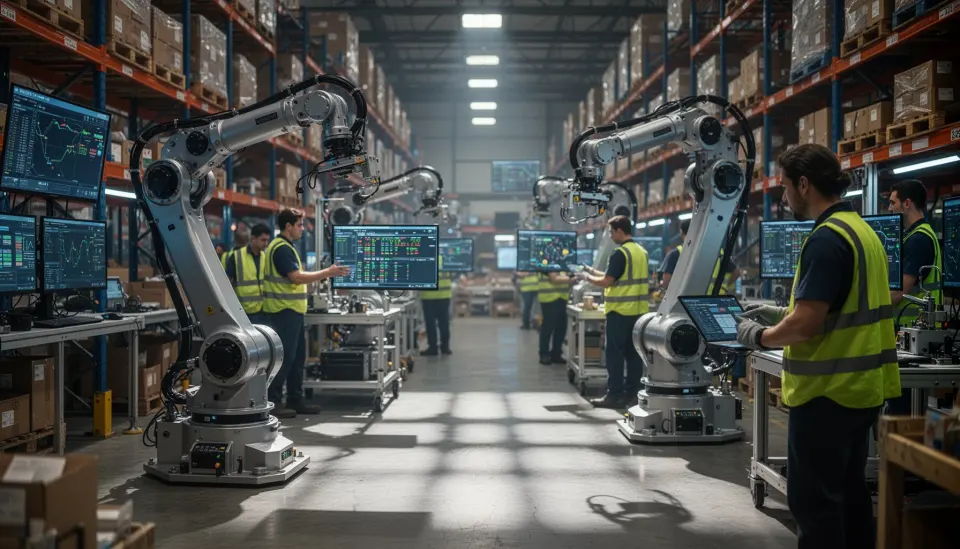
Static versus dynamic llm scheduling agent benchmark design can produce sharply different rankings, even when teams insist they're measuring the same scheduling quality. In a static benchmark, every job and machine state appears upfront, so an agent can optimize once and look brilliant. In a dynamic benchmark, new jobs show up, machine availability changes, and the policy has to respond again and again. That's a separate skill. Picture a simple case. On Monday morning, a static planner sees ten jobs and assigns them across three machines; by noon in a real plant, one machine is down, two urgent orders have arrived, and a material delay has wrecked the original plan. Not quite the same test. An agent that looked strong in the frozen setup may buckle in the live one. Our take is blunt: if vendors only present static scores, buyers should assume part of the story is missing. Reproducibility counts. But realism hits harder when missed schedules cut into revenue. That's a bigger shift than it sounds.
What is the observability paradox in scheduling agents?

The observability paradox in scheduling agents means you need dynamic, realistic environments to observe genuine agent behavior, yet those same environments can make it harder to tell what the agent actually learned. That's the paradox in plain English. If the generator behind a benchmark throws in too much uncontrolled variation, performance swings may point to benchmark noise rather than policy quality. If it adds too little, the test becomes easy to game and starts resembling the static setups researchers wanted to leave behind. DynaSchedBench addresses this by arguing for calibrated dynamic generation, which feels closer to how mature benchmarking works in other engineering domains. NIST and ISA-style measurement discipline seems relevant here, even though the paper lives in AI rather than industrial standards. Here's the thing. We'd go further: plenty of AI agent papers still mistake environmental drama for evaluation rigor. A benchmark should expose causal differences between methods, not hide them under flashy randomness. Think of NIST's habit of tightening measurement conditions. Worth watching.
How dynamic flexible job shop scheduling ai should be judged in real factories
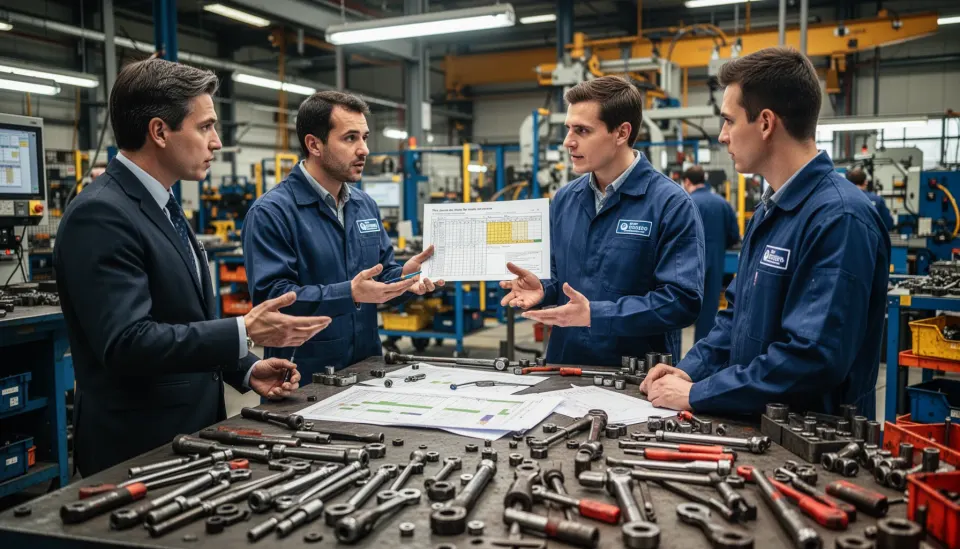
Dynamic flexible job shop scheduling ai should be judged by recovery quality, decision traceability, and performance under disruptions, not just by average makespan on a paper benchmark. Plant operators care about whether a system adapts when a CNC line stalls, whether it explains why a hot order jumped the queue, and whether planners can override it safely. Those are shop-floor questions. Siemens, SAP, and Flexciton have all built industrial planning products around the idea that execution visibility and constraint handling matter just as much as optimization quality. LLM-based agents add another wrinkle because they can propose actions in language, which is useful, but that fluency can hide weak policy logic. Simple enough. We think manufacturing teams should ask for four things from any evaluation: calibrated scenarios, classical OR baselines, ablation studies, and logs that show when the agent changed course. Without that, 'agentic scheduling' turns into a glossy label for brittle automation. Plants need fewer magic tricks and more decisions you can audit. That's not trivial.
What plant operators should ask from a calibrated dynamic scheduling benchmarks evaluation
Plant operators should ask whether calibrated dynamic scheduling benchmarks match their disruption patterns, observability limits, and service-level priorities before they trust a result. That's the procurement version of this paper. A benchmark may be dynamic and still miss the shop floor if its job arrivals, machine failures, or setup-time assumptions don't resemble the real operation. So buyers should ask for scenario calibration against historical plant data, not synthetic realism alone. They should also ask how the agent behaves under partial information, because many scheduling failures start with missing or delayed state updates from MES and ERP systems. Here's the thing: DynaSchedBench is useful partly because it gives non-research buyers better language for these questions. And once operators start asking about calibration, observability assumptions, and baselines against dispatching rules or mixed-integer methods, weak agent demos get exposed very quickly. Ask anyone who's sat through an SAP planning demo. Worth noting.
Step-by-Step Guide
Map your disruption profile
List the disruptions your operation actually faces, such as machine failures, rush orders, labor shortages, or material delays. Pull at least three months of shop-floor history from MES, ERP, or manual logs. That gives you a benchmark target grounded in your plant rather than a vendor's canned scenario.
Compare against classical baselines
Test any scheduling agent against dispatching rules, heuristic solvers, and, where feasible, mathematical optimization baselines. A new agent should beat something real, not just another experimental model. If a vendor can't provide that comparison, treat the evaluation as marketing, not evidence.
Inspect observability assumptions
Ask what the agent knows at each decision point and what information arrives late or imperfectly. Real plants rarely provide full, instant visibility across every machine and job. An agent that depends on ideal observability may fail the moment the data feed gets messy.
Calibrate scenario generation
Tune job arrivals, processing times, downtime frequencies, and setup constraints to match your own environment. Synthetic scenarios are useful only when they mirror operational reality closely enough. Calibration is what separates stress testing from fiction.
Audit decision traces
Review why the agent changed schedules, reprioritized jobs, or ignored a human override. Logs should show inputs, constraints, chosen actions, and expected tradeoffs. If the system can't explain itself in a way planners can verify, deployment will get ugly fast.
Run shadow-mode trials
Deploy the agent in observation mode before giving it control over live schedules. Compare its recommendations with planner choices and measure recovery after disruptions. That trial phase reveals whether benchmark gains survive contact with the actual plant.
Key Statistics
- Manufacturing contributes roughly 16% of global GDP, according to World Bank estimates used widely in industrial policy analysis.That scale explains why scheduling quality matters beyond academia. Small gains in throughput or recovery can produce outsized economic effects when applied across factories.
- McKinsey estimated in 2022 that AI-enabled operations improvements can lift manufacturing productivity by 10% to 20% in suitable workflows.Scheduling sits squarely inside that opportunity range. But those gains depend on methods that hold up under real disruptions, not only clean benchmark conditions.
- Classical job shop scheduling research has relied for decades on benchmark families such as Taillard and Lawrence instances, which remain highly reproducible but largely static.DynaSchedBench matters because it challenges the field's dependence on static evaluation. Reproducibility is valuable, yet static setups often miss the dynamics planners face on live shop floors.
- A 2024 Deloitte manufacturing outlook reported that labor constraints, supply volatility, and downtime resilience remained top concerns for plant leaders.Those pressures make dynamic scheduling far more than a theoretical problem. Benchmarks that ignore disruption and observability risk optimizing for the wrong battlefield.
Frequently Asked Questions
What is DynaSchedBench explained in simple terms?
Why is an llm scheduling agent benchmark different from a normal benchmark?
How does the observability paradox affect scheduling agents?
Who should care about calibrated dynamic scheduling benchmarks?
What is the best ai agent for job shop scheduling?
Key Takeaways
- DynaSchedBench suggests that static leaderboards can flatter weak scheduling agents.
- The observability paradox sounds abstract, but plant operators run into it constantly.
- Calibration matters just as much as realism in dynamic flexible job shop scheduling AI.
- A strong llm scheduling agent benchmark should test disruptions, not only ideal plans.
- Manufacturing teams should ask for traceability, baselines, and failure analysis from vendors.