
⚡ Quick Answer
An AI powered code migration guide helps teams use modern coding assistants and analysis tools to upgrade frameworks, move between languages, and refactor legacy systems with less manual effort. The best results come when teams pair AI suggestions with tests, architecture constraints, and staged rollouts rather than trusting raw code generation.
An AI powered code migration guide isn't some niche query for curious engineers anymore. It's in the budget now. Companies still rely on aging Java, .NET, Python, PHP, and JavaScript systems to keep the business running, while support windows shrink, security pressure rises, and cloud bills get less forgiving. And with GitHub Copilot, Amazon Q Developer, Google Gemini Code Assist, Sourcegraph Cody, JetBrains AI Assistant, and OpenRewrite-style automation all getting better, teams have more paths than they had even a year ago. That's a bigger shift than it sounds. The catch is pretty simple. AI can accelerate migration work. It can also multiply mistakes at machine speed.
What is an AI powered code migration guide and when should teams use one?

An AI powered code migration guide gives teams a structured playbook for modernizing codebases through upgrades, rewrites, and refactoring, with humans checking every stage. That's the right framing. Too many teams treat AI migration as code generation first and architecture second. Backwards. If the application actually matters, we'd argue this approach makes sense when framework end-of-life dates loom, maintenance costs keep climbing, cloud efficiency looks poor, or hardly anyone on staff knows the old stack well enough anymore. A clear example is a move from older Spring Boot or Java EE patterns to modern Spring, Quarkus, or Jakarta EE services with better observability and a cleaner fit for containers. According to the 2024 Stack Overflow Developer Survey, more than 76% of developers said they already rely on or plan to rely on AI tools in their development process, so the workflow no longer looks experimental. But adoption isn't discipline. Here's the thing. The guide matters because it keeps speed from outrunning judgment.
How AI assisted code migration 2026 actually works in practice

AI assisted code migration 2026 works best as a staged workflow that combines repository analysis, transformation planning, code edits, test generation, and human validation. The order isn't trivial. First, teams map the current system: dependencies, framework versions, custom integrations, test coverage, and the modules most likely to break. Then AI tools summarize patterns, flag obsolete APIs, and suggest replacement strategies, often faster than a manual review group can manage. For instance, Moderne and OpenRewrite have become known for large-scale Java transformations, while GitHub Copilot and Amazon Q Developer often do well on localized edits and test scaffolding. And when a migration changes architecture instead of just syntax, static analysis tools such as Sonar, Semgrep, or CodeQL matter just as much as the coding assistant. Worth noting. In our view, the winning workflow isn't one model doing everything. Not quite. It's AI plus analysis plus CI gates.
Which best AI tools for code migration fit framework upgrades and language transitions?

The best AI tools for code migration depend on the kind of move you're making, whether that's an in-language upgrade, a cross-language shift, or a cleanup pass before either one. There isn't a single winner. For Java framework upgrades, OpenRewrite and Moderne stand out because they can apply repeatable recipes across very large repositories, and that repeatability is gold in enterprise estates. For interactive code changes, GitHub Copilot, JetBrains AI Assistant, and Sourcegraph Cody often come off stronger because developers can steer edits in context and inspect diffs right in the IDE. If the migration jumps languages, say Java to Kotlin or Python 2-era utilities to modern Python 3 patterns, LLM-based assistants can draft conversions quickly, but they usually stumble on business semantics, hidden side effects, and concurrency assumptions. That's where teams need tighter guardrails. We'd argue language transition with AI refactoring works best when teams constrain the model with interface contracts, sample inputs, and expected outputs. AI handles pattern transfer well. Intent preservation is still uneven.
How using AI for framework upgrades reduces risk when done right

Using AI for framework upgrades cuts risk when teams rely on it to standardize repetitive changes, not to guess how the system behaves. That distinction makes the difference. Framework migrations usually involve hundreds or thousands of small edits: import rewrites, annotation changes, package moves, configuration updates, and deprecated API replacements. AI can accelerate that work a lot, especially when teams pair it with recipe-based automation and broad test suites. A concrete example is upgrading Spring applications with a mix of OpenRewrite recipes and IDE-based AI suggestions, then validating the result through integration tests and performance baselines. According to Google Cloud's 2024 DORA research, elite software teams still separate themselves through delivery stability, not speed alone, and migration projects should follow the same rule. Faster diffs don't matter much if rollback rates rise. Simple enough. So the real risk reduction comes from constrained automation, measurable validation, and disciplined rollout.
Why AI code refactoring and modernization still need architecture judgment
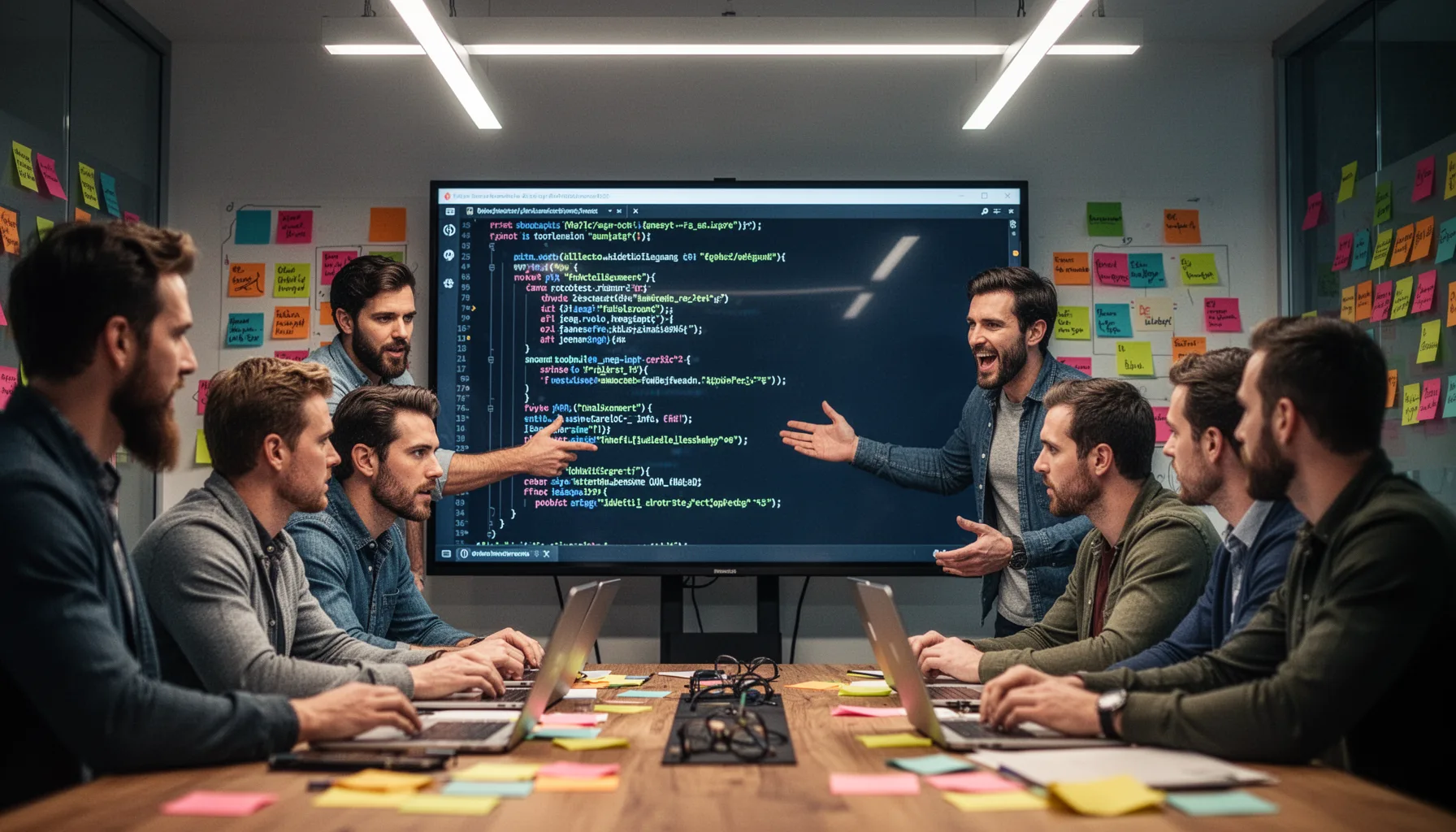
AI code refactoring and modernization still need architecture judgment because many code quality issues point to design choices, not just messy syntax. AI can propose cleaner functions, convert classes, improve tests, and remove dead code. Useful, yes. But it won't reliably decide whether a monolith should stay intact, split along domain boundaries, or move toward event-driven workflows without deep business context. We keep seeing teams ask LLMs to refactor a service while ignoring database coupling, brittle batch jobs, or reporting pipelines nobody ever documented. That's a mistake. Martin Fowler's long-running guidance on refactoring still holds: improve internal structure without changing external behavior, and do it incrementally. Worth noting. AI is a sharp assistant for that work, but not a stand-in for a staff engineer who understands failure modes, latency budgets, compliance constraints, and the actual depth of team skills.
Step-by-Step Guide
- 1
Audit the current codebase
Start by cataloging languages, frameworks, dependencies, test coverage, and runtime environments. Pull data from package manifests, build files, CI logs, and observability tools so you know what actually runs in production. AI outputs improve when you feed them a real inventory instead of a vague prompt.
- 2
Define the migration target
Set the destination before you generate a single patch. Decide whether you’re aiming for a framework upgrade, a language transition, a modular refactor, or a cloud-native packaging shift. And write down non-negotiables such as supported APIs, performance targets, security rules, and rollout deadlines.
- 3
Constrain the AI tooling
Choose tools based on the migration type and fence them in with repository context, coding standards, and architecture rules. Use recipe-based transformers for repetitive changes and conversational coding assistants for edge-case edits. This is where many teams either save the project or create a cleanup nightmare.
- 4
Generate changes in small batches
Break migration work into narrow slices such as one package, one service, or one dependency tier at a time. Smaller diffs are easier to review, test, and roll back. They also make it easier to compare AI suggestions against expected behavior without drowning in noise.
- 5
Validate with tests and benchmarks
Run unit, integration, contract, security, and performance tests after every batch. Add benchmark checks for latency, memory, and startup where runtime behavior matters, especially for Java and server-side workloads. If the AI-generated code passes style checks but misses throughput targets, it still failed.
- 6
Roll out with guardrails
Deploy migrated components gradually using feature flags, canaries, or parallel runs when possible. Monitor error rates, resource usage, and user-facing regressions closely during rollout. And keep a rollback path ready, because the smartest migration plan still meets reality eventually.
Key Statistics
Frequently Asked Questions
Key Takeaways
- ✓An AI powered code migration guide works best when tests and constraints come first.
- ✓AI assisted code migration 2026 is less about magic and more about disciplined review.
- ✓Framework upgrades are usually safer than full language rewrites, so sequence them carefully.
- ✓The best AI tools for code migration still need static analysis, CI, and human approval.
- ✓Refactoring with AI pays off most when teams migrate in small, measurable slices.