
⚡ Quick Answer
AI products embedded in existing apps became the clearest product pattern in late May 2026. Instead of asking users to adopt another destination app, new AI tools inserted memory, search, ingestion, and automation into software people already open all day.
The real Product Hunt story for the week of 2026-05-26 through 2026-06-02 wasn’t another flashy AI app. It was AI tucked inside software people already open all day. That matters. For two years, founders kept shipping AI as though every workflow needed its own tab, homepage, and daily ritual, and most users answered by ignoring one more standalone workspace. Not quite. Now the mood feels different. The launches worth watching didn’t demand fresh attention. They borrowed attention from products people already trust.
Why are AI products embedded in existing apps suddenly winning?
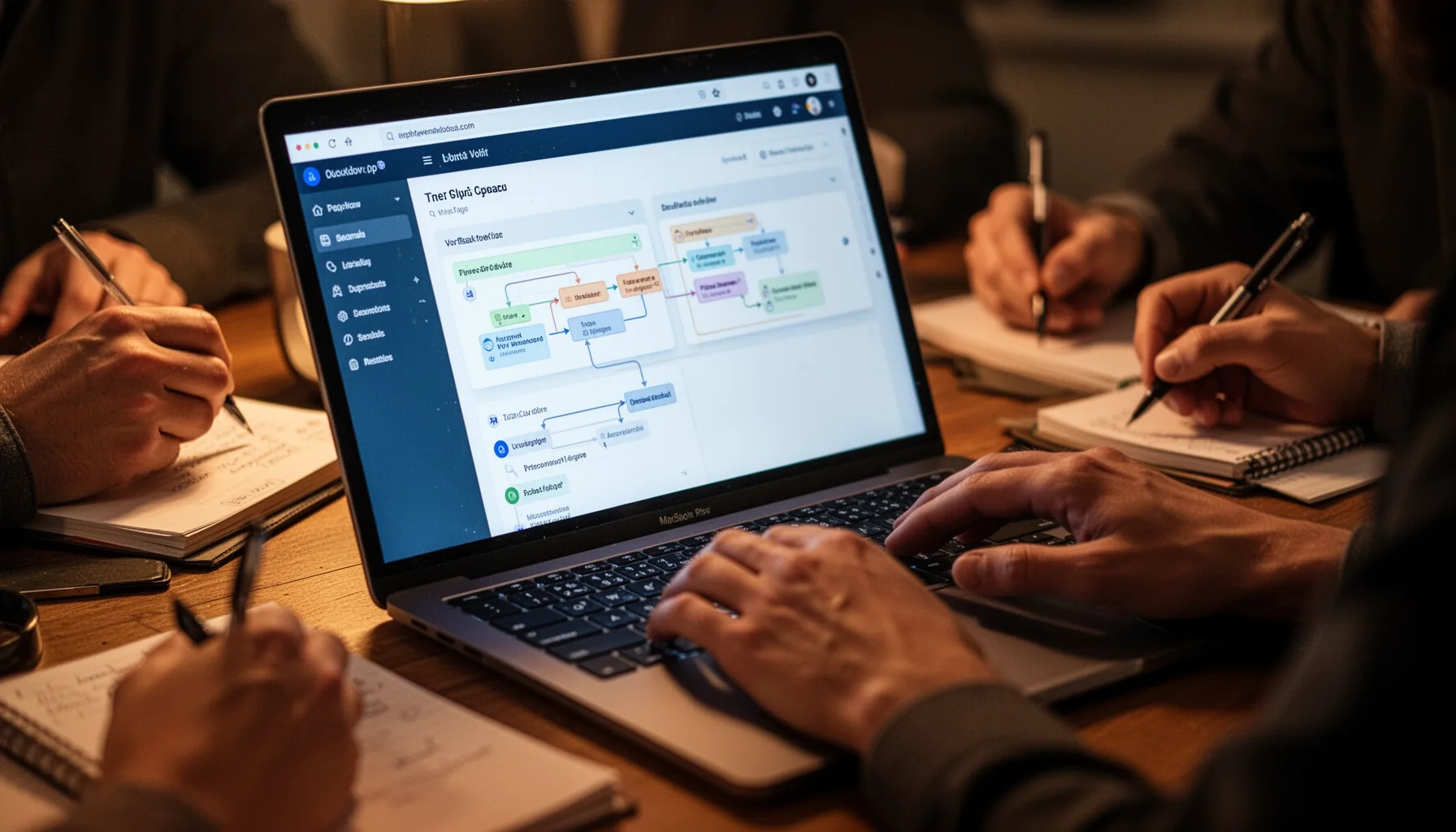
AI products embedded in existing apps are pulling ahead because distribution friction now costs more than model access. OpenAI, Anthropic, and Google made foundation models much easier to buy across 2024 and 2025, so the scarce asset in 2026 isn’t raw intelligence. It’s placement inside a live workflow. That's a bigger shift than it sounds. Product Hunt made that plain when launches like folk, Databox MCP, Dune, and Mina leaned into integration surfaces instead of brand-new interfaces. We’d argue this marks the first honest post-chatbot design phase. Users already spend their time in Slack, Teams, CRMs, browser tabs, BI dashboards, and email, so an embedded assistant starts with context that a new app has to plead for. Simple enough. According to Product Hunt’s own daily rankings that week, AI launches still owned attention, but the winners increasingly pitched themselves as layers, copilots, or connectors rather than full destinations. That points to a not trivial market signal.
How Dune, Mina, folk, and Databox MCP show AI stopped being its own app

AI stopped being its own app once founders realized the interface wasn’t the product anymore. Dune suggested a future where AI sits closer to the data workflows people already run, not in some generic assistant pane cut off from query context. Mina followed the same logic. It attached capability to an existing operating surface instead of demanding a net-new home screen. Worth noting. folk already has real footing as a CRM and relationship management tool, and it kept AI close to customer records and outreach flows, where the payoff shows up fast. And Databox MCP made the pattern even clearer by plugging model context and analytics into performance monitoring, a place operators already visit to make calls. Here's the thing. The phrase agent infrastructure unbundling can sound abstract, even a little bloodless, but this week made it visible. Memory sits in one layer. Search in another. Ingestion elsewhere. Orchestration on top. We think that’s the most consequential product lesson in the batch.
What agent infrastructure unbundling means for AI workflow tools inside existing software
Agent infrastructure unbundling means teams no longer need one monolithic AI suite to get useful automation. Instead, vendors are splitting memory, retrieval, connectors, observability, prompts, and execution into stack components that fit into current systems. Model Context Protocol entered mainstream discussion through Anthropic and then spread quickly across tool vendors, which gave apps a cleaner way to expose context to models. That's worth watching. Here’s the thing: once context becomes portable, the standalone AI app loses one of its few natural advantages. A sales team can keep Salesforce, Gmail, and Slack while adding an orchestration layer. A revenue team can stay in Databox while connecting retrieval and action tooling behind the scenes. And we’re seeing the same pattern in developer products, where GitHub Copilot, Cursor integrations, and IDE plugins pushed aside plenty of separate coding assistants. Embedded beats isolated when context comes along for free. Not quite free, sure, but close enough from the user’s perspective.
Are the best embedded AI tools 2026 products or just wrappers?
The best embedded AI tools 2026 products are not mere wrappers, because the real value sits in workflow fit, permissions, and timing. Critics often wave integrated tools away as thin veneers over OpenAI or Claude, but that misses where enterprise value actually comes from. A tool embedded in HubSpot, Notion, Microsoft Teams, or a BI dashboard can read the right records, respect user roles, and trigger actions at the right moment. A generic app often can’t. We'd argue that's the whole ballgame. Consider Microsoft’s Copilot strategy across Word, Excel, Outlook, and Teams: yes, the model matters, but the adoption engine comes from placement inside applications with billions of existing work sessions. That same playbook now shows up in startup form on Product Hunt. And because customer acquisition costs remain high in SaaS, piggybacking on existing behavior is often the sharper business move. Wrapper is a lazy label. Workflow-native is the better one. Simple enough.
What Product Hunt AI launches 2026 trends say about the next product cycle
Product Hunt AI launches 2026 trends suggest the next cycle belongs to infrastructure that hides itself well. Founders spent the first generative AI wave proving that language models could talk. Now they need to prove AI can disappear into work without creating process sprawl. That's the real test. The cycle many builders describe as unbundling into memory, search, ingestion, and orchestration lines up with what enterprise buyers now ask for in demos. They don’t want another destination. They want AI workflow tools inside existing software with auditability, identity controls, and low switching cost. And that’s why MCP-flavored products, contextual copilots, and app-native assistants keep gaining attention, while generic ask-me-anything products already feel stale. If this pattern holds, the next winning AI company may look less like a new app and more like a missing layer inside software people already pay for. Worth noting.
Key Statistics
Frequently Asked Questions
Key Takeaways
- ✓The smartest new AI launches now meet users inside tools they already rely on
- ✓This week’s Product Hunt batch suggested agent infrastructure is splitting apart fast
- ✓Embedded AI wins because distribution, retention, and context get easier
- ✓Tools like Dune, Mina, folk, and Databox MCP fit existing workflows instead of replacing them
- ✓The bigger trend isn’t flashy assistants, it’s invisible AI workflow plumbing