
⚡ Quick Answer
Embedded AI agent systems at the edge work best when teams separate planning, memory, perception, and tool use into modular components sized for local constraints. The right design usually isn't fully local autonomy; it's a hybrid edge-cloud architecture that keeps fast, private tasks on-device and offloads heavy reasoning when needed.
Embedded AI agent systems at the edge sound tidy on paper. Then the real world barges in. Tiny memory budgets, thermal caps, shaky networks, and sensors that behave nothing like benchmark inputs make edge autonomy far rougher than cloud demos suggest. So when a new paper lays out a modular architecture, builders need more than a clean theory. They need a deployment map they can actually work with. Worth noting.
What is a modular architecture for embedded AI agents?

A modular architecture for embedded AI agents splits core jobs like perception, planning, memory, and tool execution into separate parts with clear interfaces. Then each piece can be tuned, swapped, or contained when it misbehaves. That tradeoff adds some integration overhead, but it also makes fault isolation easier and model changes less painful on devices where one bloated component can sink the whole system. Small mistake, big fallout. Think about a wearable assistant, a factory vision node, or a delivery robot. Each one carries very different latency, privacy, and power limits, so a single-piece agent often turns into a headache to optimize. The paper's main idea lines up with a broader systems shift we've seen in robotics and IoT, where modularity gives teams room to keep small models local and send expensive reasoning elsewhere. That's a bigger shift than it sounds. A planner might run as a compact language model, while perception relies on a quantized vision model and memory sits in a lightweight local store with optional cloud sync. We'd argue that split pays off when maintainability and reliability matter more than architectural neatness.
Why embedded AI agent systems at the edge need module separation
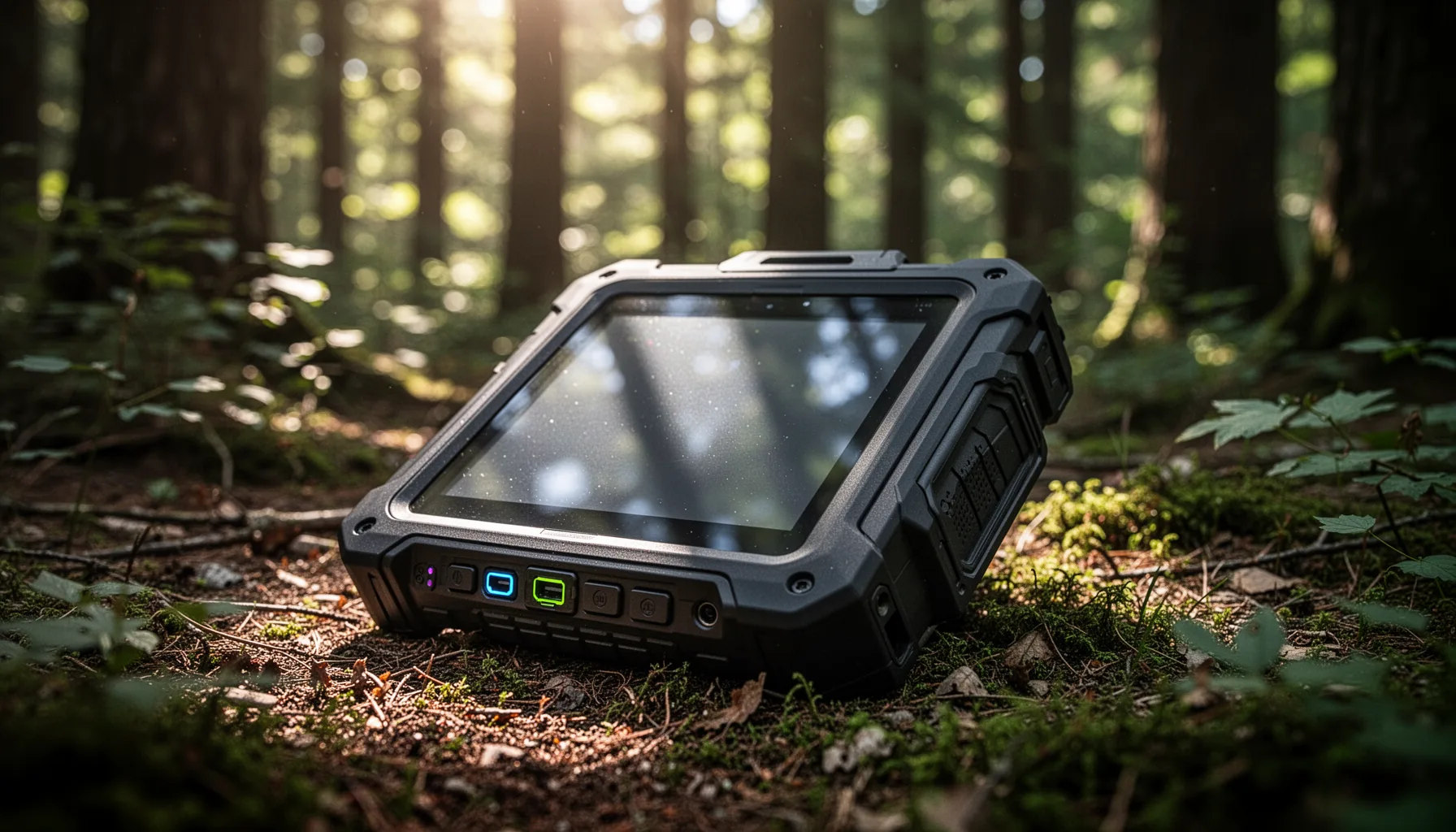
Embedded AI agent systems at the edge need module separation because edge hardware punishes all-in-one designs fast. A monolithic agent can look lean in the lab, but once it starts handling camera feeds, sensor fusion, tool calls, and long-horizon reasoning on a constrained board like NVIDIA Jetson Orin Nano or a Qualcomm RB platform, bottlenecks show up quickly. Usually in ugly ways. One overloaded reasoning stack can starve perception, spike thermals, and trigger cascading latency that makes the whole agent feel shaky. So by splitting modules, teams can assign hard budgets: say 30 milliseconds for perception, 50 for policy selection, and asynchronous background updates for memory consolidation. That setup also gives teams a real leg up on safety engineering because you can keep control loops deterministic while placing noncritical planning behind guards or cloud fallbacks. Here's the thing. We'd go further and say that for embedded products shipping to customers, clear module boundaries are often less a coding preference than a survival tactic. That's worth watching.
How should teams design an edge AI agent architecture for planning, memory, perception, and tools?
Teams should design an edge AI agent architecture by mapping each cognitive function to its latency tolerance, compute footprint, and failure cost. Start with perception nearest the sensor, because camera, audio, and telemetry inputs usually need the fastest local response and benefit from specialized models like YOLO variants, Whisper-class audio stacks, or vendor NPU-optimized networks. Then put action and tool use behind a policy layer that calls deterministic functions first and language-model reasoning second. That's a smart default. Memory should split into at least two layers: short-lived working state on-device and a compact long-term store that syncs only when bandwidth and privacy policy allow. Simple enough. Planning belongs wherever the system can tolerate delay, which often means a small local model for immediate decisions and a larger cloud model for complex replanning, summaries, or exception handling. A practical example shows up in an industrial inspection device from Siemens or Bosch Rexroth, where local perception flags anomalies right away and cloud reasoning writes maintenance narratives later. We'd say that's the sensible split.
When is modular architecture worth the overhead for resource efficient AI agents?
Modular architecture earns its keep for resource efficient AI agents when workloads change, reliability targets stay strict, or the device has a long field life. If you're building a single-purpose product with one sensor and one narrow task, a monolithic pipeline can still be simpler, quicker, and cheaper. Not every edge product needs an agent. But once the product has to interpret multiple inputs, call tools, store state, survive intermittent connectivity, and keep improving after deployment, modularity starts paying for itself through cleaner updates and sharper performance tuning. The catch is that teams need to count the overhead honestly, including serialization, orchestration, memory duplication, and inter-process communication, because those costs are not trivial on embedded Linux systems. Not quite. We think teams often split things up too early. A solid rule goes like this: if two functions need different model sizes, refresh rates, or safety envelopes, separate them; if they always move together and share the same budget, keep them fused until the data points elsewhere. Worth noting.
Step-by-Step Guide
- 1
Map the device constraints first
Start by measuring memory, power draw, thermal headroom, and network availability on the actual target hardware. Bench tests on a desktop won't save you here. And define hard latency ceilings per task, because edge agents fail when architects treat timing as a soft preference.
- 2
Separate real-time loops from deliberative reasoning
Keep control, perception, and safety-critical responses in fast local loops with deterministic behavior where possible. Push slower planning, summarization, and long-horizon reasoning into asynchronous paths. This split keeps the agent responsive even when the language layer stalls or reconnects.
- 3
Assign a budget to each module
Give every module a concrete CPU, GPU, NPU, memory, and latency budget before you pick models. That forces tradeoffs early. It also makes it easier to swap a vision encoder, planner, or memory service without collapsing the rest of the stack.
- 4
Route tasks between edge and cloud intentionally
Define clear rules for what stays local and what gets offloaded, based on privacy, urgency, and compute cost. For example, wake-word detection, obstacle avoidance, and sensitive sensor parsing often stay on-device. Long-form reasoning, historical analysis, and fleet-wide learning usually belong in the cloud.
- 5
Instrument failure paths aggressively
Log timeouts, dropped frames, tool-call errors, and fallback triggers at the module boundary, not just at the app level. That gives engineers the visibility they need to fix brittle interactions. Without that telemetry, modularity turns into guesswork.
- 6
Test under ugly field conditions
Run the system under heat, low battery, packet loss, noisy sensors, and repeated task interruptions. Real deployments rarely look clean. And edge agents that pass only ideal-condition tests will disappoint users the moment they leave the lab.
Key Statistics
Frequently Asked Questions
Key Takeaways
- ✓Modular edge agents are easier to debug, scale, and certify than monolithic ones.
- ✓Planning, memory, perception, and tool modules should carry explicit latency budgets.
- ✓Hybrid edge-cloud routing usually beats fully local autonomy on cost and reliability.
- ✓Power, thermals, and intermittent connectivity shape architecture more than model hype.
- ✓Use modularity when maintainability matters; skip it when overhead ruins latency.