
AI training for small business owners: Rick Samara’s push
AI training for small business owners is getting more practical as Rick Samara expands workshops, consulting, and AI help for teams.
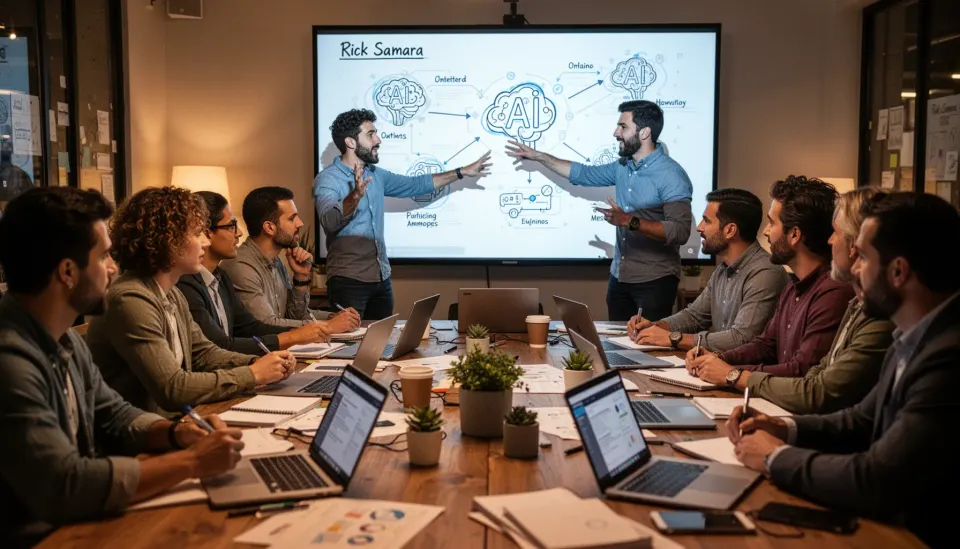
Table of Contents
Quick Answer
AI training for small business owners works best when it teaches practical workflows, risk controls, and everyday use cases rather than abstract theory. Rick Samara’s positioning speaks to a real market demand: business owners and professionals want usable AI guidance they can apply this week.
AI training for small business owners has gone from a nice extra to something closer to basic operating gear. That's the real story. Rick Samara’s latest visibility push, carried by FinancialContent, arrives right when small firms, solo operators, and white-collar professionals feel the same squeeze: learn AI quickly, or watch others pull ahead. But the headline isn't the main event. The gap is. Many businesses don't need another keynote about tomorrow. They need someone to show them how to work with ChatGPT, Microsoft Copilot, Claude, or Google Workspace AI without burning cash or stumbling into legal trouble.
Why AI training for small business owners is surging now

AI training for small business owners is climbing because low-cost generative AI tools finally reached a point where even very small teams can rely on them every day. That's a bigger shift than it sounds. According to the U.S. Census Bureau’s 2024 Small Business Pulse-style tracking, a larger share of smaller firms reported relying on software automation and AI-assisted tools in operations, even though adoption still varied by sector. Not evenly. A bakery owner, a local insurance broker, and a three-person law office can now reach for many of the same baseline tools larger firms test, including OpenAI’s ChatGPT Team and Microsoft Copilot for Microsoft 365. Worth noting. We’d argue this rise has less to do with hype and more to do with labor math. If one employee can draft emails, summarize invoices, build first-pass marketing copy, and pull action items from meetings in half the time, owners notice fast. And Rick Samara’s pitch connects because he speaks to that crowd in plain English, not vendor-speak.
What makes AI training for small business owners actually useful?

AI training for small business owners works best when it starts with workflows instead of software menus. Simple enough. Too many workshops still open with airy lectures about machine learning, and that's a poor opening for an owner who needs help with scheduling, customer follow-up, bookkeeping prep, or social content. The better model, which consultants like Rick Samara appear to be aiming at, ties AI to concrete jobs: draft three versions of a sales email, turn a customer call into notes, rewrite a product description for SEO, or summarize a dense PDF. That's the useful part. And the training needs guardrails too. The National Institute of Standards and Technology AI Risk Management Framework offers a sensible baseline for talking through privacy, data handling, and human review, especially for firms in finance, healthcare, and legal services. We'd argue that matters more than flashy demos. A good session should send people out with prompts, policies, and a short list of approved tools. Not theory. That's what turns curiosity into action.
How professionals can use artificial intelligence without making costly mistakes

How professionals can use artificial intelligence safely really comes down to pairing speed with review. Here's the thing. In accounting, legal operations, recruiting, and consulting, AI can draft, classify, summarize, and research, but it still spits out errors, invented citations, and shaky judgment when people trust it too quickly. That's the part many trainers gloss over. In 2024, the American Bar Association kept warning legal practitioners that generative AI output requires attorney review, especially around confidential data and fabricated case references. Not optional. The same logic fits a real estate agent using AI for listing copy or an HR manager drafting job descriptions. Use AI for first drafts, pattern spotting, and repetitive admin. But keep a human in charge of compliance, client commitments, and final decisions. We think any credible AI consultant for small business should repeat that until clients actually absorb it.
Can an AI consultant for small business beat generic online courses?
An AI consultant for small business often beats a generic course because the real bottleneck is context, not access to information. Worth noting. Owners can already find thousands of YouTube tutorials on ChatGPT, Gemini, Canva Magic Write, and HubSpot AI features. Yet many still freeze. Here's why. They don't know which tools fit the budget, what data should never be pasted into a model, or how to redesign daily work around AI instead of stacking on one more app. So a consultant or workshop leader can answer those questions in the language of a salon, dental office, HVAC firm, or small ecommerce brand. That specificity makes the difference. For example, a local retailer may get more from AI-assisted product descriptions and inventory email drafting than from fancy autonomous agents. We see this constantly. Tailored guidance beats endless tool wandering.
Frequently Asked Questions
Who is Rick Samara and why are people searching for his AI training?
What is the best AI training for small business owners?
How can professionals use artificial intelligence at work right now?
Why are artificial intelligence workshops for businesses becoming popular?
How much AI help do everyday people actually need?
Key Takeaways
- Small firms want AI training tied to real tasks, not flashy demos.
- Rick Samara is targeting owners, professionals, and everyday users with practical education.
- The best AI workshops mix prompt skills, policy basics, and workflow redesign.
- Adoption rises when training covers customer service, marketing, and admin work.
- For small businesses, AI value usually starts with time saved and fewer errors.