
⚡ Quick Answer
AI workforce training policy is the set of public rules, funding choices, and education strategies that prepare workers and students for AI-shaped jobs. The strongest policies connect K-12 schools, colleges, employers, and short-form training so people can build practical AI skills without waiting years.
AI workforce training policy has jumped from think-tank chatter to something families talk about at the dinner table. Parents feel it. Employers do too. A C-SPAN discussion with policy advocates and educators brought the tension into view: people already expect AI to reshape work, while many schools and training systems still run on a slower, older clock. That's the gap to watch. And that's why public policy on AI job training now sits near the middle of workforce planning, education reform, and regional economic strategy.
What is AI workforce training policy and why does it matter now?

AI workforce training policy matters now because AI adoption already changes hiring, job design, and the skills employers reward. According to the World Economic Forum's Future of Jobs Report 2025, 86% of employers expect AI and information processing technologies to transform their business by 2030. That's not abstract. It lands on curriculum, teacher preparation, workforce grants, and retraining budgets right now. We'd argue policymakers can't treat AI as a niche computer science issue anymore, because clerical work, marketing, customer support, healthcare administration, and software roles all feel the shift. Not quite. A useful example shows up in states expanding career and technical education pathways with data literacy and automation modules instead of waiting for full degree overhauls. And the C-SPAN AI workforce training discussion points to a broader truth: employers want adaptable workers, not just coders. That's a bigger shift than it sounds. The policy question isn't whether AI changes work; it's whether public systems can keep pace.
How technology workforce development AI programs should be designed
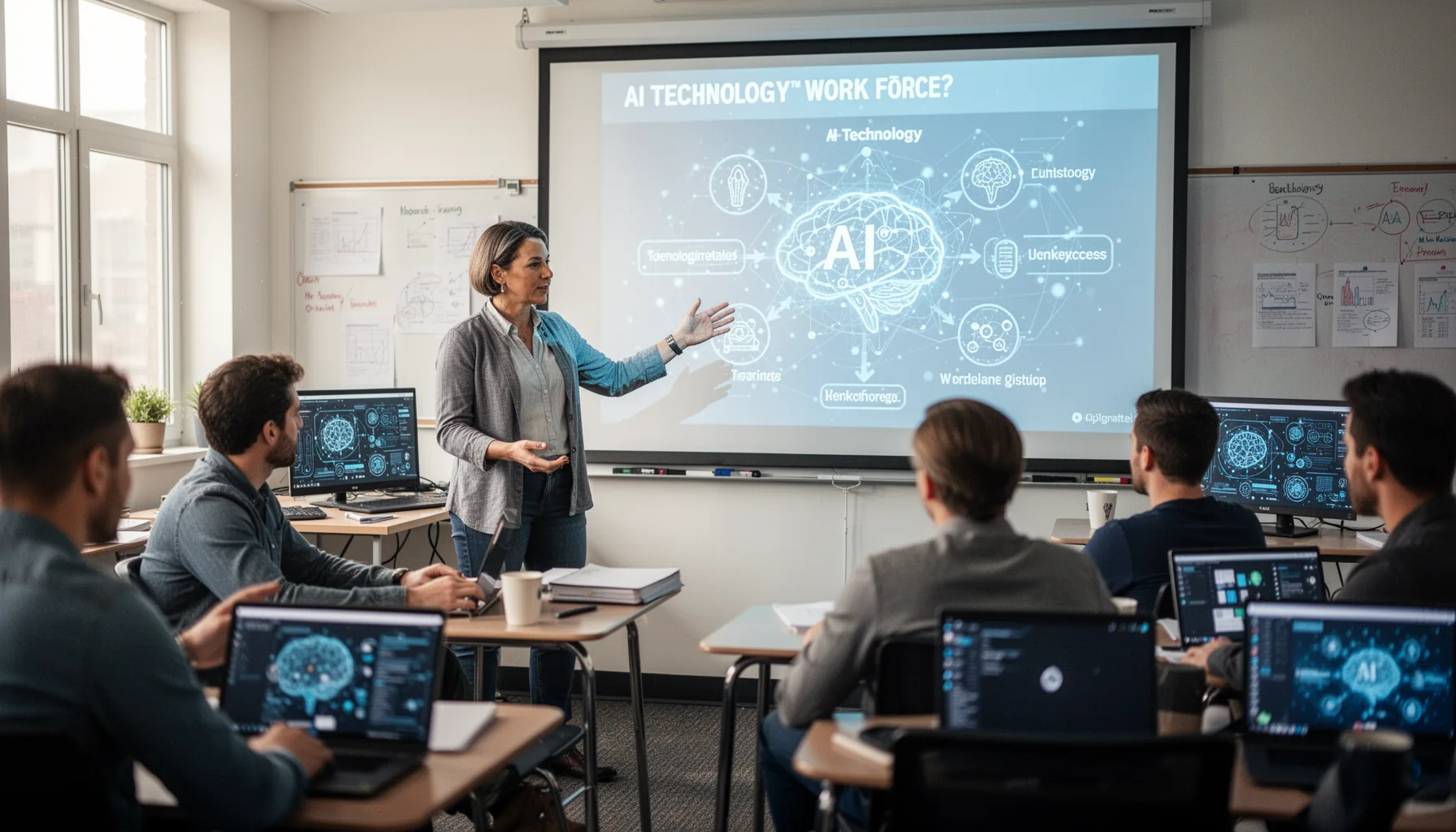
Technology workforce development AI programs should center on real tasks, local labor demand, and stackable credentials. According to Lightcast's 2024 labor market analysis, job postings mentioning generative AI climbed sharply year over year, but employers still asked for communication, analysis, and domain knowledge alongside technical fluency. That mix matters. Too many public programs still split digital skills from workplace context, and we'd call that a real miss. Here's the thing. A manufacturing technician, a nurse manager, and a small-business marketer won't work with AI in the same way. Consider IBM's long-running skills-first push and its support for credential-based hiring pathways; the company has repeatedly argued that verified capabilities can matter more than traditional degree filters for many roles. Worth noting. So the best AI workforce training policy backs modular training, employer input, and assessment tied to actual work outputs rather than generic course seat time.
Why AI skills training for educators is central to AI workforce training policy
AI skills training for educators sits near the center of this issue because teachers can't prepare students for AI-shaped work if they don't understand the tools, risks, and classroom uses themselves. UNESCO's 2023 guidance on generative AI in education urged countries to train teachers before scaling classroom deployment, and that advice still holds up. Here's the thing: many districts bought software licenses before they built teacher confidence. That's backwards. In our view, AI skills training for educators should cover prompt design, source verification, data privacy, assessment redesign, and bias awareness, not just tool demos. Simple enough. A concrete example comes from Khan Academy's Khanmigo pilots, where teacher-facing support shaped how AI entered lesson planning and student support. That's a bigger shift than it sounds. And public policy on AI job training should treat teacher professional development as infrastructure, because poorly prepared educators produce poorly prepared graduates.
What public policy on AI job training should fund first
Public policy on AI job training should fund teacher training, community college modernization, apprenticeships, and regional employer partnerships first. The U.S. National Science Foundation has backed workforce and technology education initiatives for years, and its Regional Innovation Engines model points to a useful idea: align talent development with local industry needs. That's smarter than scattering small grants everywhere. We think lawmakers should prioritize programs that show placement rates, wage gains, or measurable skill acquisition within 12 to 18 months. Worth noting. For example, community colleges in states like North Carolina and Texas already operate as practical hubs for employer-linked technical education, and they're often quicker to adapt than large university systems. But funding must also cover broadband access, compute access, and instructor time, because AI education without infrastructure turns into a paper promise. Money should follow outcomes and access, not hype.
How future jobs AI education policy can avoid common mistakes
Future jobs AI education policy can avoid common mistakes by focusing on adaptability instead of trying to predict one winning job title. The OECD has repeatedly warned that automation risk and skill change vary across sectors, regions, and education levels, which means one-size-fits-all policy usually misses the mark. Still, many proposals chase flashy labs or one-off curriculum pilots with no scale plan. That's poor policy. We'd argue future jobs AI education policy should anchor on durable abilities: reasoning, digital judgment, data literacy, workflow design, and responsible tool use. Not quite. A concrete corporate example is Microsoft's global skilling efforts, which often bundle AI familiarity with productivity, cloud, and business process skills rather than teaching AI as a silo. That's a bigger shift than it sounds. So the strongest AI workforce training policy prepares people to work with changing systems, not just today's tools.
Step-by-Step Guide
- 1
Map local job demand
Start with regional labor market data before writing any training policy. Use sources such as Lightcast, state labor agencies, and employer councils to see which roles are changing fastest. Then match AI-related skills to real occupations, not generic tech buzzwords. That keeps funding grounded.
- 2
Train educators first
Build mandatory professional development for teachers, faculty, and workforce trainers before rolling out AI-heavy curriculum. Cover classroom use, academic integrity, privacy, and practical tool workflows. And give educators paid time to practice. Unfunded expectations usually fail.
- 3
Build stackable credentials
Create short programs that can stand alone or count toward larger certificates and degrees. Workers need off-ramps and re-entry points, especially mid-career adults with jobs and families. A six-week module tied to an industry-recognized certificate often gets traction faster than a full program redesign. That's reality.
- 4
Tie funding to outcomes
Set clear measures for placement rates, wage growth, completion, and employer satisfaction. Publish the data. And keep the metrics simple enough that colleges and training providers can report them without drowning in paperwork. Accountability should sharpen programs, not freeze them.
- 5
Include employers in curriculum design
Bring employers into advisory boards, capstone reviews, and apprenticeship planning from the start. Ask what tasks workers actually perform with AI tools. Then update curriculum every year, not every five years. Hiring demand moves too fast for static syllabi.
- 6
Protect access and trust
Make room in policy for device access, broadband, disability support, and data governance. AI job training won't work if lower-income learners can't reach the tools or don't trust how their data is handled. Use standards from bodies like NIST to guide risk management. Policy works better when people believe it protects them.
Key Statistics
Frequently Asked Questions
Key Takeaways
- ✓AI workforce training policy works best when schools, employers, and states build programs together.
- ✓Teacher training matters as much as student training if classrooms will actually teach AI well.
- ✓Short certificates and apprenticeships often move faster than four-year degree reform alone.
- ✓Public funding should reward measurable job outcomes, not just course completion totals.
- ✓The smartest future jobs AI education policy blends digital literacy with domain-specific practice.