
Anthropic Claude Pro peak hours limits: why users balk
Anthropic Claude Pro peak hours limits are testing subscriber trust. Here’s why off-peak rules for free users may be smarter.

Table of Contents
Quick Answer
Anthropic Claude Pro peak hours limits are a bad trade for paying subscribers because they reduce value at the exact moment customers need the service most. A more defensible policy would shift free-tier access to off-peak windows first, protecting paid reliability and preserving subscriber trust.
Anthropic Claude Pro peak hours limits have turned into a live audit of what a paid AI subscription actually buys. Not in theory. In the messy middle of a workday. During the busiest hours, some Pro users say they get only a small number of meaningful prompts before running into limits that feel oddly close to a free plan. That's not trivial. It matters more than any short-lived promo ever did. And after Claude climbed the App Store charts and some users publicly jumped from ChatGPT to Claude, the timing makes the backlash look less like random griping and more like a consumer-rights story.
Why Anthropic Claude Pro peak hours limits hit paying users the hardest

Anthropic Claude Pro peak hours limits sting most because they reduce service at the exact moment paid subscribers place the highest value on access. That's the whole argument. In subscription software, customers aren't paying for average uptime in the abstract; they're paying for reliable access when traffic spikes, deadlines hit, and switching tools costs real time. Simple enough. We'd argue that throttling paid users during peak hours weakens the basic promise a premium plan quietly makes. OpenAI offers a useful comparison. ChatGPT Plus users also run into message caps, but OpenAI usually describes those constraints through model-specific ceilings and capacity tiers instead of creating the broad impression that paid access buckles when everyone logs on. According to Sensor Tower estimates cited by market analysts in 2024, Claude posted a sharp jump in app downloads during stretches of user frustration with rival chatbots, which pushed expectations even higher. Worth noting. And when those expectations collide with tight peak-hour limits, the frustration looks rational, not dramatic. A paid AI plan that works best when nobody needs it has a pricing problem.
Could Claude free accounts off peak hours solve the congestion problem better?
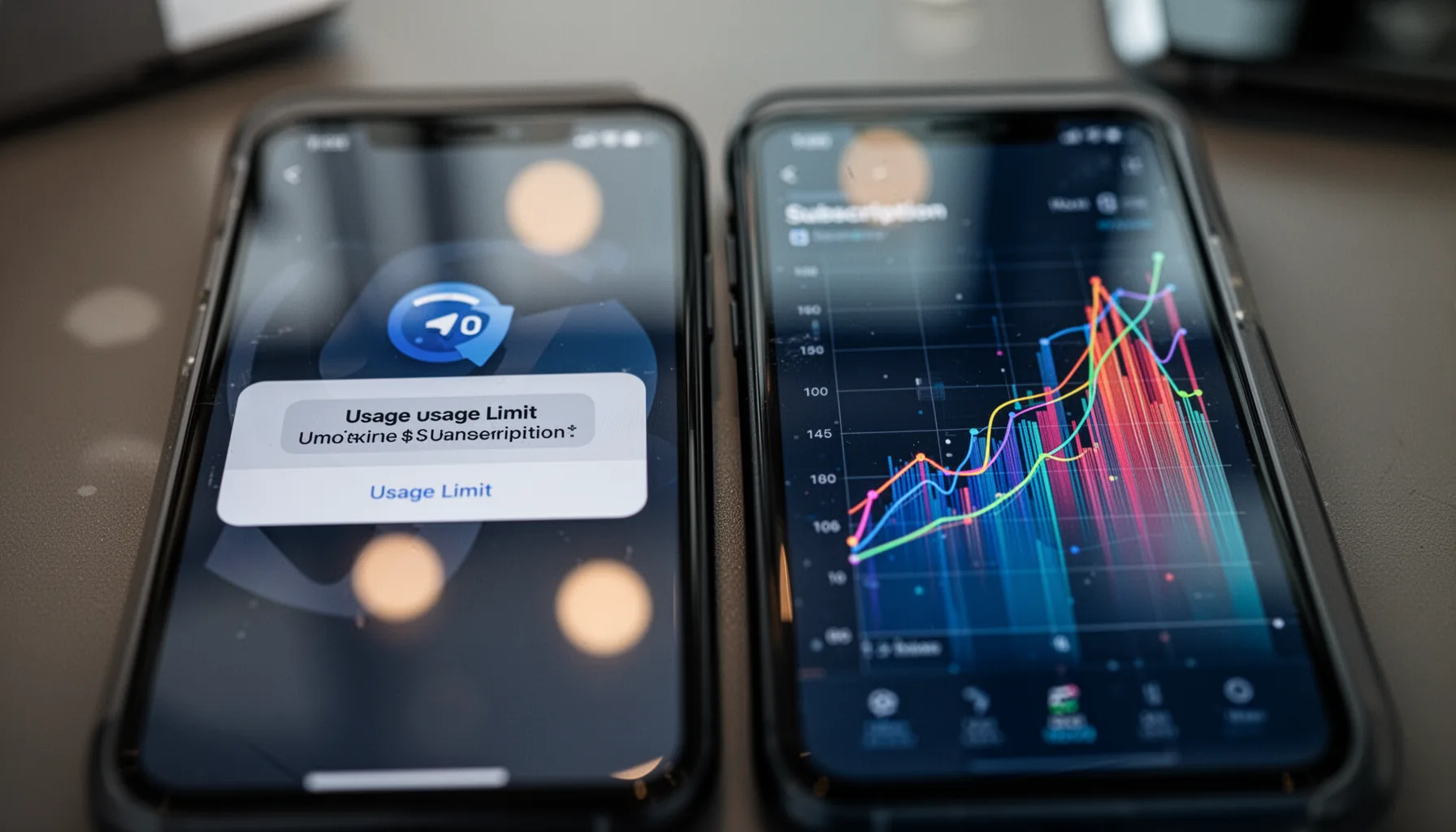
Claude free accounts off peak hours would likely be a cleaner, fairer way to manage congestion than weakening Pro access during busy stretches. Here's the thing. Free tiers exist to drive trial, visibility, and conversion, while paid tiers exist to fund priority capacity and more predictable usage, so scarcity should hit non-paying demand first. That's standard product math. Microsoft offers a familiar example. Across consumer and developer products, it has long relied on queues, credits, and feature gates to preserve service quality for higher-value accounts, even without using a strict off-peak-only rule. In our view, Anthropic would protect more long-term revenue by saying plainly that free usage shifts to quieter hours during weekday surges while Pro and Max users keep real priority. According to Zuora's 2024 subscription benchmarks, churn risk rises when customers feel the value they were promised disappears at the moment they need it most, especially in utility-like software categories. That's a bigger shift than it sounds. So yes, limiting free accounts to off-peak windows may sound harsher at first. But it's the more honest version of a premium service.
Claude Pro vs ChatGPT Plus usage limits: which subscription is better for heavy users?

Claude Pro vs ChatGPT Plus usage limits now turns less on model preference and more on reliability under load. That's where it gets real. A heavy user writing code, reviewing contracts, or uploading long documents usually cares less about a polished homepage and more about whether the tool still works at 2 p.m. on a Tuesday. Not quite a branding issue. More of an operations issue. Cursor gives us a handy reference point because it makes model access feel more metered and operationally explicit for developers, even when quotas still sit underneath. That transparency makes the difference. If Claude Pro users run into abrupt slowdowns or prompt scarcity during peak demand while ChatGPT Plus delivers steadier, if imperfect, throughput, the value calculation can flip fast despite Claude's strengths on long-context work. A 2024 Menlo Ventures enterprise AI survey found that reliability and workflow fit ranked above raw model novelty in paid tool retention decisions. We'd argue that lines up with common sense. The best AI chatbot subscription for heavy users is usually the one that fails predictably, not mysteriously.
How Anthropic paid users throttling compares with Perplexity, Cursor, and OpenAI

Anthropic paid users throttling looks worse through a subscriber-trust lens because rivals generally explain limits with more operational clarity. That difference isn't minor. Perplexity Pro, OpenAI, and Cursor each rely on their own mix of quotas, model routing, and premium-access rules, but they usually give users a firmer sense of what they're buying and when constraints will kick in. Not perfectly. But clearly enough. Perplexity offers a concrete example. It separates its product identity around search, citations, and premium models, which gives users a more specific expectation of what Pro is for even if usage controls still operate behind the curtain. Anthropic's issue isn't just congestion; it's the perceived mismatch between premium branding and the actual peak-hour experience. According to the American Customer Satisfaction Index's framing for software services, predictability and expectation-setting often matter as much as raw performance in retention outcomes. Worth noting. So if Anthropic wants to keep the goodwill it picked up during Claude's App Store growth and the complaints aimed elsewhere, it needs policy clarity as much as extra GPUs. A quiet throttle burns trust faster than an explicit rule.
Frequently Asked Questions
What are Anthropic Claude Pro peak hours limits?
Why would Claude free accounts off peak hours be a better policy?
How does Claude Pro vs ChatGPT Plus usage limits compare for heavy users?
Why are users upset about Anthropic paid users throttling?
What is the best AI chatbot subscription for heavy users right now?
Key Takeaways
- Paid users judge value during busy hours, not in marketing screenshots or quiet periods.
- Off-peak restrictions for free accounts would likely protect subscriber trust far better.
- Claude Pro vs ChatGPT Plus comparisons now turn on reliability, not headline model quality.
- Weak congestion messaging can turn App Store momentum into lasting subscriber resentment.
- Heavy users should compare real rate-limit behavior before picking any AI chatbot subscription.