
Autonomous scientific discovery optical platform explained
Autonomous scientific discovery optical platform claims are big. Here’s what the paper proves, what stays scaffolded, and how labs can replicate it safely.
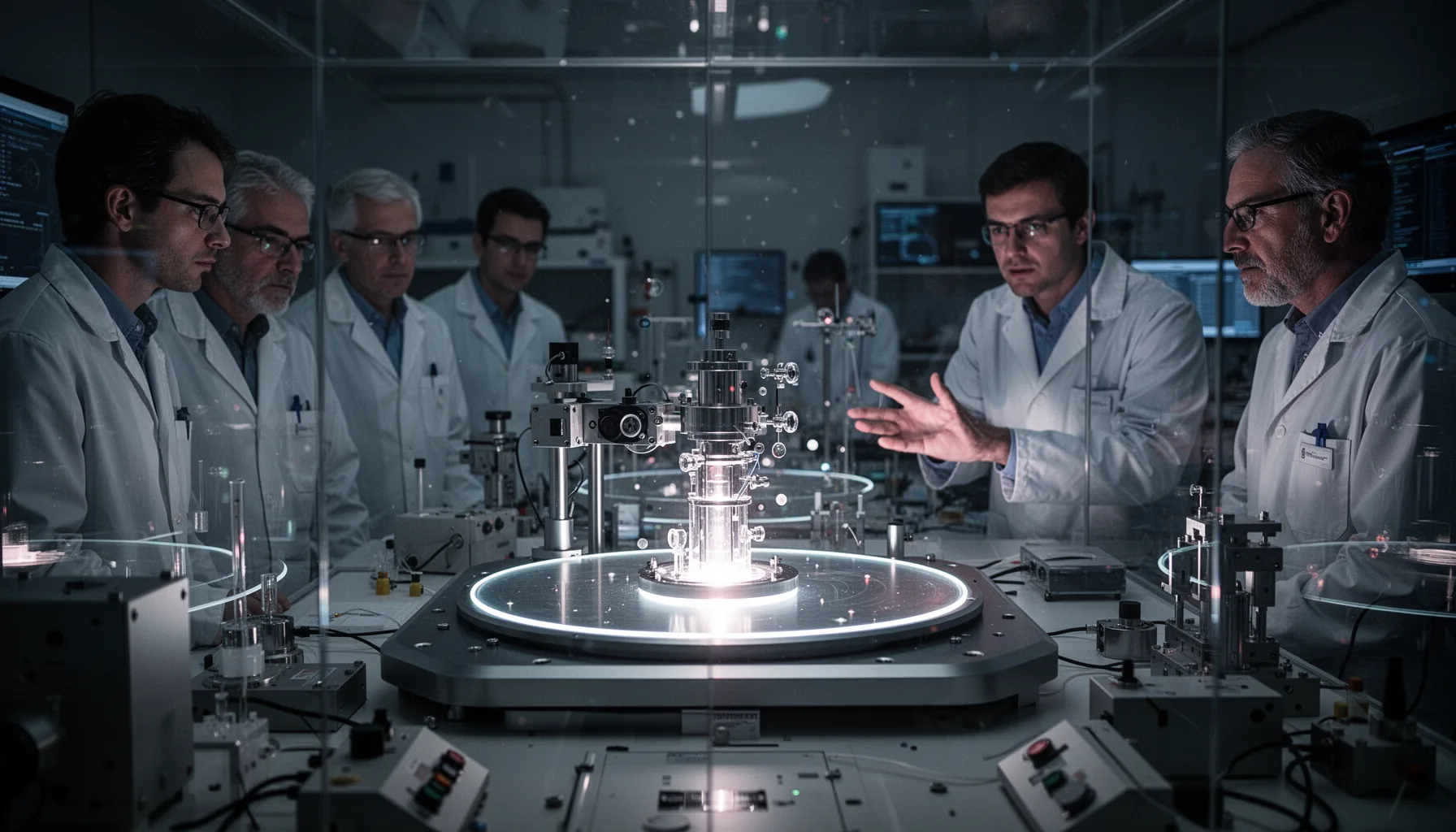
Table of Contents
Quick Answer
The autonomous scientific discovery optical platform paper points to a real, closed-loop AI system that generates hypotheses, runs optical experiments, and updates claims on physical hardware. But the system is only partly autonomous because humans still define the experimental space, safety bounds, hardware interfaces, and evaluation rules.
Autonomous scientific discovery optical platform research has finally left the whiteboard and landed on actual hardware. That's the hook. A new arXiv paper lays out an end-to-end autonomous science system that relies on LLM agents, software control, and a physical optical setup to ask questions, run experiments, read outcomes, and tighten its claims. But that headline can blur things fast if we don't separate real autonomy from carefully built guardrails. And that's where the paper turns genuinely worth watching.
What does the autonomous scientific discovery optical platform actually do?
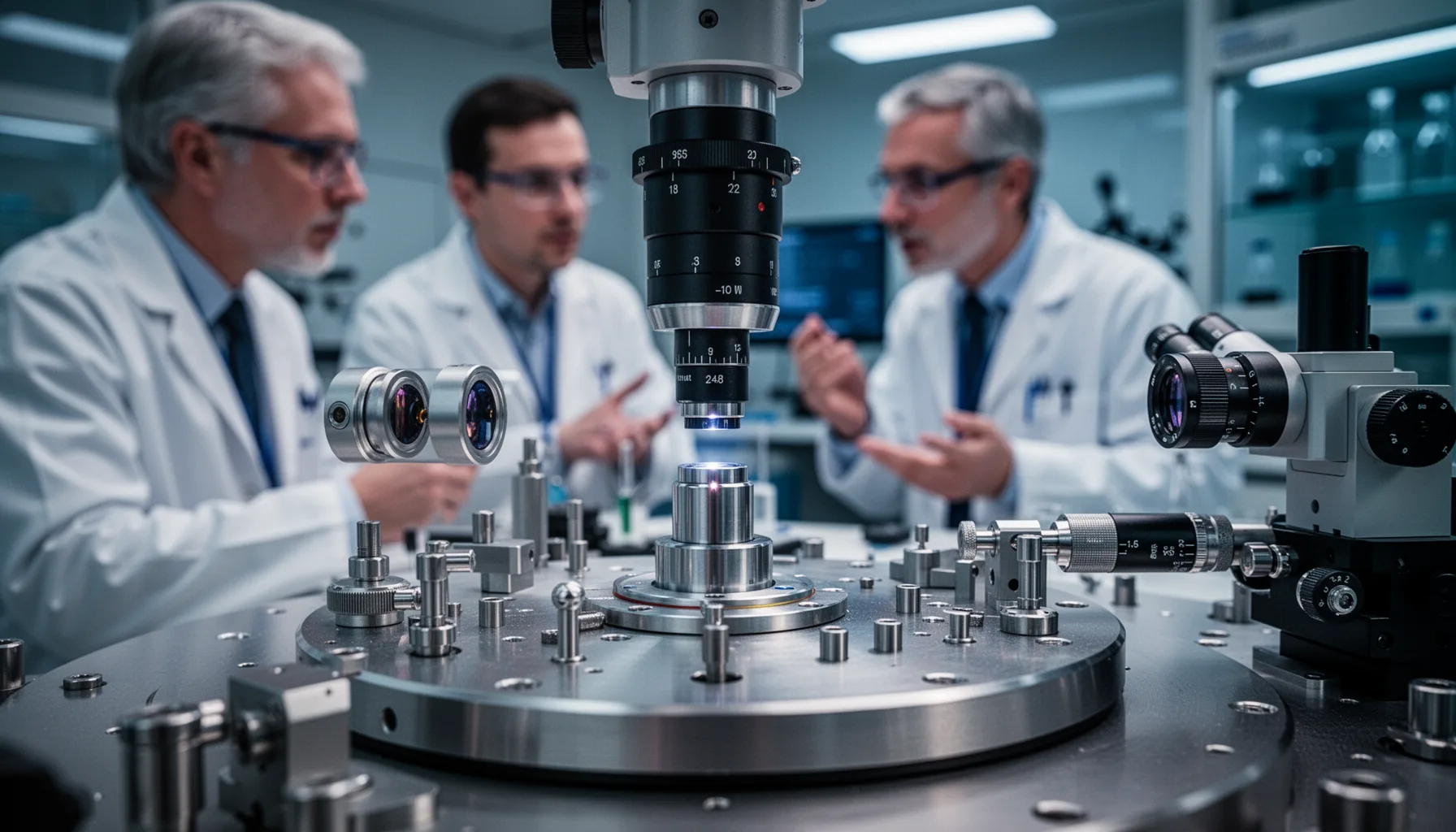
The autonomous scientific discovery optical platform runs a closed experimental loop on real optical hardware, not just in simulation or a scripted automation stack. That's consequential. In plain terms, the system can suggest hypotheses, choose or plan measurements, carry out optical experiments through connected instruments, analyze the data, and change its next move after seeing results. That's a real step. The paper matters because plenty of earlier AI scientific discovery claims leaned on benchmarks, backward-looking literature mining, or synthetic environments instead of a live physical platform. We'd argue crossing into the physical world raises the bar. Hardware noise. Drift. Calibration mistakes. Failed runs. Those aren't side issues, and the agent has to work with them. A real optical setup also gives this project a concrete edge over generic LLM agents for scientific research, which often look sharp in a notebook and oddly fragile in a lab. Think of a Princeton optics bench rather than a polished demo video. Worth noting. The strongest factual point isn't that AI has replaced scientists. It's that the authors built a working loop linking reasoning software to measurement equipment in a repeatable way.
Where is the autonomous scientific discovery optical platform genuinely autonomous versus scaffolded?
The autonomous scientific discovery optical platform makes local decisions on its own, but human choices still fence in every boundary that really counts. Here's the thing. Autonomy in science isn't a yes-or-no label. If the system can pick among candidate hypotheses, trigger experiments, inspect data, and alter claims without a person nudging each step, the term fits in a narrow sense. But humans still define the problem ontology, the hardware control layer, the allowed action space, the stopping rules, and the formats used to score evidence. Not trivial. In a real optical experiment, those constraints probably do more of the heavy lifting than the LLM itself, because they stop the agent from asking malformed questions, damaging equipment, or chasing noise. A handy comparison is DeepMind's AlphaFold pipeline versus a fully autonomous wet lab. One predicts structure inside a bounded task. The other has to manage instrument state, uncertainty, and procedural risk in real time. That's a bigger shift than it sounds. So the paper supports a real-world autonomous scientific discovery claim inside a designed sandbox, not an open-ended machine scientist that can invent whole disciplines on its own.
How the end to end autonomous science system maps across the discovery loop
The end to end autonomous science system looks strongest when you split the discovery loop into distinct stages instead of treating it like one magical block. Simple enough. First, the system frames a question or candidate explanation inside a predefined scientific domain, which keeps the search space manageable. Second, it turns that question into an experimental plan on the optical platform, likely through human-authored interfaces and instrument abstractions. Third, it runs the experiment and collects measurements from real equipment, where hardware reliability jumps to the top of the list. Fourth, it interprets the data and updates confidence in competing claims, which is where LLM reasoning can assist while statistical routines do most of the serious work. Fifth, it revises the next hypothesis or action. And that's the part many competitor write-ups will glide past, even though claim revision sits at the center of science and offers the clearest test of whether the loop is more than AI lab automation for optical experiments. Think of it as the difference between a robot arm at MIT and a system that actually changes its mind. We'd say that's the core distinction. If the system only automates experiment execution, it's advanced robotics. If it revises explanatory claims against evidence, it starts to look like science.
Why reproducibility, error propagation, and lab safety matter more than the headline
Reproducibility and safety matter more than the headline, because a flashy demo on one optical rig won't mean much if other labs can't rerun it under controlled conditions. That's the crux. Real instruments drift. Optical components age. Alignments shift. Sensors saturate. Environmental noise can skew results long before an LLM catches that anything went sideways. That creates error propagation across the full loop, since a bad calibration can taint data interpretation, which then corrupts hypothesis ranking and future experiment selection. We saw versions of this in automated biology well before LLMs showed up, with cloud labs such as Emerald Cloud Lab and Strateos stressing protocol control, audit trails, and hardware validation. The same discipline belongs here. Labs trying to reproduce an AI scientific discovery arXiv optical platform result would need versioned prompts, machine-readable protocols, sensor health checks, instrument logs, exception handling, and independent statistical review before trusting any scientific claim. Not glamorous. But necessary. If that sounds conservative, good. Science should be harder to automate than posting on social media.
What labs need to replicate autonomous scientific discovery optical platform systems safely
Labs need strict hardware abstraction, safety interlocks, data provenance, and human review gates if they want to replicate autonomous scientific discovery optical platform systems safely. No shortcuts. Start with instrument control. Teams need stable APIs for lasers, detectors, motorized stages, and acquisition software, plus permission layers that block dangerous commands before execution. Then add observability. Every prompt, tool call, parameter change, calibration event, and measurement should land in an immutable log so researchers can reconstruct why the system made a claim. Next comes domain scoping, and that probably matters most, because narrow optical tasks with well-defined variables are much safer than open-ended chemistry or biology workflows. A practical model would look more like a validated MLOps stack fused with lab automation standards than a freewheeling chatbot with root access. We'd also insist on human sign-off for claim publication, failed-run handling, and threshold breaches, especially when the system's confidence and the statistical quality of evidence pull in different directions. Consider how a lab at Stanford would treat a laser safety review: formal, documented, and not optional. Worth noting. That's why the real lesson from this paper isn't that autonomous science is solved. It's that careful scaffolding makes parts of it useful right now, and that distinction needs to stay front and center.
Key Statistics
- According to Stanford HAI’s 2024 AI Index, AI-related scientific publications and patents both continued double-digit annual growth, underscoring rising interest in machine-assisted research workflows.That trend explains why papers on autonomous science now attract attention well beyond academic labs. The field is moving from isolated demos toward operational systems tied to instruments and data pipelines.
- McKinsey’s 2024 State of AI report found 65% of surveyed organizations regularly use generative AI in at least one business function.That figure matters because it shows LLM tooling has already entered mainstream workflows. Science labs are now testing whether those same models can move from text generation into experimental decision loops.
- Nature’s 2023 survey on research reproducibility pressures reported that a large majority of scientists still see reproducibility as a serious concern across experimental disciplines.For autonomous science, that concern becomes even sharper. If a machine-generated claim cannot be independently rerun on another platform, the novelty fades fast.
- The global lab automation market was estimated above $5 billion in 2024 by multiple industry trackers, with pharmaceutical and analytical labs driving much of the spend.That spending base matters because autonomous discovery systems will likely piggyback on existing automation stacks. Adoption won't start from zero; it will build on instrument control, workflow software, and data infrastructure labs already buy.
Frequently Asked Questions
What is an autonomous scientific discovery optical platform?
How is this different from ordinary lab automation?
Why do researchers use an optical platform for autonomous science?
How much of the system is truly autonomous?
What would labs need before adopting LLM agents for scientific research?
Key Takeaways
- The paper moves beyond simulation by running a full loop on real optical hardware
- Human-designed constraints still shape what the system can ask, test, and conclude
- Real autonomy depends on claim revision, not just automated experiment execution
- Lab replication will depend on safety interlocks, calibration discipline, and traceable logs
- The biggest takeaway isn't hype; it's how structured autonomy may accelerate narrow science domains