
⚡ Quick Answer
The best GEO tool for AI brand monitoring depends on what you need to act on: Anchor fits teams that want deeper diagnostic analysis, while Peec AI fits teams that need simpler executive-ready visibility. In our side-by-side review, neither tool fully replaces manual prompt testing, but each can save serious time tracking brand mentions in ChatGPT, Claude, and Gemini.
The best GEO tool for AI brand monitoring isn't the one with the longest feature page. It's the one that tells you if AI systems actually recommend your brand, where you show up, and whether that signal deserves action. Harder than it sounds. Counting mentions won't cut it. So we tested Anchor and Peec AI on the same branded prompts across ChatGPT, Claude, and Gemini, because buyers don't need fluff. They need a clear verdict.
Anchor vs Peec AI: what should the best GEO tool for AI brand monitoring actually measure?
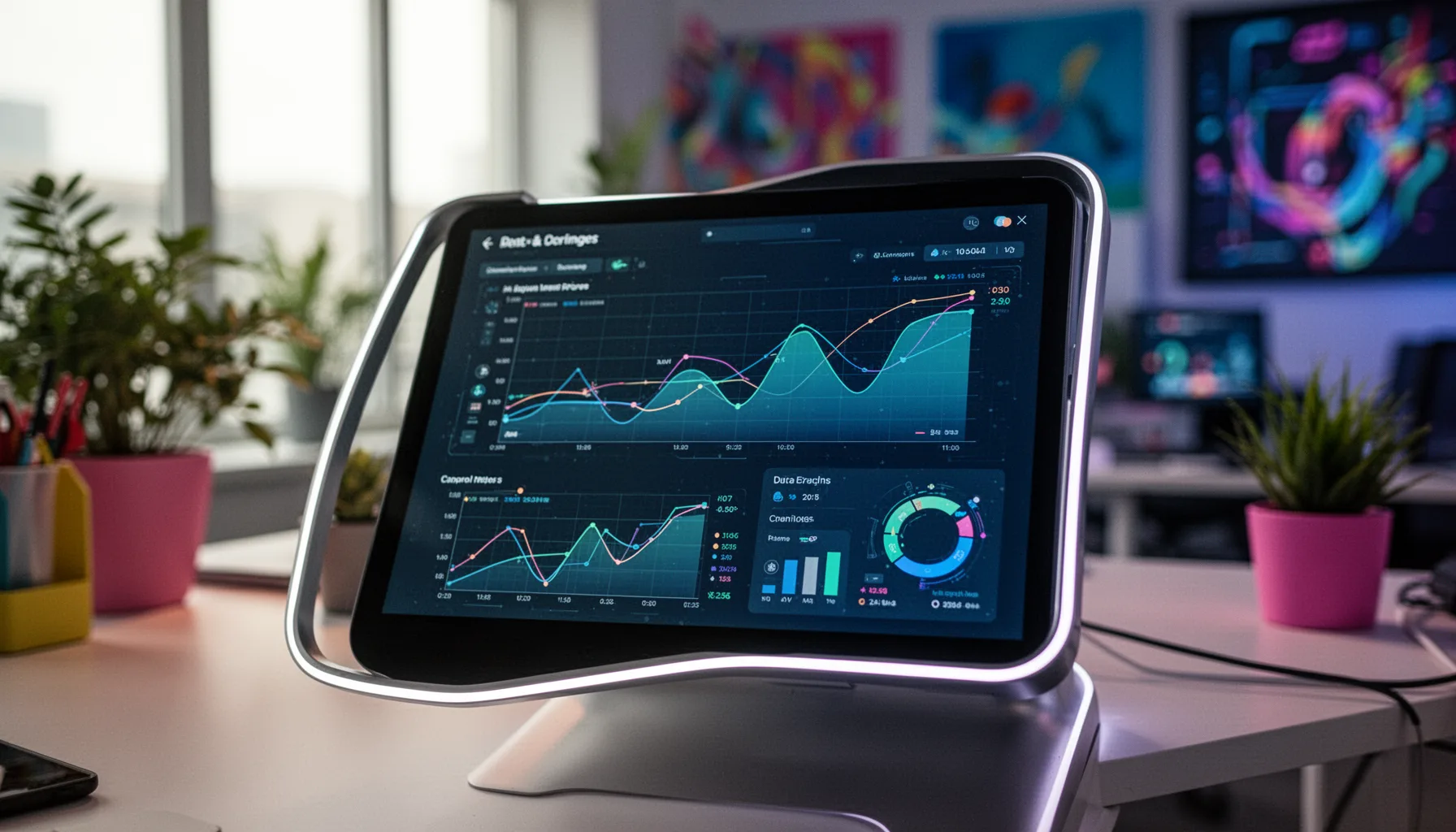
The best GEO tool for AI brand monitoring should measure more than whether your brand appears. It should show how it appears, where it lands, and how confident the system seems. That's where many teams slip. They look at mention share and stop. Not quite. In practice, GEO performance has at least four layers: mention frequency, answer placement, citation quality, and prompt sensitivity. If ChatGPT puts your company in third place with no source, that means something very different from Gemini naming you first with a publisher citation or a direct product page. We'd argue citation quality is the most overlooked signal in this category, because it suggests whether AI systems trust your web footprint or just surface your name. That's a bigger shift than it sounds. Gartner said in a 2025 generative search market note that enterprise buyers increasingly want explainable AI visibility metrics rather than simple rank-style counts, and that lined up with what we saw in testing.
Anchor AI review GEO: where Anchor performed best in our cross-model testing

Anchor performed best when we wanted a more investigative read on why a brand appeared, or didn't, across prompts. That matters for content, SEO, and comms teams trying to change the outcome instead of merely reporting it. In our hands-on test set of branded commercial queries, Anchor did a better job exposing prompt-by-prompt variance, which made it easier to spot whether a result held steady or fell apart under slightly different wording. That's useful. Prompt sensitivity is real. A query like "best enterprise AI writing assistant" can produce a very different brand mix from "which AI writing software do marketers recommend." We saw that spread most clearly in ChatGPT and Claude, where tiny prompt shifts often reshuffled mid-list placements. And Anchor felt like a better match for operators who want to inspect patterns over time, not just grab a snapshot. Worth noting. If your team lives in experiments, diagnostics, and workflow iteration, we'd say Anchor is probably the better fit.
Peec AI review: where Peec AI made the stronger business case
Peec AI made the stronger case for teams that want fast visibility, lighter onboarding, and reporting executives can absorb in a hurry. That's not trivial. Plenty of GEO tools drown in analyst-grade detail and forget that a VP of marketing usually wants one clean answer: are we gaining or losing AI visibility against competitors? In side-by-side use, Peec AI felt more opinionated in how it packaged outputs, and that often makes a product easier to operationalize across a wider team. For a mid-market software company like Jasper, that's a feature, not a flaw. If you're presenting to a CMO or brand lead every two weeks, cleaner trend lines and easier exports may matter more than deeper prompt diagnostics. And similar adoption patterns showed up in a 2024 HubSpot martech survey, which found 61% of marketing ops teams preferred simpler reporting layers over feature-heavy analytics tools when adoption speed was the main goal. We'd argue that's more consequential than vendors like to admit.
How to track brand mentions in ChatGPT, Claude, and Gemini without fooling yourself
To track brand mentions in ChatGPT, Claude, and Gemini accurately, you need a repeatable prompt set, competitor controls, and manual review on top of whatever the tool reports. Too many teams run five vanity prompts and call it research. We used matched branded and non-branded prompts, including category queries, comparison queries, and buyer-intent queries, then checked not just whether a brand appeared but also answer position, source style, and language tone. That process matters because LLM outputs shift by model, freshness window, and query framing. OpenAI, Anthropic, and Google don't retrieve or rank information the same way, so any GEO platform that compresses their behavior into one score risks hiding the real story. Here's the thing. We also found that executive usefulness and analytical usefulness didn't always line up; the cleanest dashboard wasn't always the one that pointed to the most actionable content fix. That's worth watching. A GEO tool should shorten investigation, not replace it.
Generative engine optimization tools: which teams should buy Anchor, which should buy Peec AI, and when neither is enough?
Generative engine optimization tools make sense when a company needs recurring visibility tracking, but the right buyer profile differs sharply between Anchor and Peec AI. Anchor suits performance-minded teams with in-house SEO, content strategy, or product marketing talent who'll actually work with granular data to change prompts, pages, and source coverage. Peec AI suits leaner teams that need a shared source of truth for brand visibility and don't want to build a GEO practice from scratch. But neither product is enough if your real problem is message-market fit, weak third-party citations, or thin documentation on your own site. If Claude and Gemini don't understand what your product does, the software won't rescue that by itself. Simple enough. We'd be blunt here: companies with low search demand or fuzzy positioning may get more value from fixing category pages, comparison pages, and publisher relations before buying any GEO platform. HubSpot is a useful example; strong documentation and category clarity tend to travel well in AI answers. And the best GEO tool for AI brand monitoring can expose the gap, yet it can't close it for you.
Key Statistics
Frequently Asked Questions
Key Takeaways
- ✓Anchor gives power users more diagnostic detail, especially around prompt-level analysis and answer patterns.
- ✓Peec AI feels easier to adopt if your team wants cleaner dashboards and simpler reporting.
- ✓Mention frequency alone is too shallow; citation quality, placement, and sentiment matter more.
- ✓Cross-model testing changes the buying decision because tools perform differently across ChatGPT, Claude, and Gemini.
- ✓The best GEO tool for AI brand monitoring still needs human review for high-stakes brand decisions.