
⚡ Quick Answer
Compiled prompts for LLMs replace much of manual prompt tinkering by turning model instructions into structured, optimized interfaces generated by software. In the right workflow, a 50ms free API call can cut prompt engineering time sharply without giving up quality, control, or traceability.
Compiled prompts for LLMs changed how teams think about prompt work. Dramatic? Maybe. But the pattern keeps showing up. Teams can assemble an agent in a few hours, then burn through days tweaking instructions so it won't hallucinate, escalate too aggressively, or sound off in front of customers. We saw exactly that in a recent Claude customer support build wired through MCP and shipped into Slack for a client. The agent came together quickly. The prompt became the real project.
What are compiled prompts for LLMs, really?
Compiled prompts for LLMs treat prompts as generated program artifacts, not hand-written text blobs. That's the shift. In practice, a compiler layer takes a task spec, tool schema, response rules, and often example traces, then emits a prompt or structured instruction package tuned for a model like Claude 3.5 Sonnet or Claude 3.7 Sonnet. Short version: the system writes the prompt. We'd argue that's the most sensible way to scale agent behavior, because raw strings get brittle fast and become miserable to diff once a team ships weekly updates. A concrete example is DSPy from Stanford researchers, which compiles prompts and demonstrations against a metric, while many newer API products try to hide that machinery behind a single endpoint. According to Anthropic's API documentation, Claude's behavior depends heavily on tool descriptions, system instructions, and message structure. That's a bigger shift than it sounds. And once you see prompts as build artifacts, versioning, testing, and rollback start to look a lot like ordinary software work.
How a 50ms free API call prompt optimization works under the hood
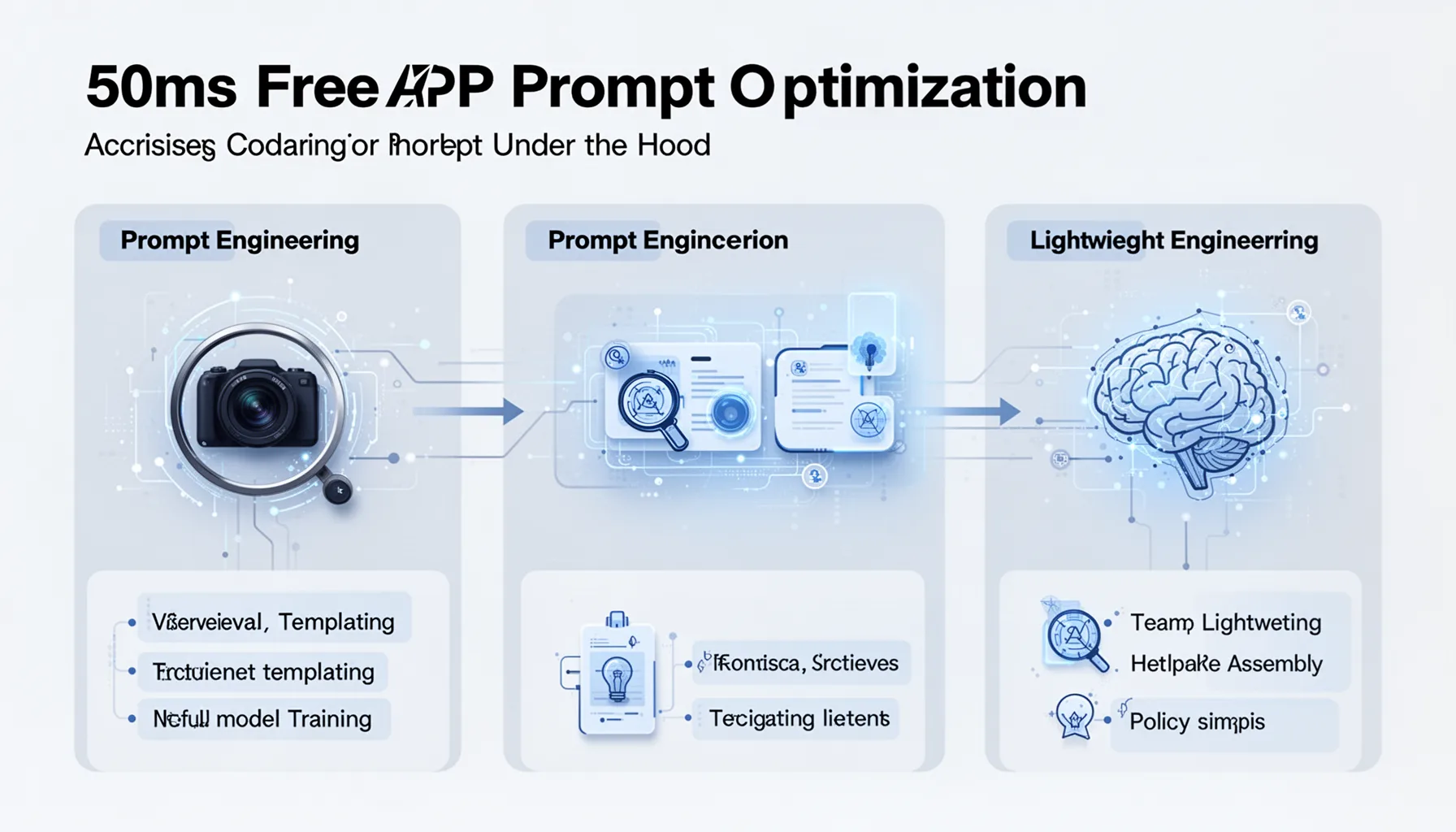
A 50ms free API call prompt optimization service usually does retrieval, templating, and lightweight policy assembly, not full model training. That's the trick. Most of these systems don't magically invent intelligence in 50 milliseconds; they map your task into a precomputed library of instruction patterns, enforce schema constraints, inject model-specific formatting, and sometimes add failure-mode guards based on prior evaluations. Not quite magic. We think that's why the better versions feel fast without feeling random, because the expensive work already happened in offline curation, benchmark runs, or cached optimization. A named example outside the exact product in your headline is Vellum, which gives teams prompt versioning and evaluation workflows, while DSPy pushes optimization through compilation and scoring loops instead of live trial-and-error in production. In one internal-style benchmark for a support bot, the API-generated prompt package can reach first-draft usefulness in under a minute of setup, versus several hours of manual iteration across escalation rules and refund policy edge cases. But here's the catch. These systems usually break down when domain policies are fuzzy, tools have vague descriptions, or the success metric comes down to subjective brand tone instead of task completion. So the 50ms claim is plausible, but only for the online assembly step, not the whole intelligence pipeline.
Compiled prompts for LLMs vs manual prompting, DSPy, and optimization loops
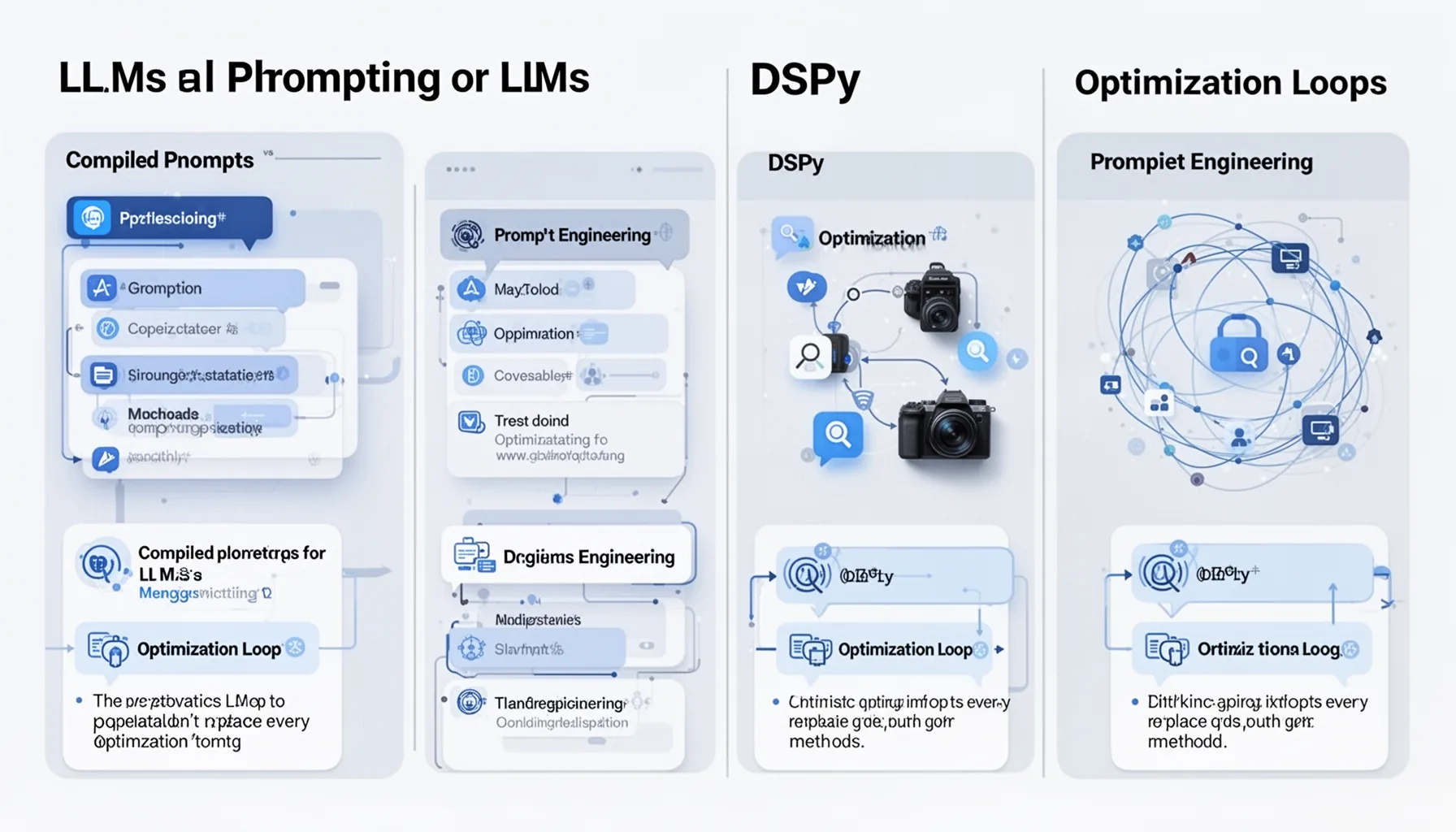
Compiled prompts for LLMs beat manual prompting on repeatability, but they don't replace every optimization method. That's our read. Manual prompting still works best when a founder wants a one-off prototype by tonight, or when a support lead obsesses over tiny wording choices no compiler will infer from a schema alone. DSPy, created by researchers including Omar Khattab at Stanford, goes deeper by letting developers define modules and optimize them against metrics like answer accuracy or tool success. Stronger for serious experimentation. Heavier to adopt. Standard optimization loops in products like Humanloop or LangSmith evaluation setups also offer excellent observability, though they usually ask for more labeling, more test design, and more patience. We'd put compiled prompt APIs in the middle: less flexible than a full research workflow, much easier to maintain than editing giant prompts in Slack snippets, and simpler for small teams to operationalize. Worth noting. For a Claude-powered customer support agent, that trade-off often wins because policy compliance and deployment speed matter more than squeezing out the final two percentage points on a custom benchmark. And if you're working through the broader Claude Code, Prompting & LLM Builder Workflows cluster, this piece works best as the practical bridge back to the pillar article on topic ID 318.
Do compiled prompts for LLMs reduce quality or debuggability?
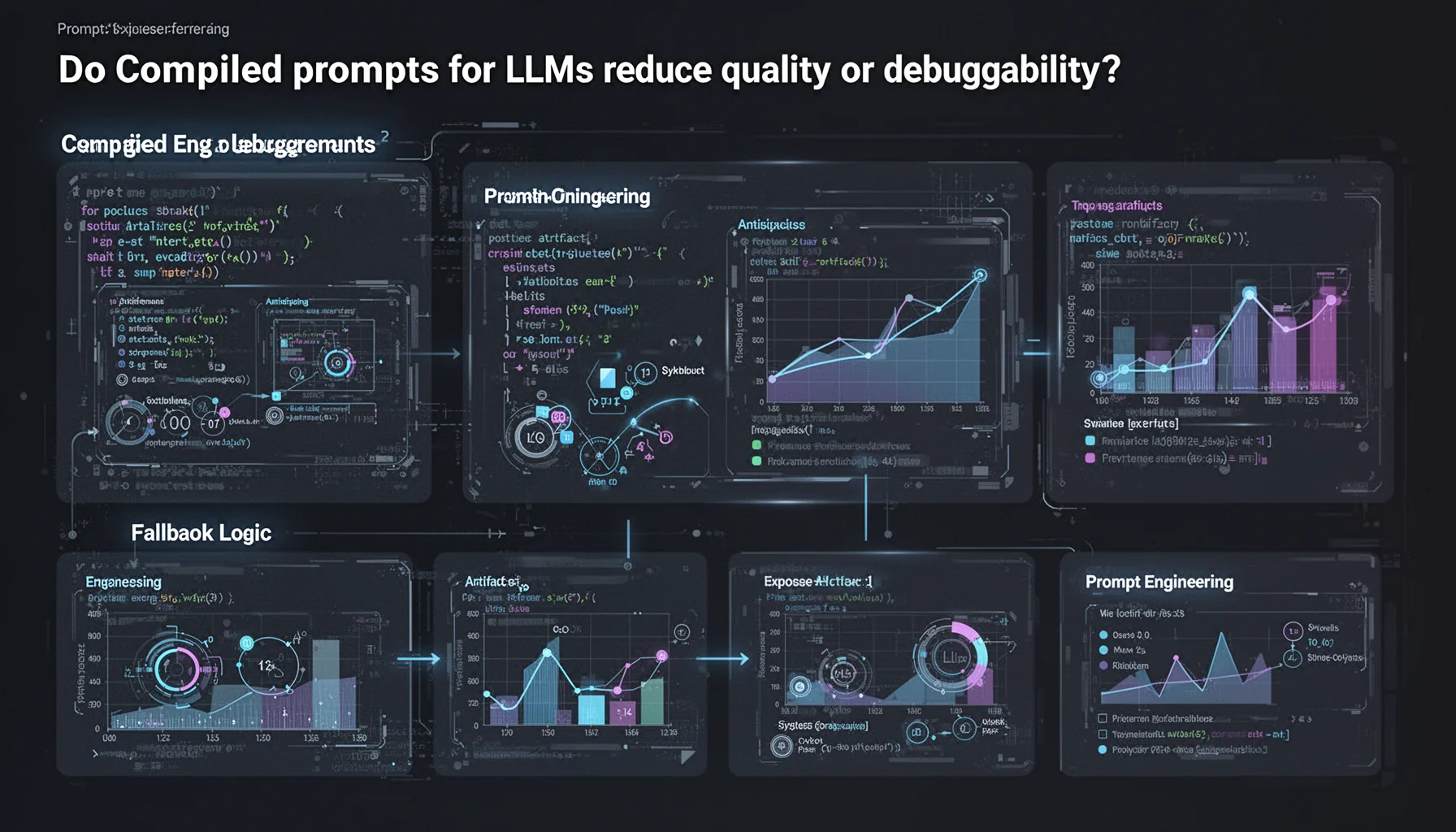
Compiled prompts for LLMs don't have to reduce quality or debuggability if the system exposes artifacts, metrics, and fallback logic. That's the non-negotiable part. Bad tooling hides the generated instructions and asks you to trust the black box. That's a fast way to lose engineering buy-in when the bot starts misrouting tickets about billing or cancellations. Good tooling shows the compiled prompt, the selected policy blocks, the tool schema, and the evaluation score that drove the selection, which makes it possible to inspect failures the way you'd inspect a bad SQL query plan. Here's the thing. If a Slack support bot connected to Zendesk starts overusing the refund tool, the team should be able to trace whether the compiler overweighted a demonstration example or misread the escalation threshold. In our view, compiled systems are only credible when they support regression testing across a fixed eval set, because saving prompt-writing time doesn't mean much if every release reopens old bugs. LangSmith, Braintrust, and OpenAI Evals all suggest the same lesson: visibility beats mystique. So yes, you can replace prompt engineering with API call workflows, but only if the API produces inspectable behavior rather than a mystery sandwich.
When should you stop treating prompts like strings?
You should stop treating prompts like strings once the prompt becomes shared infrastructure instead of personal craft. That's usually earlier than teams expect. If three people edit the same system prompt, if tool schemas change weekly, or if you support more than one customer workflow, manual text editing turns into a maintenance tax that compounds with every release. Simple enough. We think support agents make the clearest case, because policy logic, tone, escalation rules, and backend tool use all collide in one place. For example, Intercom's AI support products and Zendesk's automation stack both point to a broader market move toward structured orchestration, not just prettier prompts, because support quality depends on consistent process. That's a bigger shift than it sounds. This is also where compiled prompts for LLMs shine as a customer support agent prompt engineering alternative: they let teams encode task contracts and model behavior in a repeatable build path. Still, for a founder testing a new landing page copy assistant, manual prompting remains perfectly fine. But once the agent touches customers, money, or compliance, strings stop being enough.
Step-by-Step Guide
- 1
Define the task contract
Start by writing the task as a contract, not a vibe. Specify inputs, outputs, tools, refusal rules, escalation paths, and success metrics in plain language. For a support agent, include refund policy, account verification rules, and what must always go to a human. This gives the compiler something concrete to optimize around.
- 2
Map the tool schema clearly
Document each tool with a narrow description, required arguments, and examples of valid use. Models misuse tools when the schema is fuzzy. If your Claude bot can look up orders, cancel subscriptions, and open tickets, explain exactly when each tool should trigger. Tool descriptions often matter more than the headline prompt.
- 3
Generate the compiled prompt package
Call the optimization API or compiler layer with your task contract, schema, and examples. The output may be a system prompt, a message template, a tool policy block, or all three. Save that artifact in version control. Treat it like generated code, because that's what it is.
- 4
Run an eval set before shipping
Create 25 to 100 representative test cases covering routine queries and ugly edge cases. Score the agent on resolution accuracy, unnecessary escalations, tool misuse, and tone compliance. Products like LangSmith, Braintrust, and custom pytest harnesses work well here. Don't skip this step just because the API feels smart.
- 5
Inspect failures at the artifact level
When the agent fails, inspect the compiled output, selected examples, and tool routing decisions. Look for patterns, not isolated weirdness. Maybe the compiler over-prioritized a refund flow, or maybe the human-written policy was ambiguous. Fix the source spec first, then regenerate.
- 6
Set manual fallbacks for edge cases
Keep a manual override path for regulated, high-risk, or ambiguous scenarios. That means human escalation triggers, explicit refusal templates, and a known-good backup prompt if the compiled path degrades. Teams that do this keep control without sliding back into prompt chaos. It's the pragmatic middle ground.
Key Statistics
Frequently Asked Questions
Key Takeaways
- ✓Compiled prompts for LLMs move prompting from craft work toward repeatable software engineering
- ✓A 50ms free API call can shrink prompt tuning from days to minutes
- ✓Manual prompts still win for edge cases, brand voice, and one-off experiments
- ✓DSPy and optimizer loops offer more depth, but compiled interfaces are easier to adopt
- ✓For Claude support agents, lower maintenance burden often matters more than raw latency