
⚡ Quick Answer
Contained codex networking refers to giving an AI coding agent tightly restricted network access inside a controlled sandbox, rather than letting it browse and call services freely. That matters because coding agents now touch secrets, dependencies, APIs, and production workflows, so network isolation becomes a trust requirement, not a nice extra.
Contained codex networking sounds narrow, almost like a developer-only toggle. It isn't. The post blew up on Hacker News for a reason: it suggests a deeper change in how AI coding agents will behave. Less like chatbots. More like semi-autonomous workers with scoped access to the web, internal tools, and code repositories. And once that line gets crossed, security turns into product design. That's a bigger shift than it sounds. We're not talking about convenience now; we're talking about whether developers, startups, and bigger firms will trust an agent to act at all.
What is contained codex networking and why is Hacker News paying attention?

Contained codex networking means an AI coding agent can reach network resources, but only inside a constrained sandbox with explicit rules and hard edges. That's why Hacker News cared. Developers know that the moment an agent can install packages, call APIs, fetch docs, or touch internal endpoints, it stops looking like harmless autocomplete and starts looking like execution risk. Not quite harmless. This same trust boundary shaped GitHub Copilot for Business, Replit Agent, and Anthropic's Claude Code experiments. And the market moved quickly: Microsoft, OpenAI, Anthropic, and Google now talk about agents through permissions, tools, and policy controls, not just model quality. We'd argue that's the real story. My read is simple. Contained codex networking matters because the industry finally admits useful coding agents need internet access, but users won't accept that access without hard containment.
How does contained codex networking work inside a codex networking sandbox?

A codex networking sandbox works by placing the agent inside an isolated execution environment where outbound traffic, credentials, domains, and file access stay tightly controlled. Security teams have seen these mechanics before. Think ephemeral containers, allowlisted hosts, signed package sources, scoped API tokens, egress filters, audit logs, and replayable sessions. Simple enough. That's not abstract theory; it's standard cloud security practice, and NIST guidance plus SOC 2-aligned controls already push vendors toward traceability and least privilege. For a concrete example, GitHub Actions runners, AWS Nitro isolation, and Cloudflare Zero Trust tools all suggest the same pattern: let automation do useful work, but keep every permission narrow and visible. Worth noting. We'd argue any serious AI coding product that skips this architecture will slam into an adoption ceiling fast.
Why secure networking for ai coding agents is becoming a product requirement
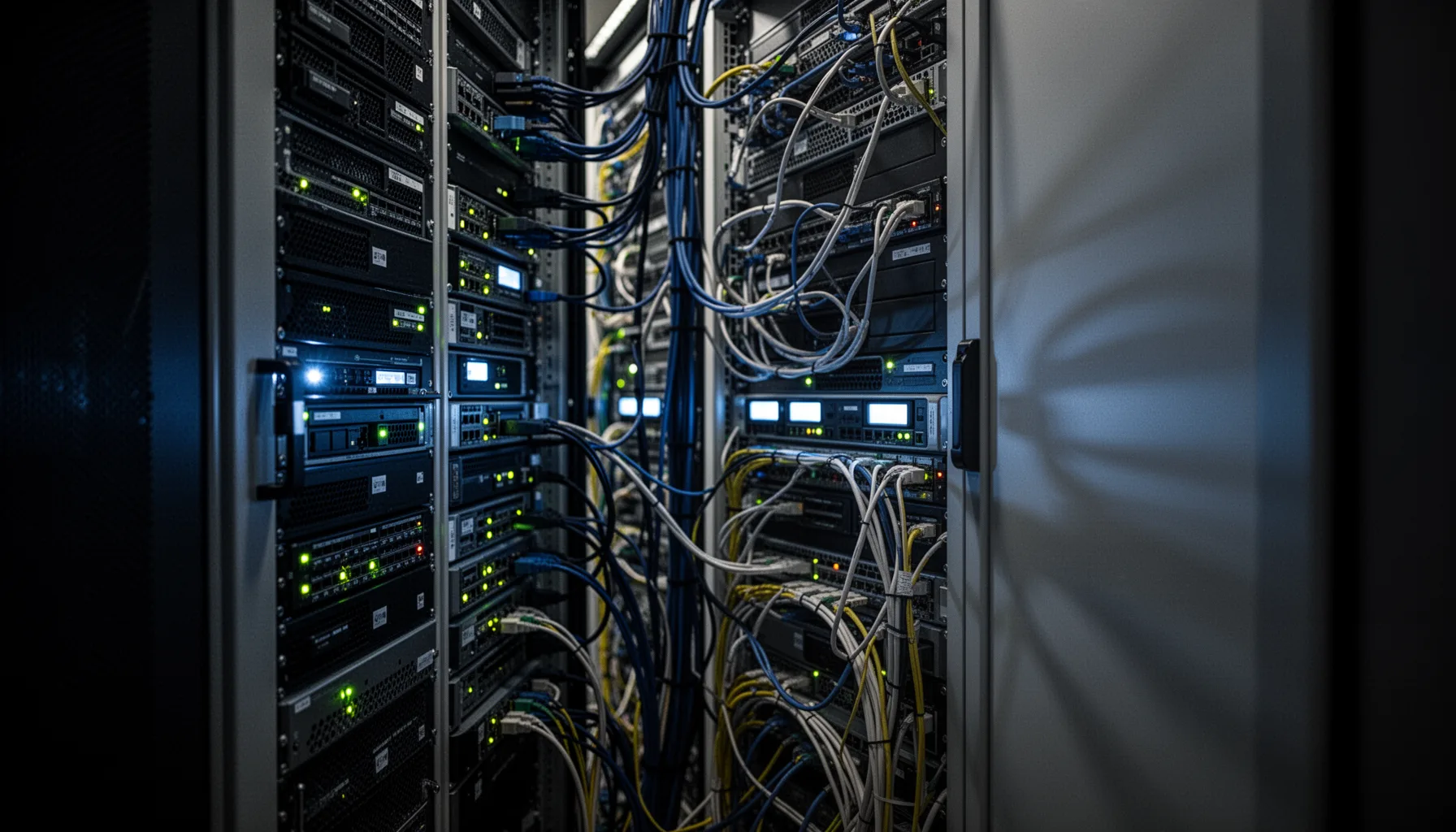
Secure networking for ai coding agents is turning into a product requirement because agents now do more than suggest code; they inspect repos, run tests, fetch dependencies, and sometimes propose infrastructure changes. That's a bigger blast radius. According to Verizon's 2024 Data Breach Investigations Report, credential abuse and supply-chain weaknesses still rank as common entry points, and an agent with broad network access can magnify both. So the buyer question changes. It becomes: "What can it touch, and who can prove it?" That's a healthier market, honestly. A startup using an agent to patch Python dependencies doesn't just need speed; it needs proof the tool only reached PyPI mirrors, didn't exfiltrate environment secrets, and logged each external request. Here's the thing. If vendors can't answer those points crisply, enterprise security teams will stall procurement.
How to contain codex network access without breaking developer workflows

You can contain codex network access by shrinking permissions to the task level, isolating execution, and logging every network action by default. The hard part is avoiding security theater. Developers won't put up with a system that blocks package installs, documentation access, or CI lookups every five minutes, so the best design relies on policy templates tied to common jobs like dependency updates, test runs, or docs retrieval. And OpenAI, Anthropic, and GitHub all appear headed toward this middle path, where users grant bounded capabilities instead of blanket freedom. We'd say that's the right move. A practical setup might allow docs.python.org, an internal artifact registry, and a staging API while denying arbitrary outbound requests and blocking persistent credential storage. Security that kills velocity loses. Security that scopes velocity wins.
Step-by-Step Guide
- 1
Define allowed network destinations
Start by listing exactly which domains, registries, and APIs the agent needs for a given task. Keep the list short. A dependency-update workflow might need GitHub, a package mirror, and a vulnerability database, while nothing else should resolve at all.
- 2
Isolate the agent runtime
Run the agent in an ephemeral container or VM with no standing trust outside the job. That keeps file access, processes, and temporary credentials bounded to a single session. If something goes wrong, you can destroy the environment and inspect the logs.
- 3
Issue short-lived credentials
Give the agent task-scoped tokens that expire quickly and can't be reused elsewhere. This matters more than most teams think. Long-lived secrets turn a one-time mistake into a durable attack path.
- 4
Apply egress and domain policies
Use firewalls, proxy rules, or zero-trust controls to restrict outbound requests to approved targets. Log blocked attempts too. Those failed requests often reveal prompt injection, dependency confusion, or a model trying to go beyond its brief.
- 5
Record every network action
Create tamper-evident logs for DNS lookups, HTTP requests, package installs, and external tool calls. Auditing isn't just for compliance. It gives developers a way to debug the agent and security teams a way to trust it.
- 6
Review and tighten policies regularly
Watch real usage, then remove permissions the agent doesn't need. Most teams overgrant at first. After two or three weeks of logs, you can usually cut access sharply without slowing useful work.
Key Statistics
Frequently Asked Questions
Key Takeaways
- ✓Contained codex networking is really about limiting what an AI agent can reach.
- ✓Sandboxed network access lowers the odds of data leaks and supply-chain mistakes.
- ✓The Hacker News interest reflects a broader shift toward managed AI agent execution.
- ✓OpenAI’s likely path runs through safer agent permissions before richer autonomous features.
- ✓If coding agents gain network freedom, security controls must get much stricter fast.