
DoorDash AI Agents: Only Hundreds of Orders So Far
DoorDash AI agents have driven several hundred orders so far. See what the early figure reveals - and why it does not prove adoption is scaling.
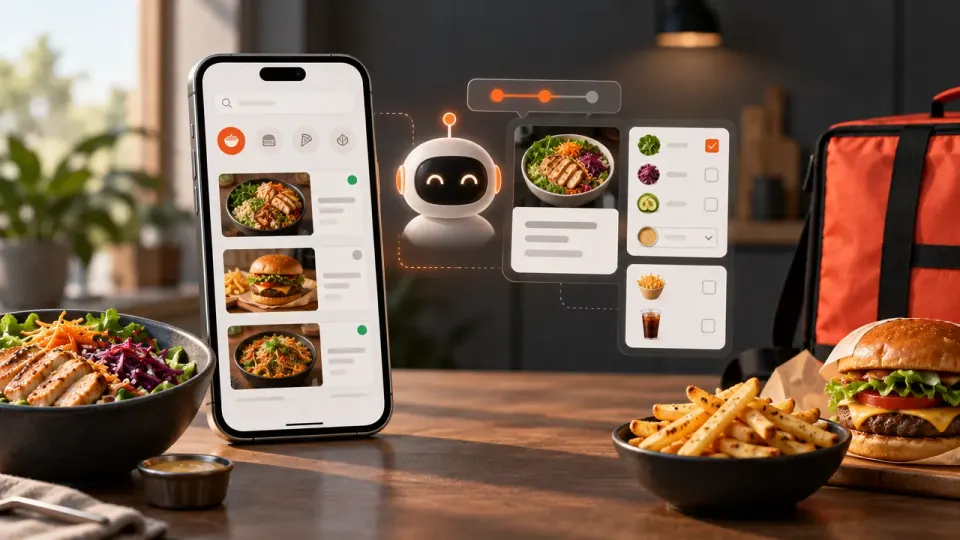
Table of Contents
Quick Answer
DoorDash CEO Tony Xu said AI agents have generated several hundred orders on the platform so far. The tally shows early activity, but without a defined reporting period or repeat-use data, it does not establish widespread adoption.
Xu’s reported tally was a “so far” count, not a stated total for a particular quarter. It should not be compared directly with a quarterly order figure unless the periods match. DoorDash has not provided, alongside the count, a detailed breakdown of which agents were used, how often customers returned, or what kinds of orders they placed.
Why AI agents may be a tougher fit for food ordering
Xu suggested agents may be more useful for purchases that require extended research and comparison. Food delivery often works differently: customers may already know what they want, recognize familiar restaurants, and use DoorDash to place the order directly. For a quick meal, adding an intermediary may not save enough effort to change that habit.
That does not mean there is no role for an agent. A customer planning a meal for a group, balancing dietary needs, or comparing several options could benefit from help narrowing choices. Those are potential use cases, however, not evidence that agents are already handling a large share of DoorDash orders. The reported count does not say whether the orders involved complex requests or simple repeat purchases.
What the early results do - and do not - tell us
Several hundred orders are evidence of activity, not proof of widespread adoption. But a small count at this stage also cannot establish that AI-agent commerce will remain small. Adoption may depend on how reliably agents can understand preferences, select the right items, and complete checkout without adding friction.
For DoorDash, the practical test is whether an agent makes ordering easier than using the app directly. Customers need a clear reason to hand off a task they can already complete quickly. For agents more broadly, food delivery shows that being able to transact is only one part of the challenge: the experience must be useful enough to earn repeat use.
Xu’s figure is therefore a narrow snapshot of an emerging behavior, not a verdict on its future. The next meaningful signs will be whether order volume grows, whether customers return to agents, and whether the technology handles more involved requests well. We’ll continue following AI agents in ecommerce as early experiments develop into - or fall short of - everyday shopping habits.
Frequently Asked Questions
How many DoorDash orders have AI agents generated?
Does the DoorDash figure prove AI-agent ordering is scaling?
Why might AI agents be less useful for food delivery?
What would show that DoorDash AI agents are becoming useful?
Key Takeaways
- Tony Xu described the DoorDash AI-agent order tally as several hundred so far, not as a quarter-specific total.
- The reported count indicates that some customers have used outside agents to order through DoorDash.
- DoorDash did not provide a breakdown of the agents used, repeat orders, or order types alongside the tally.
- Food delivery may be a harder fit for agents when customers already know what they want and can order quickly in the app.
- Growth, repeat use, and success with more involved requests will be important signals of whether agent ordering becomes routine.