
Genesis AI Funding: $500M Bet on Glove-Wearing Robots
Genesis AI funding reaches $500 million to build dexterous humanoid robots. Explore its glove-based training strategy, customer pilots, and 2027 US production plan.
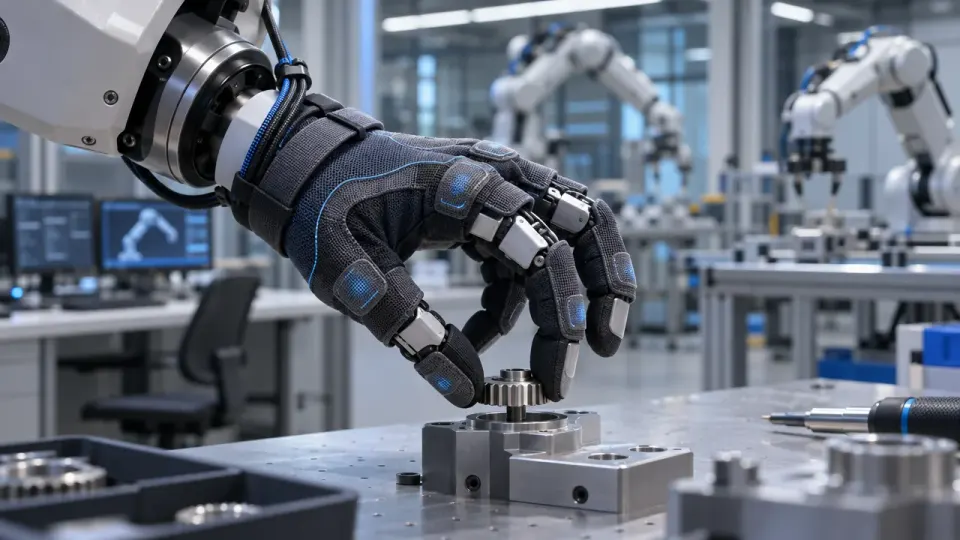
Table of Contents
Quick Answer
Genesis AI raised $500 million in a Series A led by Khosla Ventures, Premji Invest, and Eclipse to develop humanoid robots trained with sensor-equipped gloves. The company is testing 30 to 40 robots with undisclosed customers and plans to begin US mass production in 2027.
The company has built between 30 and 40 robots and is testing them with a small number of customers whose identities have not been disclosed. It plans to begin mass production in the US in 2027. The gap between those early pilots and dependable, scaled deployment is now the central test of the Genesis AI funding story.
Who Is Backing Genesis AI's $500 Million Series A?
Khosla Ventures, Premji Invest, and Eclipse led the $500 million round. The size of the investment gives Genesis substantial backing as it develops both its robotics technology and its manufacturing plans.
Founded in 2024 by graduate-school colleagues, Genesis previously announced a $105 million seed round in July 2025. The new financing is a significant step up as the company moves beyond development and begins working with customers.
How Genesis Combines Robot Training Data, AI, and Dexterous Gloves
Genesis is pursuing a vertically integrated approach. It generates training data, develops its own generative AI model, and designs and builds its humanoid robot. The company’s bet is that coordinating these pieces can help it teach robots to handle tasks that require flexible, precise movements.
Its sensor-equipped gloves are a key part of that strategy. They capture hand movements that can help train robots for dexterity-focused work, including sorting objects and manipulating wires. These tasks demand more than simply moving through a space: a robot must also control its hands and respond to objects with care.
The gloves also point to a broader challenge in robotics. Machines need useful examples of how people perform real tasks, while companies need AI systems that can translate those examples into reliable actions. By developing its data pipeline, model, and robot together, Genesis aims to build that connection within one company.
Genesis is entering a field that includes humanoid-robot makers such as Figure and Agility. Its stated emphasis is on dexterity and training data, rather than a claim that one approach has already solved the larger deployment challenge. The practical measure will be whether its robots can perform useful work consistently outside controlled demonstrations.
From Customer Pilots to Planned US Mass Production
The current fleet of 30 to 40 robots gives Genesis a starting point for testing its systems with customers. But pilots involving a small number of undisclosed users are an early signal, not proof that the robots are ready for broad commercial use. Scaling will require dependable performance across repeated tasks, alongside a manufacturing process that can produce machines in meaningful numbers.
Genesis says it plans to begin mass production in the United States next year. That timeline raises the stakes for the pilots: customer feedback must inform the robot’s design and capabilities, while the company prepares to manufacture at a much greater scale.
The broader challenge is moving humanoid robots from impressive laboratory demonstrations to reliable automation. Genesis AI’s $500 million round is a major bet that its integrated strategy and dexterity focus can help make that transition. The next evidence will come from how its customer trials progress and whether its US production plan stays on schedule.
Follow our robotics coverage for updates on Genesis AI’s customer pilots, production plans, and the broader race to build useful humanoid robots.
Frequently Asked Questions
How much funding did Genesis AI raise?
How do Genesis AI's sensor-equipped gloves help train robots?
How many robots is Genesis AI testing?
When does Genesis AI plan to begin mass production?
Key Takeaways
- Genesis AI raised $500 million in a Series A led by Khosla Ventures, Premji Invest, and Eclipse.
- The company is building its training data, generative AI model, and humanoid robots in-house.
- Sensor-equipped gloves capture hand movements to support training for dexterity-focused tasks.
- Genesis has built between 30 and 40 robots and is testing them with a small number of undisclosed customers.
- The company plans to begin mass production in the United States in 2027, with pilot performance and manufacturing scale still to be proven.