
⚡ Quick Answer
The GPT 5.5 leaked chain of thought codex incident probably does not prove full hidden reasoning exposure on its own. In most cases, short fragments like this fit better into tool trace, planning stub, or debug text categories than true internal chain-of-thought.
People are calling this a GPT 5.5 leaked chain of thought codex moment. But that headline runs ahead of the evidence. The screenshot circulating from Codex looks more like a clipped, internal-sounding phrase about a file path and current working directory than some long, reflective monologue. That matters. And when every odd planning fragment gets labeled chain-of-thought, we muddy the line between a real model-governance problem and a pretty ordinary product bug.
Was the GPT 5.5 leaked chain of thought codex incident really chain-of-thought?

The short answer: probably not, at least from what anyone has shown in public. The visible fragment reads more like a compressed task note or execution stub than a full reasoning trace with premises, options, and conclusions. Over the last two years, OpenAI and other labs have pulled back from exposing detailed internal reasoning, especially after policy shifts that favored concise answers over raw scratchpads. That's a real trend. Anthropic, Google DeepMind, and OpenAI have all talked about hidden reasoning or summarized reasoning in different ways, even while product interfaces sometimes still spill small artifacts during tool use. In our view, the strongest clue is the syntax. File name. Path request. cwd reference. Those point to workflow state, not human-like private deliberation. A real chain-of-thought leak would usually reveal more coherent intermediate logic, not a clipped note about where the code lives. Worth noting.
How to classify a codex chain of thought leak: tool trace, planning stub, debug text, or true reasoning
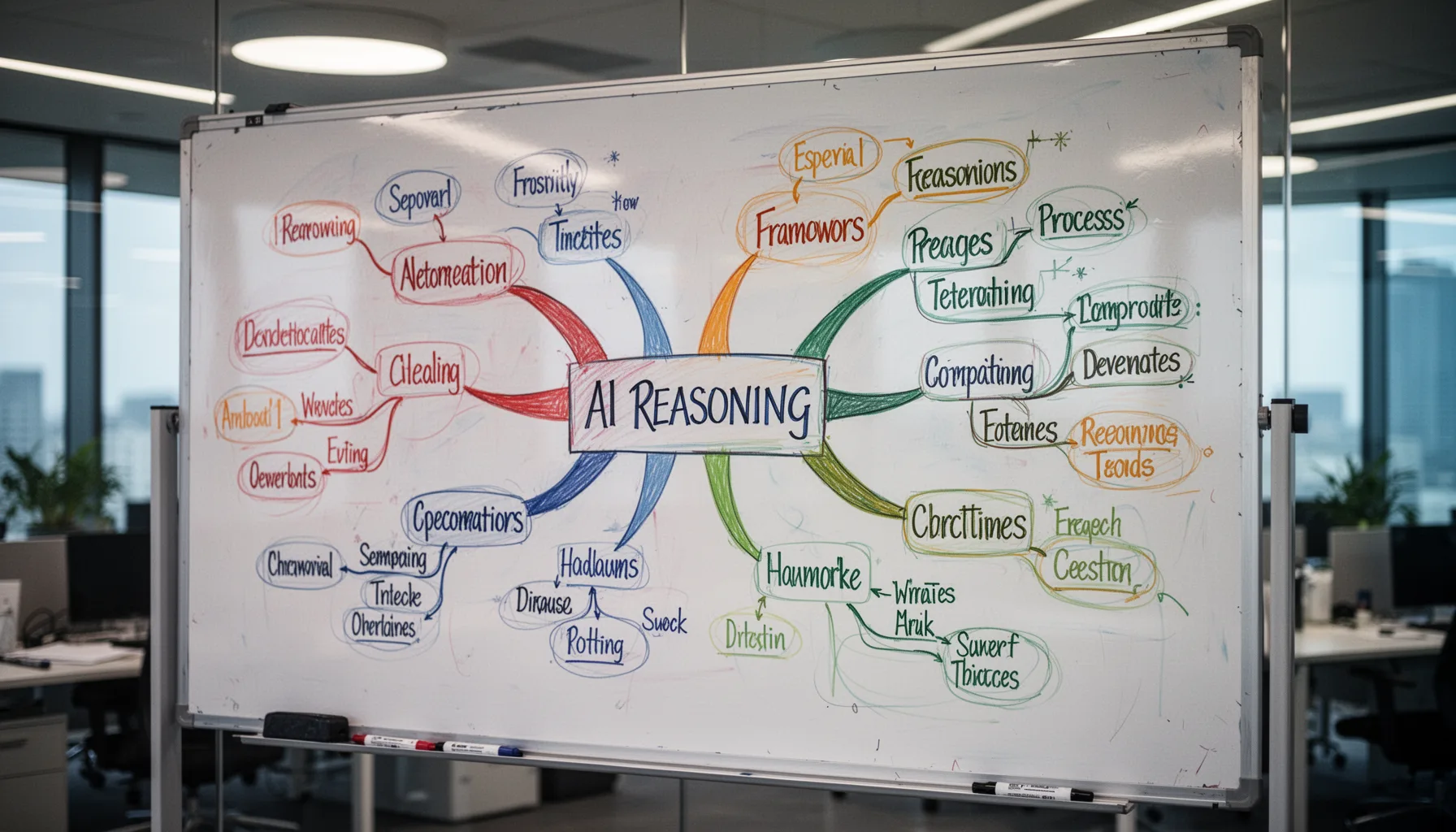
The cleanest way to judge a codex chain of thought leak is to sort it into a small taxonomy before making big claims. Simple enough. First, a tool trace usually describes actions around files, terminals, commands, paths, or API calls; GitHub Copilot Workspace style systems and code agents often leave these breadcrumbs during orchestration. Second, a planning stub is a terse internal-looking note like 'need absolute path' or 'find failing test first.' That's compressed intent. Not deep reasoning. Third, debug text often comes out malformed, clipped, or repetitive because the model or wrapper surfaced content from the wrong channel. That's common. Fourth, true internal reasoning would expose a longer inferential chain, often with assumptions, alternatives, self-critique, or latent policy handling. We'd argue the reported GPT 5.5 reasoning trace exposed here fits planning stub plus possible debug artifact much better than category four, and that difference matters for both headlines and incident response. That's a bigger shift than it sounds.
Why the GPT 5.5 reasoning trace exposed claim matters anyway

Even if the GPT 5.5 reasoning trace exposed claim ends up overstated, the incident still matters because hidden channels carry product, security, and evaluation risk. If a coding agent accidentally emits internal planning text, users may see file structure, environment assumptions, or system behavior they were never supposed to see. That can dent trust. For enterprise teams working with code assistants in regulated environments, accidental disclosure of hidden prompts or traces may also complicate audit review under standards such as SOC 2 control logging or internal secure-development rules. Here's the thing. NIST's AI Risk Management Framework pushes teams to document failure modes and user-facing anomalies, and this fits that bucket exactly. A Microsoft or OpenAI enterprise buyer won't spend much time debating whether the leak counts as philosophical chain-of-thought; they'll care whether it exposed sensitive context, broke abstraction boundaries, or made outputs harder to validate. So yes, the taxonomy matters. But the operational consequence matters too. Worth noting.
What prior research says about hidden scratchpads and compressed reasoning

Prior research points to a messy middle ground between visible reasoning and totally opaque output. Work from OpenAI, Anthropic, and academic groups such as Stanford's Center for Research on Foundation Models suggests that models often do better when they get room for intermediate computation, yet vendors increasingly hide those steps to reduce prompt leakage, policy gaming, and unsafe imitation. That's the tradeoff. Papers on chain-of-thought prompting after Wei et al. made the method famous also triggered a product-era correction. Labs realized that exposing every intermediate token can create security, compliance, and competitive headaches. More recent work on monitoring reasoning and faithfulness also suggests that what a model says it thought doesn't always match what actually drove the answer. So when users see GPT 5.5 prompt style caveman reasoning or clipped shorthand, they shouldn't assume they caught the model's pure inner life. They may have seen a compressed summary, a wrapper artifact, or a planning cache peeking through the UI. We'd argue that's the more likely read.
How developers should reproduce and report an OpenAI codex hidden reasoning output responsibly
The right move is to gather reproducible evidence before posting a dramatic claim about an OpenAI codex hidden reasoning output. Start by saving the exact prompt, model name, timestamp, interface, tool settings, and whether file access, shell access, or agent mode was enabled. Then rerun the same task in a clean environment with the same repository state, because many apparent leaks depend on path structure, tool retries, or interrupted context windows. Keep logs. If the output reveals secrets, redact them before sharing, and report the issue through official vendor channels first instead of dumping raw screenshots onto social media. We'd also label the artifact with the taxonomy above so responders know whether they're looking at a tool trace, planning stub, debug text, or plausible true reasoning. That gives OpenAI or any other vendor a cleaner bug report. And it gives the wider community a better signal than another viral post with a giant conclusion stapled on. Simple enough.
Step-by-Step Guide
- 1
Capture the raw output
Save the exact text exactly as the system displayed it. Include formatting, truncation, timestamps, and the model identifier, because tiny details often reveal whether the content came from a tool layer or the model itself. Screenshots help, but raw text is better for debugging. And preserve surrounding turns too.
- 2
Record the runtime conditions
Write down whether Codex had access to files, shell tools, repositories, or browsing. Note the current working directory, operating system, and any wrapper product involved, since orchestration layers often inject hidden planning prompts. This is where many false alarms start. Environment details matter more than people think.
- 3
Reproduce in a clean session
Run the same prompt in a fresh workspace with the same repo state. Then try one change at a time, such as disabling tools or shortening context, to isolate the trigger. If the strange text disappears, you've learned something useful. If it persists, you have a stronger report.
- 4
Classify the artifact
Use a simple label: tool trace, planning stub, debug text, or likely internal reasoning. That forces discipline and avoids overclaiming in public. Most incidents won't land in the final bucket. But some may.
- 5
Redact sensitive material
Remove secrets, file paths tied to private systems, customer names, and proprietary code before sharing. Hidden-channel leaks can accidentally expose more than they first appear to. That's a security issue, not just a product oddity. Treat it seriously.
- 6
Report through the vendor channel
Send the cleaned reproduction package to the official bug bounty, support, or feedback route. Include expected behavior, actual behavior, and your classification of the artifact. Public discussion still has value, but vendor triage should come first when hidden outputs may expose system internals. That's just good practice.
Key Statistics
Frequently Asked Questions
Key Takeaways
- ✓Most viral reasoning leaks look more like tool traces than full private deliberation
- ✓A short broken sentence is weak evidence of genuine hidden chain-of-thought exposure
- ✓Developers need a taxonomy before declaring a Codex chain-of-thought leak
- ✓Security impact depends on whether the output reveals policy, prompts, or execution details
- ✓Responsible reproduction beats screenshots if you want vendors to fix model leaks