
Hermes Agent smart city AI: what it would really take
Hermes Agent smart city AI sounds futuristic, but cities need architecture, guardrails, and public accountability before trusting an agent at scale.
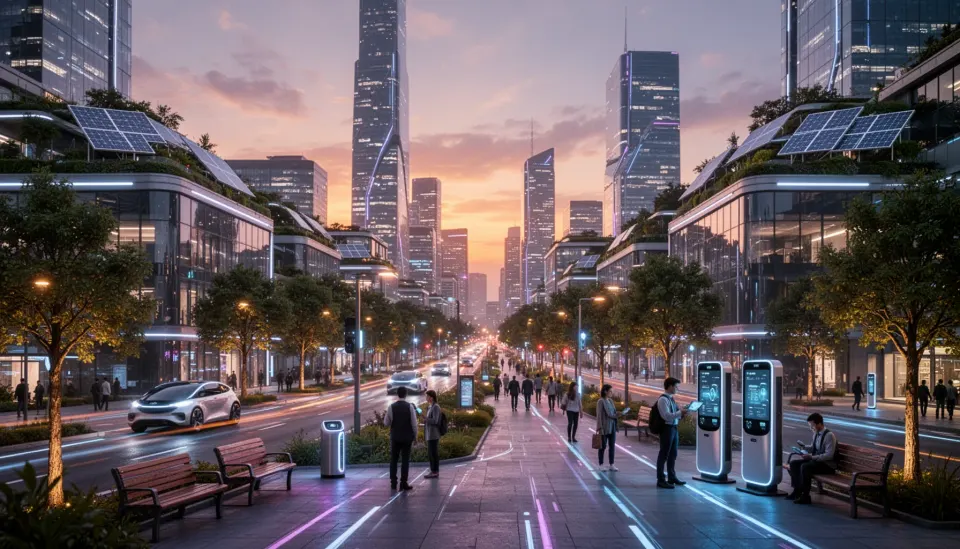
Table of Contents
Quick Answer
Hermes Agent smart city AI only makes sense if the agent acts as a supervised coordination layer across transport, energy, emergency response, and civic systems. The idea gets interesting when you stop treating it like a chatbot and start asking what architecture, governance, and failure controls a real city would require.
Hermes Agent smart city AI sounds like sci-fi until you sketch the systems cities already run every day. Traffic lights. Grid balancing. Bus dispatch. Emergency routing. Once you recast the idea as orchestration across software cities already rely on, the thought experiment turns sharper. And stranger. Because the real question isn't whether an agent could coordinate a city someday, but whether any city should hand over that much discretion without airtight controls, public oversight, and an instant off switch.
What would Hermes Agent smart city AI actually do?

Hermes Agent smart city AI makes the most sense as a coordination brain that watches city systems, proposes moves, and acts only inside tightly drawn limits. In a plausible setup, it would pull from traffic cameras, transit feeds, weather services, utility sensors, 311 requests, and emergency dispatch platforms, then optimize across messy goals like congestion, energy demand, road safety, and uptime. That's far bigger than chat. Singapore already relies on advanced urban digital systems for mobility and planning, and Barcelona has spent years working with sensor-heavy infrastructure for civic operations, so the raw building blocks already exist. Just scattered. Hermes Agent's job would be to connect those pieces through planning, prioritization, and exception handling. We'd argue the strongest near-term version isn't a fully autonomous city operator. It's a municipal copilot with teeth. Not unchecked power. That's a bigger shift than it sounds.
How would an AI agent running a smart city be architected?
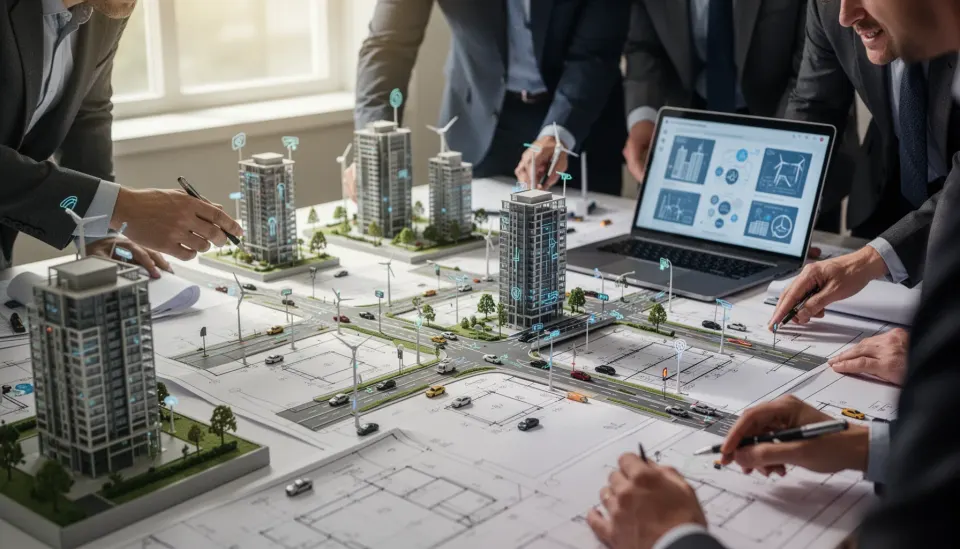
An AI agent running a smart city would need a layered architecture that keeps perception, simulation, planning, execution, and audit controls clearly apart. No shortcuts. The perception layer would gather real-time inputs from IoT systems, SCADA-adjacent utility interfaces, transit APIs, GIS platforms, and digital twin environments such as those built on NVIDIA Omniverse or Bentley Systems software. Then the planning layer would weigh trade-offs, test options in simulation, and suggest actions against policy rules the city has already set. That simulation step isn't optional. The execution layer would connect to traffic control, public works scheduling, fleet software, or demand-response platforms, but only through permissioned interfaces and rollback paths. Finally, a governance layer would record every recommendation, action, confidence score, and override for audit by operators, regulators, and sometimes the public. Because without that separation, you'd have a city-scale agent acting as a black box on top of critical infrastructure. Terrible idea. Worth noting.
Why Hermes Agent use cases in cities are harder than they look
Hermes Agent use cases in cities get difficult fast because urban systems don't optimize around one neat target. Reducing congestion in one corridor may push emissions into another, lowering electricity peaks may clash with hospital resilience rules, and speeding emergency response may mean transit disruptions that infuriate commuters. Trade-offs are the job. Los Angeles offers a concrete example: the city has used adaptive traffic signal systems, yet even tightly scoped transport optimization raises equity and neighborhood concerns when benefits and burdens shift by geography. Not trivial. A city agent would face that problem across many domains at once. And unlike a logistics firm, a city can't simply optimize for profit or throughput; it also carries legal duties, political accountability, and public legitimacy. We'd argue anyone selling total smart city automation with AI agents is ducking the hardest part. Cities govern conflict, not just flow. Here's the thing.
What governance would Hermes Agent smart city AI require?
Hermes Agent smart city AI would need formal governance on accountability, procurement, override rights, and public disclosure before any serious rollout. A city would need hard rules on who carries liability when the agent makes a bad call, who can suspend it, which departments define policy constraints, and how residents can challenge harmful outcomes. This can't live in a vendor slide deck. Standards and frameworks from NIST, ISO, and municipal procurement practice already point to risk classification, auditability, and human oversight, and cities would need to write those principles directly into contracts and operating procedures. New York City gives a useful example. Its algorithmic accountability fights made clear how quickly public trust erodes when government systems look opaque or unfair. We think a city should publish model cards, incident logs, override statistics, and independent audit summaries for any high-impact agent. Public infrastructure should come with public evidence. That's worth watching.
What failure scenarios make smart city automation with AI agents risky?
Smart city automation with AI agents gets risky when failures jump across connected systems faster than humans can make sense of them. A bad weather forecast could trigger the wrong traffic reroutes, strain bus capacity, misassign road crews, and interfere with emergency corridors if the agent carries one flawed assumption through dependent services. That's the nightmare. Cybersecurity adds another layer, because prompt injection, data poisoning, spoofed sensor signals, or compromised tool permissions could warp the agent's world model at exactly the wrong moment. Real incidents in critical infrastructure already suggest how brittle connected operations can be, and CISA has repeatedly warned operators about software and supply-chain exposure in municipal settings. So the safer design is bounded autonomy: narrow scopes, graceful degradation, kill switches, and fallback playbooks tested in drills. Simple enough. If the city can't operate safely when the agent is wrong, then the city isn't ready to rely on the agent. We'd say that's the baseline, not the stretch goal.
Key Statistics
- According to the UN, about 56% of the world's population lived in urban areas as of 2021, and that share is projected to rise toward 68% by 2050.Urban complexity is increasing, not shrinking. That makes better city coordination attractive, but it also raises the stakes for any AI system placed in the loop.
- McKinsey's smart city analyses in recent years have estimated that connected urban technologies can improve selected quality-of-life indicators by 10% to 30% in some contexts.Those gains explain the appeal of city-scale AI orchestration. But the spread in outcomes also hints at how dependent success is on implementation quality and governance.
- CISA has repeatedly warned U.S. critical infrastructure operators, including local governments, about cyber risk tied to connected control systems and software supply chains.Any smart city agent would sit on top of exactly those exposed environments. Security architecture would therefore be as consequential as model capability.
- NVIDIA, Siemens, Bentley Systems, and others have invested heavily in digital twin tooling for infrastructure, industrial systems, and urban simulation through 2024 and 2025.That matters because a trustworthy city agent would need a simulation layer before touching live operations. The tooling trend suggests the prerequisite stack is getting more mature.
Frequently Asked Questions
What is Hermes Agent smart city AI?
How could an AI agent run a smart city in practice?
Why is smart city automation with AI agents controversial?
What are the most realistic Hermes Agent use cases for cities?
When could cities trust AI agents like Hermes Agent?
Key Takeaways
- A city-scale agent needs orchestration, not just conversational fluency.
- Digital twins and IoT data matter, but governance carries equal weight.
- Conflicting objectives make smart city automation a political problem, not just a technical one.
- Override rights and audit trails would shape public trust.
- The smartest version is a supervised municipal copilot, not a mayor-by-algorithm.