
⚡ Quick Answer
Jensen Huang says a new $200 billion market for AI agents could emerge around CPUs and enterprise infrastructure that support agentic workloads. His argument is that AI agents won't run on accelerators alone; they also need general-purpose compute for orchestration, memory-heavy tasks, and system control.
Jensen Huang $200 billion market AI agents is a striking claim, even for Nvidia. Not small. But it doesn't come out of nowhere. Huang argues that the next surge in AI spending won't end with GPUs for training and inference; it'll spill into the wider compute stack that keeps agents alive, linked up, and actually useful inside real companies. Short version: more than chips. And that's where CPUs return to the picture. If he's right, Nvidia isn't chasing a side bet. It's trying to redraw how AI infrastructure gets defined.
What does Jensen Huang $200 billion market AI agents actually mean?
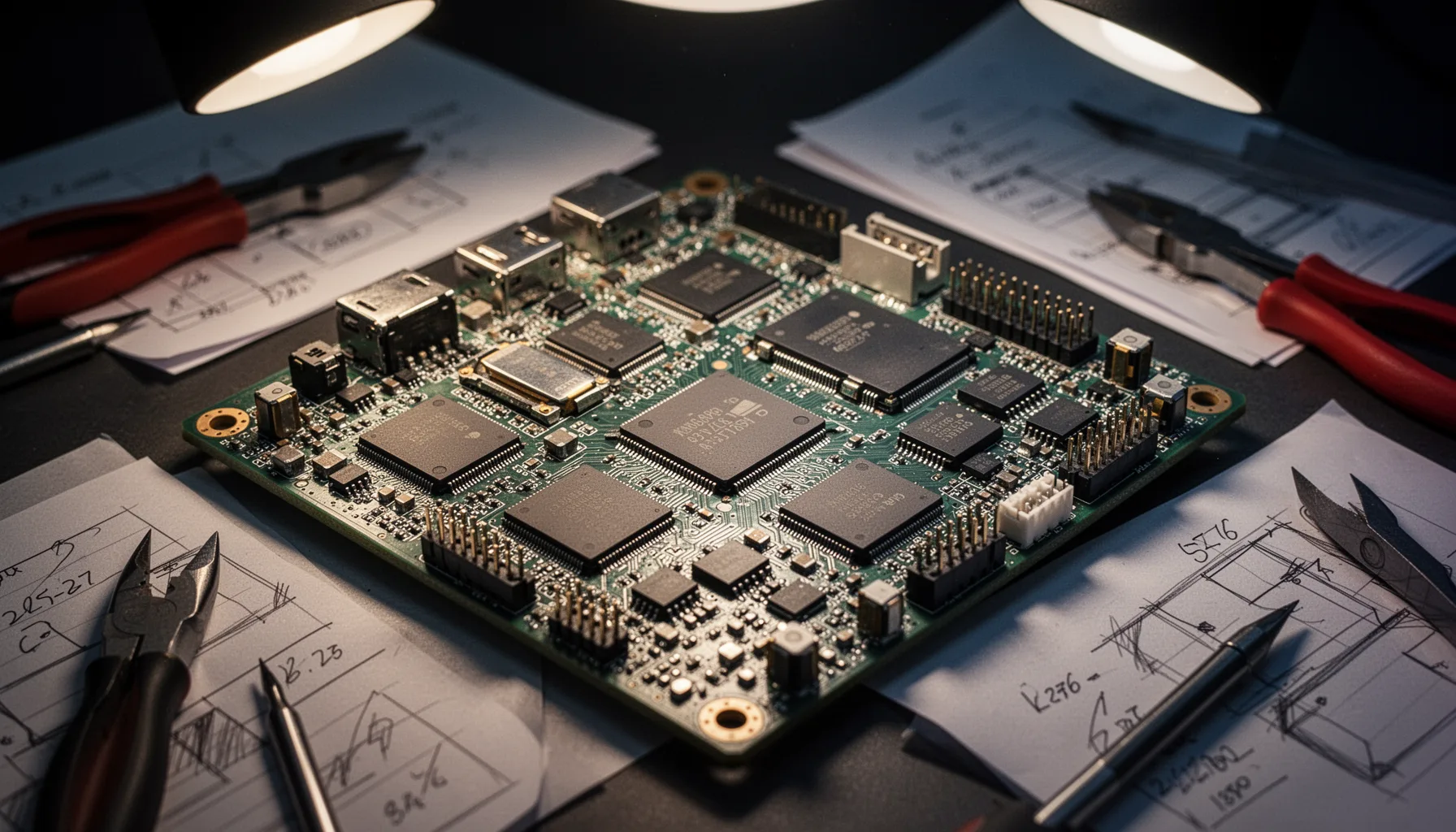
Jensen Huang $200 billion market AI agents signals that Nvidia sees a huge opening in the infrastructure needed to run agentic software at enterprise scale. Big opening. Huang's point isn't just that agents need chips. It's that AI agents act more like software workers than chatbots, so they need scheduling, memory movement, tool calls, security checks, retrieval, and coordination across systems that GPUs can't cover by themselves. That leaves room for CPUs, networking, storage, and full-stack platform software. That's a bigger shift than it sounds. The estimate is aggressive, no question. But Nvidia has spent years expanding past accelerators into systems with NVLink, BlueField DPUs, networking from the Mellanox acquisition, and Grace CPUs, so the strategy fits an existing pattern rather than a throwaway line. We'd read the $200 billion figure less as a precise forecast and more as a market-framing message for customers and investors. Think of Amazon Web Services in its early expansion phase.
Why AI agents need CPUs as well as GPUs

AI agents need CPUs as well as GPUs because most enterprise agent workflows revolve around orchestration and system interaction, not just raw tensor math. That's the plain truth. A GPU can generate the next tokens quickly, but a CPU often runs the application logic around them: retrieving records, calling APIs, managing browser sessions, validating outputs, scheduling tasks, and coordinating across users or services. That's the less glamorous part. Yet it often shapes end-to-end agent performance in real deployments. Worth noting. Consider a procurement agent that reads contracts, queries SAP, opens a browser session, checks policy rules, and routes an approval; only part of that workload belongs on an accelerator. SAP is a concrete example here. And Intel, AMD, and Nvidia all get this, which is why the fight is shifting beyond model speed toward total platform efficiency. Huang's claim lands because agents are systems problems, and systems problems usually reward balanced compute.
How Nvidia CPUs for AI agents fit the company’s broader strategy

Nvidia CPUs for AI agents fit the company's wider strategy of controlling more of the AI data center, not just the accelerator slot. That's not trivial. Grace CPUs, DGX systems, networking, CUDA, inference software, and enterprise AI offerings all suggest the same goal: make Nvidia the default foundation for building and running AI services. Agents sharpen that pitch because they stress every layer of the stack. If businesses deploy thousands or even millions of semi-autonomous software workers, they'll care about memory bandwidth, low-latency networking, workload orchestration, observability, and secure system access as much as model throughput. That's where Nvidia wants to sell complete systems instead of isolated parts. We'd argue that's the real play. We saw a version of this in hyperscale computing. Simple enough. The difference now is that agent infrastructure could push spending outward from training clusters into day-to-day operating environments across finance, healthcare, retail, and software firms. Think JPMorgan, Epic, Walmart, or Salesforce.
Is the new Nvidia market for AI agents realistic or overstated?

The new Nvidia market for AI agents looks plausible in direction, though probably overstated in timing and in how tidy the rollout appears. Not quite. Enterprise software adoption rarely moves on stage-demo schedules, and many so-called agents today still act like scripted assistants with a thin reasoning layer. Even so, the spending case holds up. If companies move from chat interfaces to agents that take actions across ERP systems, browsers, CRMs, and internal knowledge bases, they'll buy more compute, networking, security controls, and management software. That's the core logic. Deloitte's 2024 enterprise AI surveys already pointed to rising budgets for generative AI pilots and scaled deployments, which gives Huang's thesis some footing. Worth watching. But the real question isn't whether agents need infrastructure. It's whether businesses will trust enough agentic workflows, fast enough, to create a market anywhere near $200 billion on Nvidia's preferred timeline. Deloitte gives the argument some ballast.
Key Statistics
Frequently Asked Questions
Key Takeaways
- ✓Huang is betting AI agents create huge demand for CPUs alongside Nvidia's GPU business
- ✓Agent systems need orchestration, memory handling, and I/O work that CPUs still own
- ✓This isn't just a chip story; it's an enterprise infrastructure story
- ✓Nvidia wants a bigger role in full-stack AI agent deployment, not only training
- ✓The $200 billion figure is ambitious, but the logic behind it isn't crazy