
⚡ Quick Answer
The LLM tools that matter in production are the ones that keep systems reliable, observable, and cheap enough to run at scale. LangChain and raw model SDKs can help with prototypes, but production success usually depends more on queues, tracing, caching, evals, schema enforcement, and guardrails.
The LLM tools that actually matter in production usually aren't the ones all over tutorials. That's the awkward part. Teams get nudged to study LangChain or memorize the OpenAI SDK, and then production shows up with a very different mess: retries, broken JSON, runaway spend, and traces that don't exist when you need them. We've watched this happen enough times to say it plainly. Framework-first advice often trains people for slick demos, not systems that keep working once real users pile in. And when traffic lands, that gap gets pricey fast.
What LLM tools that matter in production actually do

LLM tools that pull their weight in production cover reliability, control, and visibility across the whole application lifecycle, not just prompt wiring. Short version: prompt assembly isn't the hard part. A real production system has to handle request routing, schema checks, caching, fallbacks, and failure recovery before anyone should care about fancy chains. That's a bigger shift than it sounds. Teams working with only a model SDK often realize they can't answer basic questions, like which prompt version caused a refusal spike or why latency suddenly jumped in one region. Redis for semantic or response caching, Celery or Temporal for queued workflows, and Pydantic or JSON Schema for structured output all address very specific breakpoints tutorials tend to glide past. LangChain can speed up exploration, sure. But without a tracing layer through Langfuse, Arize Phoenix, Helicone, or OpenTelemetry, you're basically flying blind. Worth noting. Our view is blunt: the production stack starts exactly where the demo stack runs out.
Why best LLM production tools beyond LangChain beat framework-first thinking
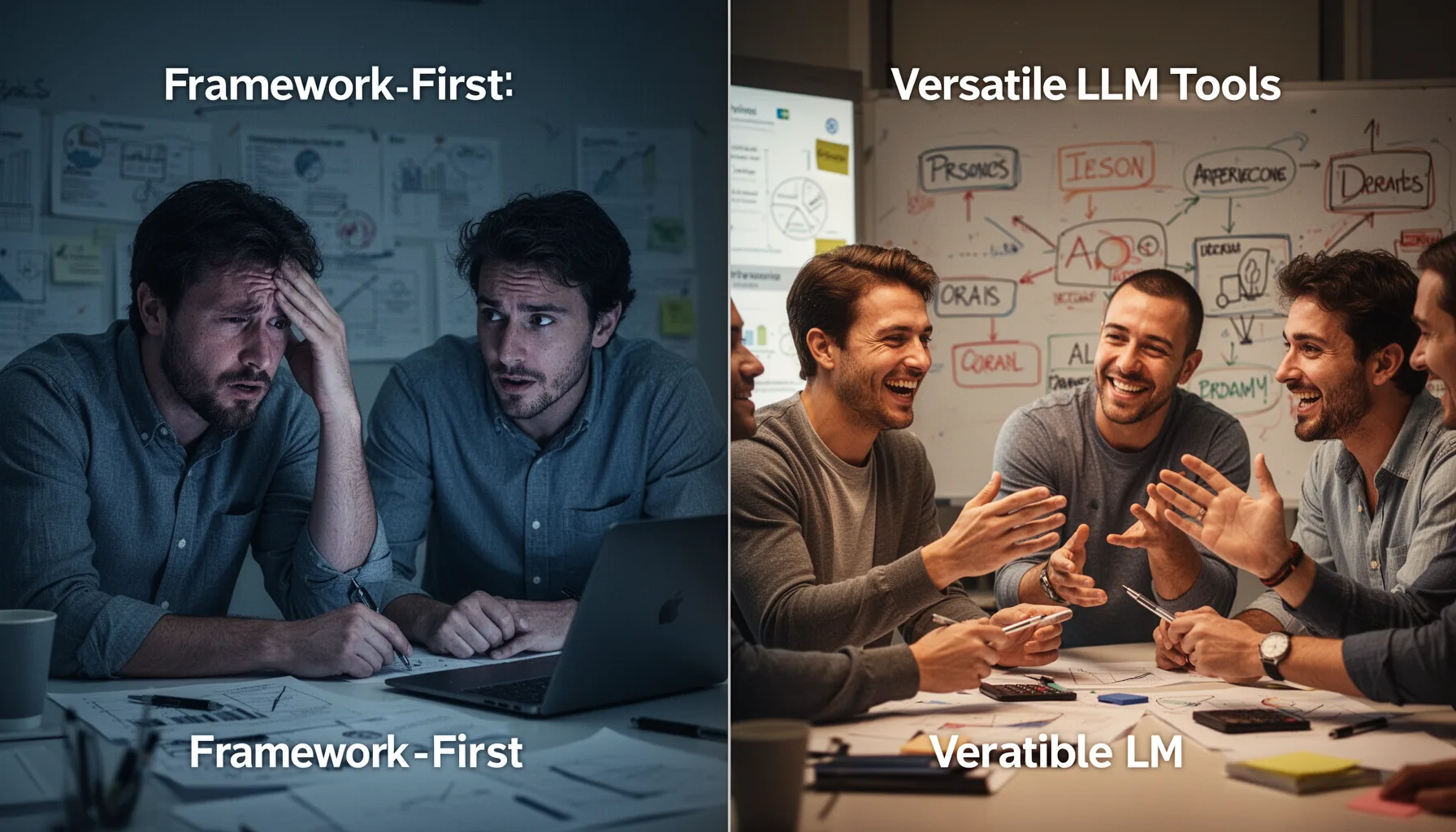
The best LLM production tools beyond LangChain beat framework-first thinking because production failures usually come from infrastructure and process, not from missing abstractions. Simple enough. Frameworks have their place, but they also tempt teams to wrap straightforward logic in thick orchestration before they've measured where the real complexity sits. That tends to create brittle apps. A support automation team at, say, Intercom could build an agentic flow in LangChain, then find out the real problem is duplicate retries from the job queue, malformed tool output, and no rollback path when a third-party API stalls. Not quite what the tutorial promised. In that kind of setup, Temporal, FastAPI, PostgreSQL, and a tracing layer matter more than an agent framework. Even OpenAI's own SDK won't rescue you there. So we'd start thinner: direct SDK calls, explicit business logic, strict schemas, and workflows you can actually observe, then add orchestration only when repeated patterns genuinely justify the extra machinery.
Which LLM observability tools for production matter at each maturity stage
LLM observability tools for production matter in different ways at different maturity stages, so teams should choose with that in mind instead of copying some startup architecture diagram from X. Here's the thing. At the experimentation stage, request logs, prompt versioning, and cost tracking may be enough; Helicone, Humanloop, or even custom dashboards can do the job. Once you ship customer-facing features, you need traces that connect prompts, model versions, latency, tool calls, and user outcomes in one place. That's where Langfuse, Weights & Biases Weave, Arize Phoenix, or OpenTelemetry pipelines start to earn their rent. Worth noting. At scale, evaluation joins observability. Companies like Notion, Klarna, and Ramp have all talked publicly about careful instrumentation and testing around AI features, because output quality doesn't stay fixed just because the endpoint still returns 200 OK. The editorial point is simple: if you can't inspect failures by segment, model, prompt version, and downstream action, you don't have production readiness. You have a belief system.
What breaks when teams rely only on OpenAI SDK alternatives for production AI
What breaks when teams rely only on OpenAI SDK alternatives for production AI is usually everything around the model call that makes software dependable. That's the sneaky part. The model might answer, but the app can still fall over from malformed output, retry storms, timeout cascades, or cost spikes caused by repeated context stuffing. So OpenAI SDK alternatives for production AI aren't really about swapping one vendor library for another. They're about adding the missing control plane around any vendor. Think of a customer service app on AWS. If it doesn't have SQS buffering, idempotent task handling, schema validation, and fallback routing to another model when latency blows up, users will still get a flaky experience no matter how polished the prompt looks. We've seen teams learn this late. And when they do, they often strip out framework logic in favor of plain Python or TypeScript, add Pydantic or Zod for structure, put requests behind queues, and introduce model routers like LiteLLM or custom gateways. Not glamorous. But that's how production survives traffic.
How to choose an AI infrastructure stack for production apps
Choosing an AI infrastructure stack for production apps starts with maturity, risk, and operating constraints, not brand popularity. We'd argue that's the only sane place to begin. A small internal tool may need only a model SDK, a database, structured output, and basic logs. A customer-facing workflow with SLAs probably needs queues, tracing, prompt versioning, evals, caching, and policy controls from day one. Here's a practical decision matrix in prose. For experimentation, optimize for speed and explicit code; for deployment, add queueing and schemas; for growth, add observability and eval pipelines; for regulated contexts, add governance, audit logs, and access controls; for cost pressure, add caching and routing across providers. Concrete tools will vary. One team might pair FastAPI, PostgreSQL, Redis, LiteLLM, Langfuse, and Pydantic, while another on GCP might reach for Cloud Run, Pub/Sub, BigQuery, Vertex AI evals, and OpenTelemetry. Worth noting. The rule that matters most is simple: choose components that make failure obvious and can be swapped out without rewriting the whole application.
Step-by-Step Guide
- 1
Map the failure path
Start by tracing what happens before, during, and after every model call. Include authentication, retrieval, tool use, retries, parsing, and user delivery. Most teams find the model isn't the only fragile point. That's useful news.
- 2
Keep orchestration thin
Write core business logic in plain code before adopting heavy orchestration layers. That makes behavior easier to test and easier to migrate later. If a framework stops paying rent, you should be able to remove it without surgery.
- 3
Enforce structured outputs
Use JSON Schema, Pydantic, or Zod to validate outputs at the boundary. This catches silent failures early and gives downstream systems something dependable. Free-form text feels flexible until billing or compliance workflows break.
- 4
Instrument every request
Log prompts, model versions, latency, token counts, tool calls, and user outcomes. Connect them in a trace you can query by customer, feature, and release version. If you can't inspect regressions quickly, you'll end up arguing from anecdotes.
- 5
Add queues and retries carefully
Put long-running or high-volume tasks behind a queue such as Celery, Temporal, SQS, or Pub/Sub. Make retries idempotent and set strict backoff rules. Otherwise one flaky dependency can multiply cost and chaos in minutes.
- 6
Run evals before and after releases
Build a small but representative evaluation set tied to your real task. Test model, prompt, and workflow changes before rollout, then watch live metrics after deployment. Production quality drifts more often than teams expect.
Key Statistics
Frequently Asked Questions
Key Takeaways
- ✓Production LLM apps usually break on operations, not because they're missing one more framework.
- ✓Thin stacks tend to age better than heavy orchestration layers for most teams.
- ✓Tracing, retries, and structured outputs often matter before agent abstractions do.
- ✓Evaluation and cost controls should show up early, not after launch chaos.
- ✓The right tool choice changes with maturity stage, team size, and risk tolerance.