
⚡ Quick Answer
Runtime security for AI agents means monitoring agent behavior live, scoring risky actions, enforcing policies before execution, and rolling back harmful runs when needed. It matters because production agents can leak PII, trigger bad tool actions, or loop through costly workflows long before offline testing catches the issue.
Runtime security for AI agents has gone from a nice idea to something production teams plainly need. Because real agents don't just answer questions. They call APIs, touch customer data, and kick off workflows. One bad loop can keep running for minutes. And one careless retrieval step or tool call can expose PII, create bogus records, or fire off an email nobody meant to send. That's a bigger shift than it sounds. The move from chatbot demo to autonomous pipeline has rewritten the security discussion.
What is runtime security for AI agents and why does it matter?
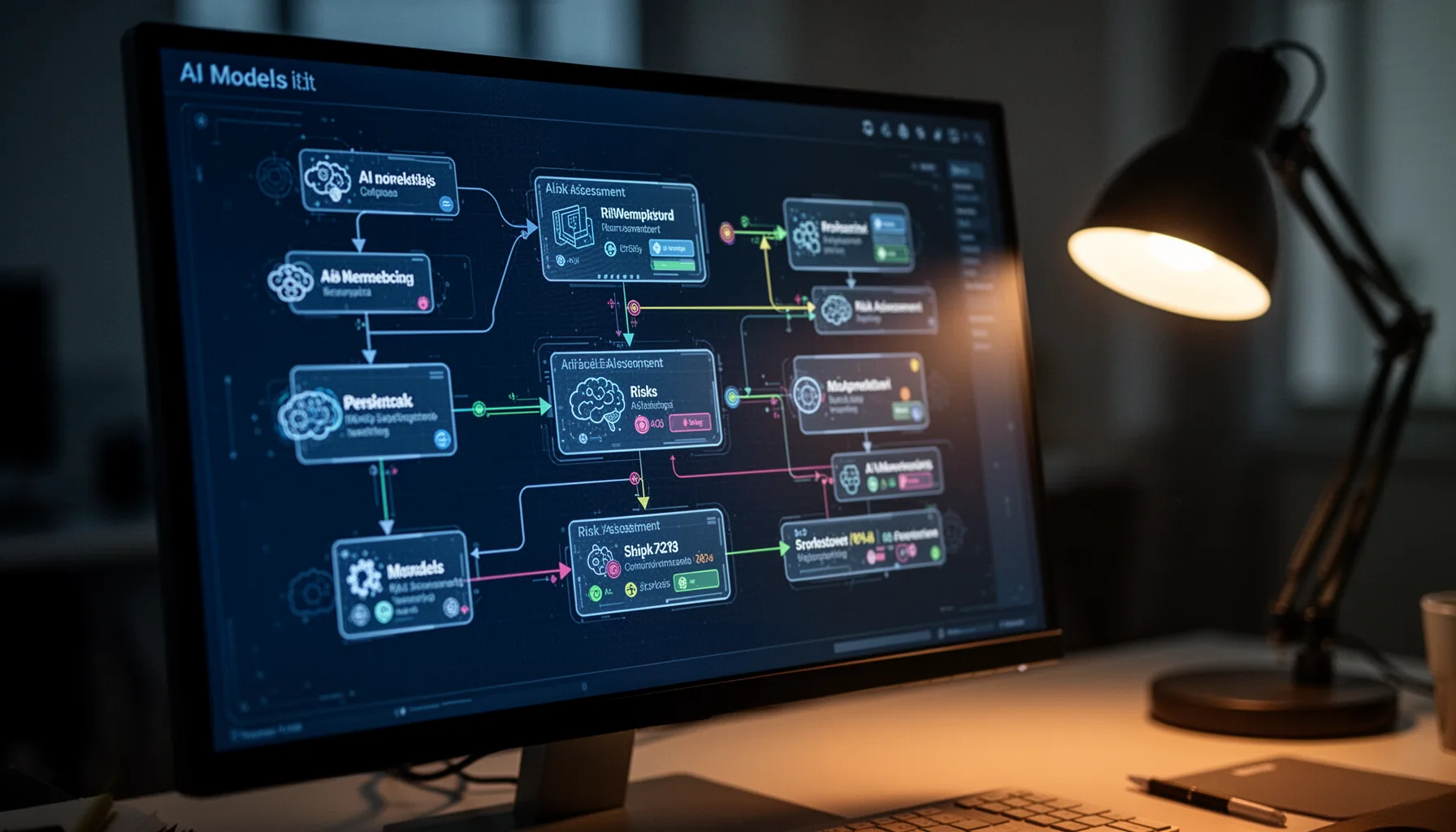
Runtime security for AI agents is the live control layer that watches agent behavior, scores risk, and steps in before an unsafe action lands. Pre-deployment testing still matters. But it won't cover every prompt variation, every tool response, or every action chain an agent may try once it's loose in production. That's the uncomfortable truth. Microsoft, NVIDIA, and Cisco all published agent security guidance over the past year that points to runtime controls, not just model hardening, because behavior comes from the whole system. A retrieval agent tied into Salesforce and Jira can look safe across ten test cases, then break when stale permissions, malformed records, and prompt injection show up together. Not quite. We'd argue this part is simple: if an agent can act, it needs a runtime referee. And unlike static guardrails, runtime security can judge risk from context, sequence, and intent as the run unfolds.
How AI agent risk scoring works in production pipelines

AI agent risk scoring assigns a severity signal to actions, states, or full trajectories during execution. A mature setup doesn't just tag one prompt as safe or unsafe. It looks at combinations: external tool calls, access to sensitive fields, repeated retries, and policy mismatches. Think Stripe-style fraud scoring, but aimed at agent behavior. For example, an internal HR agent that asks for employee compensation data and then tries to export it by email should earn a much higher score than a plain FAQ lookup. Teams building with LangChain, LlamaIndex, or Semantic Kernel can attach scorers to tool calls, retrieval outputs, and memory writes. Worth noting. The strongest setups will likely mix deterministic rules with lightweight model-based classifiers, because rules catch hard violations while models pick up stranger patterns. And once a score crosses a threshold, teams can pause execution, ask for human approval, or send the run into a sandbox. Here's the thing.
How policy enforcement prevents AI agents leaking PII in production

Policy enforcement stops AI agents from leaking PII in production by turning governance rules into blocking controls right when the action happens. This is where plenty of teams get sloppy. They write a policy doc, add a system prompt that says 'do not expose sensitive data,' and hope the agent behaves. Hope isn't a control. Real enforcement checks whether a tool call, message, or state update breaks constraints tied to data class, user role, destination, and purpose. If an agent built with OpenAI function calling or Anthropic tool use tries to send Social Security numbers to Slack, the policy engine should block it outright and record why. NIST AI RMF 1.0 and OWASP guidance for LLM applications both back this shift toward explicit safeguards and auditability. We'd go further. If your control can't stop an unsafe action in milliseconds, it's governance theater. That's a bigger shift than it sounds.
Why rollback for AI agent pipelines is a core safety feature

Rollback for AI agent pipelines is a core safety feature because many agent mistakes touch external systems, not just chat transcripts. If an agent updates a CRM record, opens a support ticket, changes inventory, or emails a customer, you need a way to reverse or compensate for that action chain. Database engineers learned this decades ago. Agent teams are learning it again the hard way. A solid rollback system tracks execution state, records which tools changed what, and supports either transactional undo or compensating workflows when a true reversal isn't possible. Shopify-style idempotency patterns and saga-style distributed transaction ideas are useful models here, especially for multi-step agents spread across several services. Simple enough. The key point, and we'd stress it, is that rollback isn't only for catastrophic failures. It also cuts the cost of experimentation, because teams can let agents act within bounds while keeping a practical recovery path.
What a production AI agent security monitoring stack should include

A production AI agent security monitoring stack should include telemetry, risk scoring, policy enforcement, rollback controls, and human escalation. Miss one, and you've left a hole. Datadog, Honeycomb, Arize, LangSmith, and OpenTelemetry already give teams pieces of the observability side. But observability by itself won't stop a bad action. You need event-level traces for prompts, tool calls, retrieved documents, outputs, and state mutations, all tied to identity and policy context. Then you need control points. A serious stack also keeps tamper-resistant logs for audit review, because regulated sectors like finance and healthcare will ask who approved what and when. Worth noting. If we're honest, the near-term winners in agent infrastructure won't just be the smartest models. They'll be the platforms that make risky agents boring to operate.
Step-by-Step Guide
- 1
Map every agent action surface
List each place the agent can read, write, call, or send data. Include tools, retrieval sources, memory stores, outbound channels, and human handoff paths. You can't secure behavior you haven't enumerated.
- 2
Define runtime risk signals
Choose the events that should raise concern during execution. Common signals include access to sensitive records, repeated retries, cross-system writes, privilege jumps, and unusual output destinations. Keep the first version simple enough to tune with real incidents.
- 3
Enforce blocking policies
Translate written policy into executable checks before every consequential action. Tie rules to user identity, data type, tool, destination, and approved purpose. If a rule only alerts after the action fires, it's too late.
- 4
Instrument rollback paths
Record state changes with enough detail to reverse or compensate for them later. For databases, that may mean transactional controls; for external systems, it may mean idempotent updates or compensating actions. Test rollback on messy scenarios, not just clean demos.
- 5
Route high-risk runs to humans
Create thresholds that trigger review before the agent continues. High-risk doesn't always mean malicious; it can mean ambiguous, expensive, or legally sensitive. Human approval is still one of the strongest safety controls when uncertainty spikes.
- 6
Review incidents and retrain controls
Use every blocked run, rollback, and near miss as data for the next policy iteration. Update scores, thresholds, and allowlists based on what actually happened in production. Security controls age fast when agent behavior changes weekly.
Key Statistics
Frequently Asked Questions
Key Takeaways
- ✓Runtime security watches what agents do during execution, not just before launch.
- ✓Risk scoring gives teams a practical way to prioritize dangerous behavior fast.
- ✓Policy enforcement can block unsafe tool calls before damage spreads.
- ✓Rollback is essential when an agent workflow changes state or external systems.
- ✓Production agent security needs telemetry, controls, and human escalation paths together.