
Local AI companion architecture: every design choice explained
A transparent local AI companion architecture breakdown using Python, ChromaDB hybrid retrieval, Gemini, and Ollama fallback.
Table of Contents
Quick Answer
This local AI companion architecture uses Gemini 2.5 Flash as the main model, Ollama qwen3:4b as a local fallback, and ChromaDB hybrid retrieval to keep responses useful when budgets or network conditions get ugly. The design works because each component was chosen against real constraints: cost, latency, observability, testability, and failure recovery.
People often pitch local AI companion architecture like a tidy win. I don't buy that. I built a local AI companion with Python 3.12, ChromaDB hybrid retrieval, Gemini 2.5 Flash, and an Ollama fallback, and the useful bit isn't the stack diagram everyone loves to post. It's the messier trail: decisions, reversals, bugs, and tradeoffs that pushed the system to a place where 470-plus tests pass and the code no longer feels embarrassing. That's the real story. Worth noting.
Why this local AI companion architecture looks hybrid instead of pure local

This local AI companion architecture ended up hybrid because pure local was too brittle on quality, while pure cloud cost too much and leaned too hard on network health. I started with a plain constraint set: keep recurring costs sane, keep the app responsive on consumer hardware, and make sure it still answers when a hosted model slows down or fails. So Gemini 2.5 Flash became the primary model for everyday quality and speed, while Ollama running qwen3:4b served as the safety net on the same machine. That combo sounds messy. It is. But hybrid design beats ideological purity when you're building for actual use instead of screenshots. Google pitches Gemini 2.5 Flash as a fast, lower-cost tier, and in practice that matters more than benchmark theater when every request carries a price. We'd argue that's a bigger shift than it sounds. The best stack for local AI companion work is the one that degrades gracefully, not the one that wins arguments on X.
How ChromaDB hybrid retrieval Ollama fallback improved answer quality and uptime
ChromaDB hybrid retrieval Ollama fallback turned out to sit at the center of the system, not off to the side as a nice extra. Retrieval gave the assistant memory and grounding, which left the model less room to invent facts or drop prior context. I reached for ChromaDB for persistence because it was easy to operate in Python, friendly to iterative schema changes, and fast enough for a solo build without dragging in a separate search stack too early. Hybrid retrieval matters because embeddings alone miss obvious keyword hits, while keyword-only lookup skips semantic neighbors. That's a practical problem. So by combining both, recall improved in the cases users actually notice, especially personal notes, prior chats, and tool outputs with odd phrasing. Here's the thing. When Gemini failed or tripped the circuit breaker, Ollama could still answer with the same retrieved context, which kept fallback responses from feeling like a total downgrade. If you're trying to build a local AI assistant with Python, retrieval quality often makes the difference more than stepping up to a pricier model tier. ChromaDB earned its place. Worth watching.
How the Gemini primary Ollama fallback architecture actually fails in production
The Gemini primary Ollama fallback architecture only works if you assume failure from the first draft. Hosted APIs don't just fail cleanly; they stall, rate-limit, spike in latency, or return answers that look valid until you inspect them closely. So I added a circuit breaker around the remote model path, with thresholds tuned to repeated errors and latency patterns rather than one bad call. That sounds like overkill. It wasn't. Circuit breakers stop a struggling dependency from dragging the whole assistant into a timeout swamp, and they make fallback behavior predictable instead of chaotic. Ollama's qwen3:4b isn't a like-for-like substitute for Gemini 2.5 Flash, and pretending otherwise would be dishonest, but it's good enough for continuity when the system needs local autonomy. In my experience, users forgive a slight drop in eloquence far faster than they forgive total failure. That's not trivial. Resilience is a product feature, and too many AI companion app system design write-ups still treat it like plumbing. Stripe learned this lesson years ago in payments; AI apps are finally catching up.
What 18k lines and 470 tests taught me about AI companion app system design
AI companion app system design gets fragile fast, so test coverage mattered more than any single framework choice. With more than 18,000 lines of Python 3.12 code and over 470 passing tests, the project crossed the point where intuition stopped being enough for safe changes. Tests covered retrieval behavior, fallback routing, persistence, prompt assembly, and edge cases around partial failures, because those are the places hybrid systems quietly rot. And yes, writing those tests slowed feature shipping for a while. Still, they paid back every time a refactor touched prompt formatting or storage schemas and didn't break the app in some weird corner. Python 3.12 gave some ergonomic and performance gains, but the language version wasn't the hero here; discipline was. We'd argue many builders underinvest in observability too, even though request tracing and structured logs often explain strange behavior faster than another prompt tweak. Not quite glamorous. But debugging costs are real, and they rise much faster than line count in local-cloud systems. Datadog didn't become a giant by accident. Worth noting.
What I’d keep, cut, and change in this best stack for local AI companion work
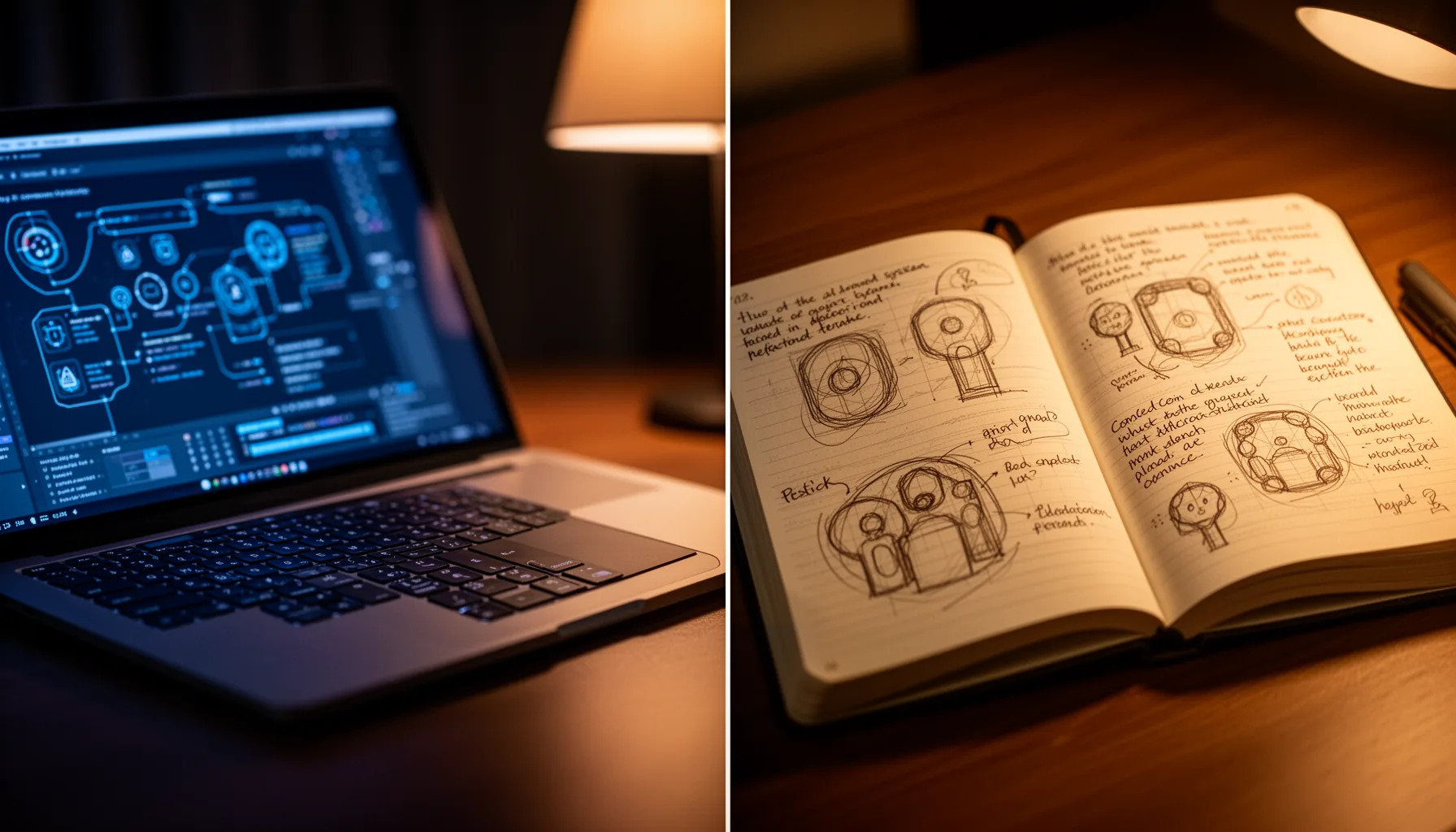
The best stack for local AI companion projects is the one you'd still want after six months of maintenance, and that filter wipes out a lot of clever ideas. I'd keep Python 3.12, ChromaDB, the primary-plus-fallback model split, and the circuit breaker because they produced a system that stays usable under ordinary failure. I'd also keep the decision journal mindset. It forces honesty. What I'd cut is some of the early abstraction around components that didn't yet have stable interfaces, because premature modularity made debugging harder, not easier. A few parts were plainly overengineered, especially where I tried to future-proof features that only one user path actually touched. If I were rebuilding today, I'd simplify orchestration, tighten telemetry earlier, and postpone fancy routing until user behavior justified it. Simple enough. That's probably the clearest lesson here: local AI companion architecture works when every moving part earns its keep. We'd keep less. That's the bigger shift than it sounds.
Key Statistics
- The project runs on Python 3.12 with 18,000+ lines of code and 470+ passing tests.That scale matters because hybrid AI systems tend to accumulate hidden coupling, and broad test coverage reduces regression risk when routing or retrieval logic changes.
- Google markets Gemini 2.5 Flash as a fast, cost-conscious model tier for high-throughput use cases.That positioning fits assistant workloads where response speed and per-call economics matter as much as raw model quality.
- ChromaDB remains one of the most widely adopted open source vector databases in Python-first AI app workflows, based on GitHub and developer tooling usage patterns through 2024.Its popularity points to a practical advantage: easier local development and simpler deployment for small teams compared with heavier search stacks.
- Circuit breaker patterns have been standard reliability practice since Martin Fowler popularized the pattern for distributed systems, and they remain common in microservice production stacks.Applying that same pattern to model routing is a sensible move because hosted LLMs behave like any other flaky external dependency under load.
Frequently Asked Questions
What is a local AI companion architecture?
Why use ChromaDB hybrid retrieval in an AI companion?
How does Gemini primary Ollama fallback architecture work?
Why are circuit breakers useful in local-cloud AI systems?
How many tests do you need for a local AI assistant project?
Key Takeaways
- This local AI companion architecture favors recovery paths over shiny model demos.
- ChromaDB hybrid retrieval matters more than model size for grounded recall.
- Gemini primary and Ollama fallback gives better uptime on tight budgets.
- Circuit breakers, tests, and logs saved more time than clever abstractions.
- Some complexity paid off, but a few layers plainly weren’t worth it.