
⚡ Quick Answer
Loop engineering vs prompt engineering comes down to scope: prompts shape one interaction, while loops govern how an AI system iterates, checks work, uses tools, and recovers from mistakes. For developers, that means the prized skill is shifting from writing clever instructions to designing reliable AI workflows.
Loop engineering vs prompt engineering is suddenly all over the place, and there's a real reason for that. A single prompt still gets useful work done. But when AI starts editing code, running tests, calling tools, and revising its own output across multiple turns, the center of gravity shifts fast. That's what Claude Code's creator is pointing to. We'd argue the claim sounds sharper than it really is. Prompt craft still matters. Just not as the main event anymore.
What is loop engineering in AI, and why is it overtaking prompt craft?

What is loop engineering in AI? It's the practice of designing the repeat cycle where a model plans, acts, checks what happened, revises, and either finishes the task or asks for help. That's a wider frame than prompt engineering, which mostly tunes the wording of a single request or short exchange. In tools like Claude Code, OpenAI Codex-style agents, and Cursor, the model doesn't just reply once. It inspects files. It edits code. It runs commands, reads errors, and tries again. That changes the developer's job. The real question becomes, "What should the system do after it gets something wrong?" Not merely, "How should I phrase the first instruction?" That's a bigger shift than it sounds. So loop engineering vs prompt engineering isn't some trendy slogan. It's a pretty accurate description of where serious AI-assisted development is headed. Simple enough.
Loop engineering vs prompt engineering in real developer workflows

Loop engineering vs prompt engineering gets obvious the second you watch an agent tackle a nontrivial coding task. Give it a one-shot prompt for a React component, and prompt skill might be enough. Ask that same system to refactor an authentication flow, preserve tests, update docs, and avoid a legacy billing module, and now you're dealing with a workflow problem. Claude Code, for example, becomes far more useful when the user sets boundaries, verification steps, and stop conditions around what the model can do. That's the core of loop design. And developers who skip this often confuse repeated retries with intelligence. They're really watching an unconstrained loop wander through a codebase. We'd argue the best practitioners now think more like systems engineers. Define the task. Constrain actions. Inspect outputs. Wire in recovery. Worth noting.
Why Claude Code prompt engineering no longer main skill makes sense

Claude Code prompt engineering no longer main skill makes sense because the bottleneck has moved from language quality to execution control. That's a blunt way to put it. Still, it lines up with what teams report in practice. Once a coding assistant already understands common instructions reasonably well, the extra lift from polishing phrasing gets smaller, while the gain from better task decomposition, test harnesses, and tool permissions gets much bigger. Think about a repo migration at Stripe, Shopify, or Block scale. The risk isn't that the model misunderstood the words "update imports." The risk is that it touched the wrong modules, skipped validation, or made changes nobody can audit. So the next-generation AI skill is designing loops that limit blast radius, force evidence, and surface uncertainty before bad code ships. Here's the thing. That's not a tiny change.
Best AI skills after prompt engineering for developers
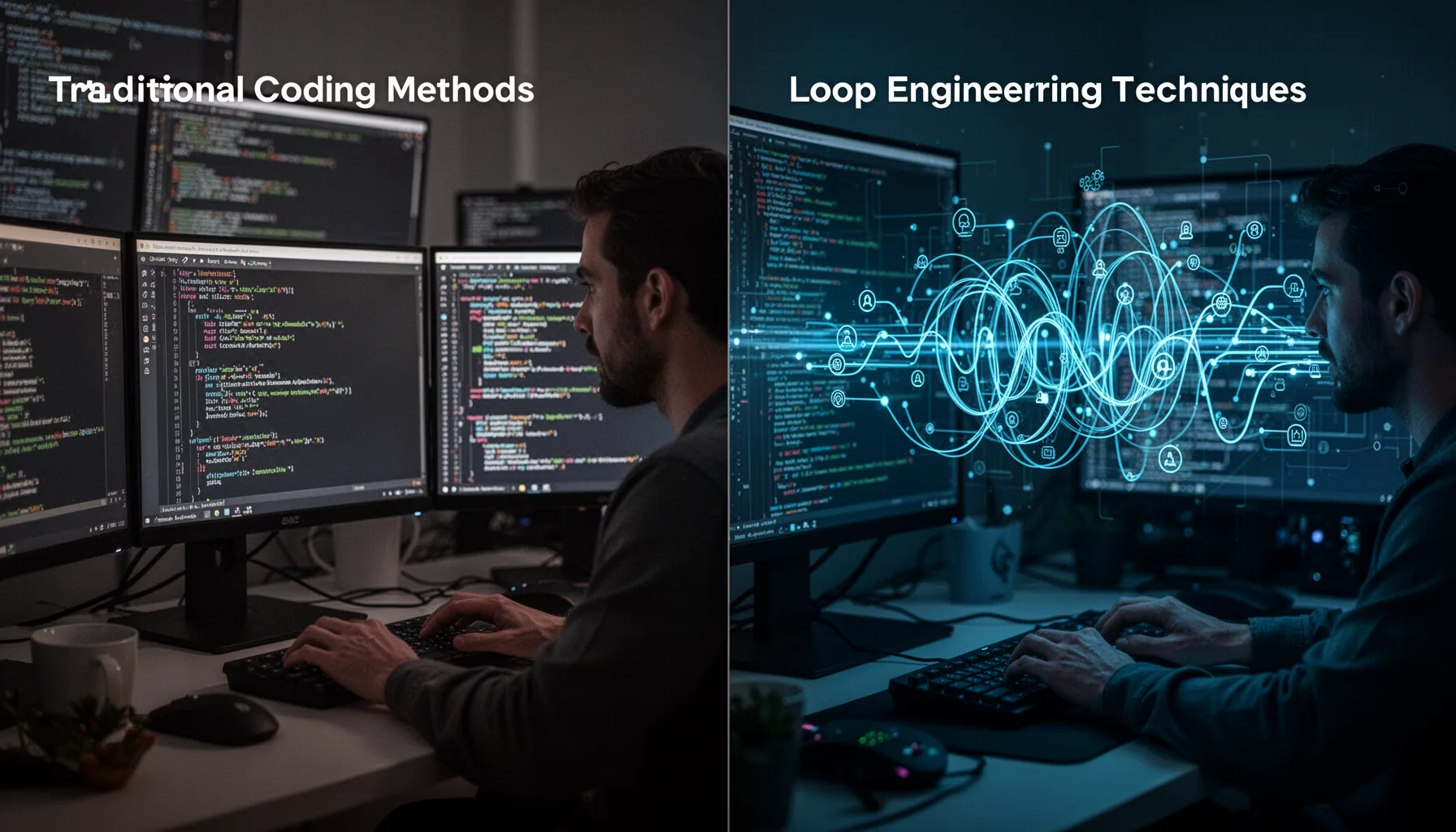
Best AI skills after prompt engineering now include workflow design, evaluation, tool orchestration, and failure recovery. Prompting still belongs on the list. Just lower than many newcomers expect. If you're relying on agents in software work, you need to know how to break tasks into checkpoints, define acceptance tests, and decide when the model can act on its own versus when it has to ask. And you need a feel for observability. What do logs, traces, and diffs actually tell you about whether the loop is healthy? This is why the loop engineering vs prompt engineering debate matters for hiring too. The developer who can set up a repo-aware coding loop with test gates and rollback logic will probably create more value than the person who writes dazzling prompts but lacks a control plane. We'd argue that's already visible in teams working with Cursor or Claude Code. Not quite.
Step-by-Step Guide
- 1
Start with bounded tasks
Choose tasks with clear acceptance criteria, such as fixing one failing test suite or updating one API client. Don't begin with open-ended product work. Tight scope teaches you how loops behave before the blast radius grows.
- 2
Define explicit stop conditions
Tell the agent when to stop, escalate, or ask for help. Examples include repeated test failures, touching protected files, or uncertainty about requirements. Good loops don't just know how to continue; they know when not to.
- 3
Insert verification checkpoints
Require the system to run tests, summarize diffs, or cite evidence before moving to the next stage. This creates a rhythm of action and proof. It also catches drift early, which is where most expensive mistakes start.
- 4
Constrain tool access
Limit what the agent can edit, execute, or deploy until it earns more trust on low-risk tasks. Sandboxing isn't glamorous, but it's effective. The smartest loop in the world can still fail badly with unrestricted permissions.
- 5
Log every iteration
Capture prompts, tool calls, file changes, failures, and retries so you can inspect the loop later. Without traces, you can't improve the system. And when an agent damages a code path, logs are the difference between diagnosis and guesswork.
- 6
Review loop quality weekly
Look at completion rate, retry count, unnecessary tool calls, escaped defects, and human intervention frequency. Those metrics reveal whether your loop design is getting sharper. Prompt tweaks alone rarely move all of them in the right direction.
Key Statistics
Frequently Asked Questions
Key Takeaways
- ✓Loop engineering vs prompt engineering is really about systems thinking taking the place of prompt cleverness.
- ✓Claude Code users need feedback loops, not just sharper one-shot instructions.
- ✓The best AI skills now include evaluation, tool orchestration, and rollback design.
- ✓Strong loops cut hallucinations by forcing checks, retries, and human checkpoints.
- ✓If you're learning AI development now, start with workflows before wordsmithing.