
MacBook as AI training cluster: why this idea matters
MacBook as AI training cluster sounds odd until you see how DiffusionBlocks changes on-device AI training and self-improving agents.

Table of Contents
Quick Answer
Macbook as ai training cluster describes a shift in training methods that makes local hardware useful for certain kinds of model improvement instead of treating laptops as inference-only devices. DiffusionBlocks explained simply is this: smarter algorithms can turn modest consumer machines into practical platforms for on-device adaptation, continual learning, and self-improving AI agents.
Calling a MacBook an AI training cluster sounds like pure headline bait. But the underlying claim holds up. For years, we treated laptops as inference endpoints while serious training sat inside GPU clouds and giant research budgets. DiffusionBlocks flips that assumption by suggesting the real bottleneck wasn't only hardware; it was the training method itself. That's a bigger shift than it sounds.
What does macbook as ai training cluster actually mean?
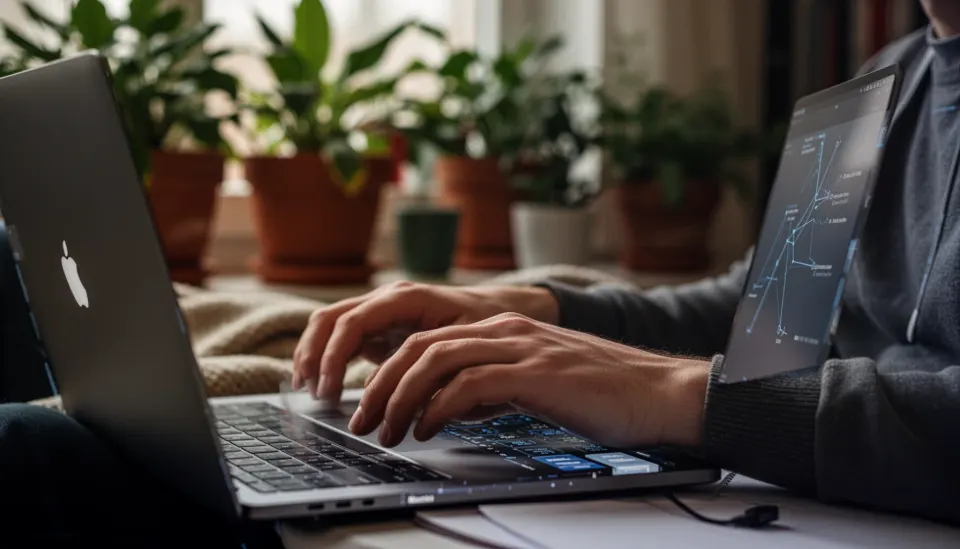
MacBook as AI training cluster doesn't mean your laptop suddenly replaces an H100 rack. Not even close. It means a laptop can take part in useful model improvement when the training method actually matches the hardware. And anyone saying otherwise is selling theater. What we're seeing is narrower, but still consequential. Local machines may handle adaptation, personalization, and agent refinement far better than many people guessed. Apple's M-series chips already gave developers unified memory and efficient on-device inference, which is part of why MLX caught on with local AI builders. Worth noting. The real shift is conceptual. Instead of forcing consumer hardware to imitate hyperscale training, methods like DiffusionBlocks appear to break learning into smaller, cheaper pieces that fit laptop limits. We'd argue that matters because training has acted like a capital moat for too long, even though many real use cases only need incremental learning rather than giant base-model rewrites.
How is diffusionblocks explained in practical terms?
DiffusionBlocks explained in plain terms looks like an algorithmic way to split model improvement into blocks that a local machine can actually compute. Simple enough. Researchers will care about the exact implementation, and they should. But the broader point is easy to grasp: if training gets structured more efficiently, devices with modest thermals and memory can still make useful updates. And that's where things get interesting. Think back to LoRA. It made fine-tuning cheaper by changing what got updated instead of brute-forcing the full model, and DiffusionBlocks seems to sit in that same efficiency-minded family, though with its own mechanics and tradeoffs. Stanford and MIT researchers have pointed to this direction for years through work on parameter-efficient training, showing that local experimentation can close more of the gap than people expected for targeted tasks. That gives the claim real weight. Here's the thing. The most valuable part isn't the flashy line that your laptop can train. It's the suggestion that self-improving agents may not need a round trip to a central cluster every time they adjust.
Can on device ai training on macbook enable continuously self improving ai agents?
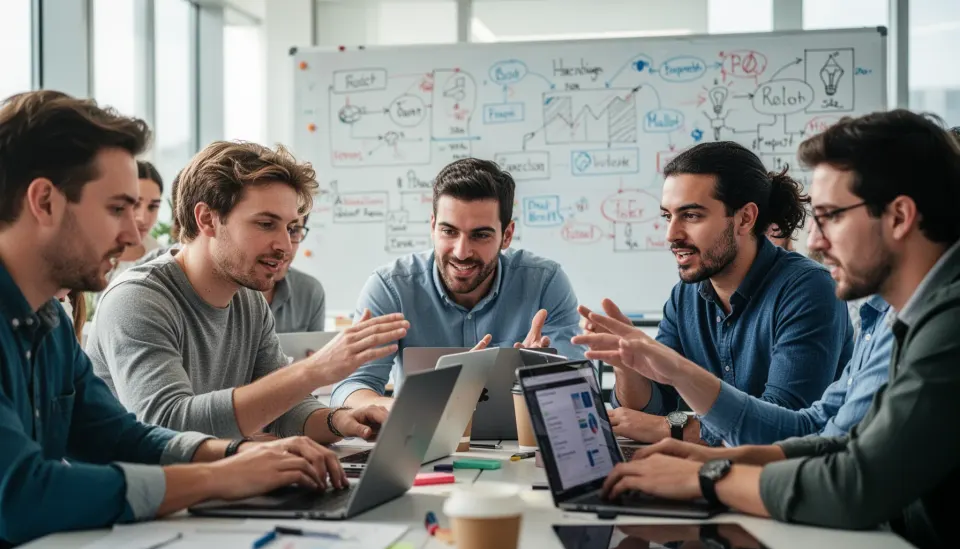
On-device AI training on MacBook can support continuously self-improving AI agents, but only in a narrow, useful sense. Not quite. These systems probably won't rebuild their own foundation models from scratch. What they can do is adapt memory, tune policies, optimize retrieval, and refine lightweight components using local interaction data. That's enough to matter. A coding assistant running on a developer's MacBook could pick up project conventions, favored libraries, and recurring code patterns without shipping sensitive context back to the cloud. Apple has pushed privacy-first on-device intelligence as a product principle, and this direction fits that logic far better than server-heavy personalization. According to 2024 paper trends across arXiv efficiency work, parameter-efficient fine-tuning and local adaptation stayed among the busiest corners of practical LLM deployment. Worth noting. But the hard part isn't only making agents improve. It's stopping feedback loops where the model overfits to bad habits or confidently learns the wrong lesson. So yes, self-improvement looks plausible, but only when evaluation stays stricter than the learning loop itself.
What are the limits of local ai training algorithm for laptops?

A local AI training algorithm for laptops still runs into hard ceilings on memory, thermals, battery life, and sustained throughput. Physics still wins. And frontier-scale pretraining remains parked in data centers with massive GPU clusters, custom networking, and software built for distributed optimization. Local methods can still shift a valuable slice of the job closer to the user: personalization, domain adaptation, feedback-driven reinforcement, or lightweight post-training updates. That's not a trivial slice. NVIDIA, AMD, Apple, and Qualcomm are all pushing more AI compute toward the edge, yet hardware gains alone won't fix local training economics without better algorithms and tighter compression. MLPerf and related inference benchmarks have already suggested that edge hardware can be surprisingly capable on bounded tasks, though training stays much tougher than inference. We'd say the biggest mistake is binary thinking. A laptop doesn't have to replace a cluster to matter. The more likely setup is hybrid, with cloud pretraining on one side and local continual adaptation on the other. That's where this seems headed.
What could become the best on device ai agent framework?
The best on-device AI agent framework will probably mix efficient local training, strong evaluation, secure memory, and selective cloud fallback. Raw speed won't decide it. And developers should distrust any stack that celebrates self-improvement but skips audit logs, rollback controls, and clear regression tests. A serious framework would look less like a flashy demo and more like an operating system for adaptation: local vector storage, parameter-efficient updates, policy constraints, telemetry, and human review tools. Ollama, MLX, llama.cpp, and Apple's local tooling already point to pieces of that stack, even if none of them solves the whole thing alone. Worth noting. In our view, the winning framework won't just make a laptop train. It will make local improvement observable, reversible, and cheap enough to run often. That's the line between a research curiosity and a system people will trust with real work.
Key Statistics
- Apple's M-series MacBook chips brought unified memory configurations up to levels that made local LLM inference practical for many 7B to 13B-class models by 2024.That hardware baseline matters because algorithmic advances like DiffusionBlocks only become useful when consumer devices can already sustain meaningful local workloads.
- Parameter-efficient fine-tuning methods such as LoRA have cut trainable parameter counts by orders of magnitude compared with full-model fine-tuning in widely cited academic work since 2021.This provides the research context for why local adaptation on laptops is now plausible in a way it wasn't a few years ago.
- ArXiv output across efficient fine-tuning, quantization, and edge deployment stayed among the busiest practical AI subfields through 2024.The volume of research suggests sustained interest in shrinking the gap between cloud training and local model adaptation.
- MLPerf edge and client benchmark efforts have shown steady gains in AI throughput on smaller devices, even though training remains far more demanding than inference.That benchmark trend supports a hybrid future where local hardware takes on more adaptation work without replacing centralized clusters.
Frequently Asked Questions
What is meant by macbook as ai training cluster?
How is DiffusionBlocks different from standard AI training methods?
Can you do on device AI training on MacBook today?
Why do continuously self improving AI agents matter?
What is the best on device ai agent framework right now?
Key Takeaways
- MacBook as AI training cluster is really about algorithm efficiency, not magical new hardware
- DiffusionBlocks explained plainly means splitting training into cheaper computational units that fit local machines
- On-device AI training on MacBook makes the most sense for adaptation, not giant frontier pretraining
- Continuously self-improving AI agents need strict safeguards against drift, bad feedback, and silent regression
- The best on-device AI agent framework will pair efficient training with strong evaluation and rollback loops