
⚡ Quick Answer
NJIT AI Exploration Day is a campus-wide artificial intelligence event that signals how universities are responding to AI across teaching, research, policy, and workforce prep. It matters because NJIT is treating AI as an institution-wide issue, not just a computer science topic.
NJIT AI Exploration Day feels like more than another campus tech event. It reads more like a public pressure test for how a modern university plans to live with artificial intelligence. That matters. Across higher education, leaders have moved past flashy demos and into tougher territory: curriculum, academic integrity, research policy, and job readiness. That's a bigger shift than it sounds. And NJIT’s event lands right in the middle of it.
What is NJIT AI Exploration Day and why does it matter?

NJIT AI Exploration Day is a university-wide event that places artificial intelligence at the center of campus strategy. That's the real story. Instead of boxing AI inside computing departments, NJIT seems to be pulling faculty, students, and staff into one shared discussion about teaching, research, and operations. We’d argue that’s the right call. Higher education keeps treating AI like a mere tool choice when it’s really an institutional design problem. In 2024, EDUCAUSE reported that generative AI ranked among the most consequential strategic technologies facing colleges and universities, which gives clear context for why an njit artificial intelligence event now carries weight beyond one campus. Not trivial. A school like NJIT, with deep engineering and applied science roots, also works as a useful test case because it can tie AI policy to practical workforce demands. So when people search for njit ai news, they’re really asking whether a serious technical university has a workable model for this moment. Worth noting.
How universities are responding to AI after the first wave of hype
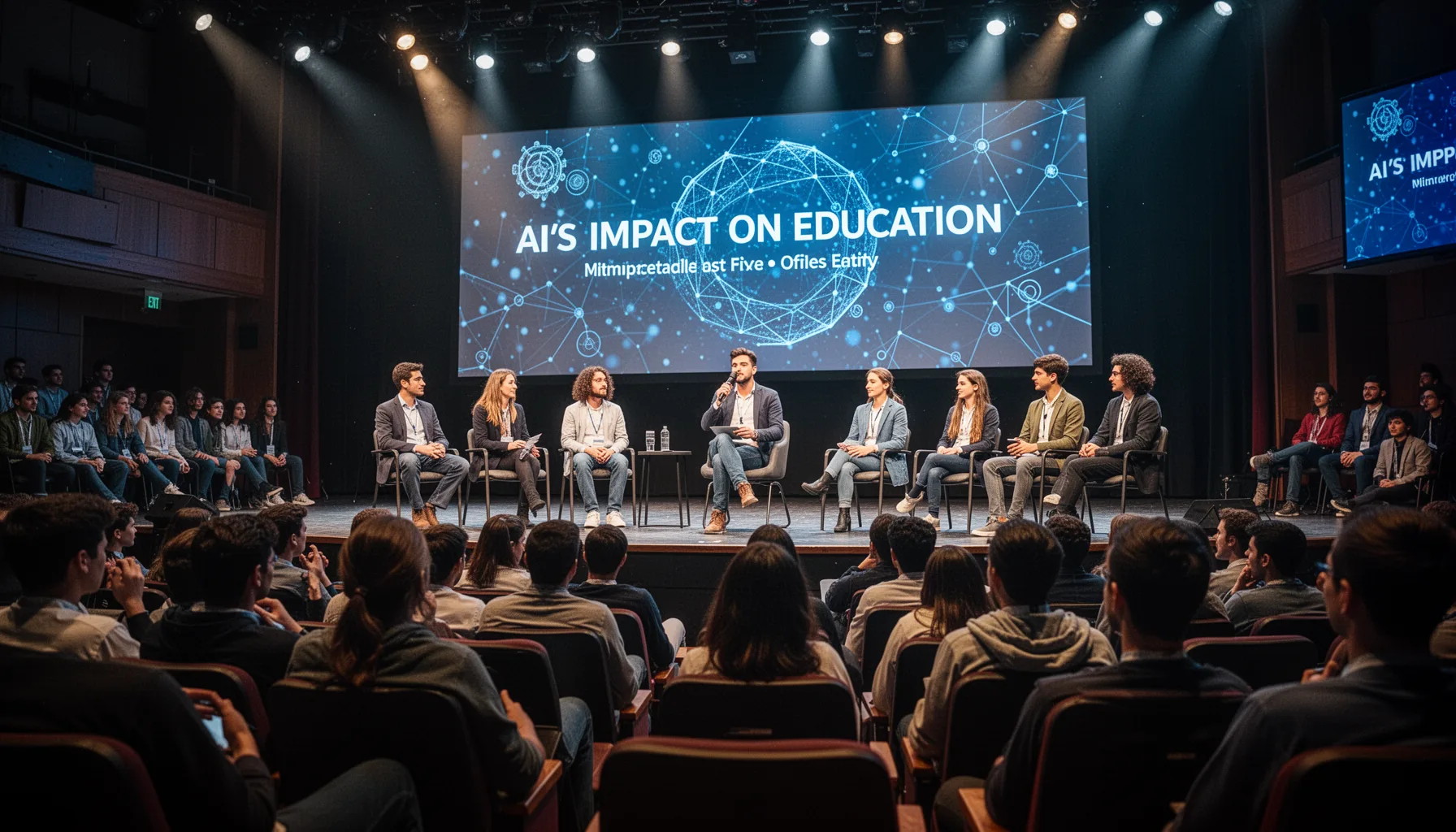
Universities are responding to AI by shifting from panic and prohibition toward governance, training, and selective adoption. That pivot was overdue. In early 2023, many institutions reacted to ChatGPT with temporary bans or fuzzy classroom warnings, but the stronger campuses now build faculty guidance, student use policies, and AI literacy programs. Arizona State University’s work with OpenAI and Microsoft became one of the better-known examples, suggesting that university leaders want structured adoption rather than ad hoc experimentation. According to a 2024 global survey from the Digital Education Council, 86% of students said they use AI in their studies, which means the question is no longer whether AI is on campus but whether universities can govern it honestly. Simple enough. We’d argue that an ai exploration day university event matters only if it moves beyond inspiration and into concrete operating rules. And that’s where events like NJIT’s become useful: they force public discussion before informal practice hardens into policy by accident. That's a smarter path than it sounds.
Why NJIT AI Exploration Day reflects the AI in higher education conference trend
NJIT AI Exploration Day reflects a broader AI in higher education conference trend: institutions now want cross-functional answers, not isolated expert panels. Here's the thing. A dean worries about accreditation. A professor worries about assessment. A CIO worries about data control. And students worry about whether they’re being prepared for real jobs. One event can bring those tensions into the open. Stanford’s Institute for Human-Centered AI, along with universities such as MIT and Georgia Tech, has expanded public AI programming over the last two years, but the most useful events tie discussion to institutional action. In our view, that’s the benchmark NJIT should face. If the day includes case studies, faculty guidance, student debate, and examples of AI use in advising or research administration, then it becomes far more than a symbolic showcase. And if it doesn’t, attendees will notice fast, because campuses have already had enough abstract AI optimism. Not quite enough anymore. Worth watching.
What NJIT AI news says about policy, teaching, and workforce readiness
NJIT AI news points to three linked priorities: policy clarity, classroom adaptation, and workforce readiness. Those goals rise together. A university can’t credibly teach responsible AI use while leaving faculty without assessment frameworks or students without rules on acceptable assistance. The National Institute of Standards and Technology released its AI Risk Management Framework in 2023, and that kind of standards-based thinking now shapes how schools discuss trustworthy deployment. Worth noting. NJIT sits in a region with dense ties to finance, healthcare, logistics, and engineering employers, so its AI event also carries labor-market meaning beyond campus culture. We’d argue that schools like NJIT have an edge here because they can connect abstract ethics debates to specific industry workflows and hiring signals. And that matters when employers want graduates who can work with AI tools competently without outsourcing their judgment to them. Here's the thing.
Step-by-Step Guide
- 1
Map the campus AI use cases
Start by listing where AI already appears across the university. Include teaching, admissions, advising, research support, IT help desks, and student services. Most campuses discover that AI use is already happening informally. That baseline keeps the conversation honest.
- 2
Set shared governance rules
Create a working group with faculty, IT, legal, student affairs, and library leadership. Give it a clear mandate to define acceptable use, privacy boundaries, and review processes. Universities that skip this step usually end up with contradictory policies. And students spot that instantly.
- 3
Train faculty before mandating change
Run practical workshops on assessment redesign, AI-assisted writing, citation norms, and verification. Faculty don’t need slogans; they need examples they can use on Monday morning. A strong ai in higher education conference or campus event should feed directly into this training. Otherwise it becomes theater.
- 4
Publish student-facing guidance
Write plain-language rules on when AI use is allowed, restricted, or prohibited. Include examples from real assignments and explain the reasoning behind each rule. Students respond better when institutions define gray areas clearly. Ambiguity invites misuse.
- 5
Pilot AI in low-risk operations
Test AI tools first in bounded settings like FAQ chat, scheduling support, or administrative triage. Measure error rates, escalation volume, and user satisfaction before broad rollout. Schools such as Georgia State have shown how student-support automation can work when it is tightly scoped. The key is supervision, not novelty.
- 6
Review outcomes publicly
Publish what worked, what failed, and what policy changes followed. That level of transparency builds trust across campus. It also turns a one-day event into a repeatable governance process. Universities need that feedback loop now.
Key Statistics
Frequently Asked Questions
Key Takeaways
- ✓NJIT AI Exploration Day frames AI as a campus issue, not a niche lab topic
- ✓Universities are shifting from curiosity to governance, training, and classroom policy
- ✓NJIT’s approach mirrors a wider push for AI literacy in higher education
- ✓Faculty, students, and administrators now need shared rules for AI use
- ✓The smartest AI in higher education conference format mixes demos, policy, and practice