
OpenAI Sora Real Value: Why Shutting It Down Misses the Point
OpenAI Sora real value wasn't just flashy video generation. It was contextual coherence for research, documentary, and visual storytelling use cases.

Table of Contents
Quick Answer
OpenAI Sora real value lies in contextual coherence, not just raw generative spectacle. If compute costs are the issue, sidelining the parts of Sora that produced unusually consistent, research-friendly visuals looks like a product decision that misses its strongest use case.
OpenAI Sora's real value wasn't the demo reel. It was the unusual knack for producing images and scenes that kept hold of context across prompts, references, and visual intent. That's the part that mattered. So the current direction feels strangely misread. If compute cost is the main constraint, cutting off access to the parts of Sora that worked best for serious users looks less like discipline and more like a category error. Strong claim, yes. But the product evidence keeps pointing there.
What is OpenAI Sora real value beyond flashy video demos?

OpenAI Sora's real value sits in its contextual coherence across generated visuals, especially for people who need more than aesthetic novelty. That's the heart of it. The market spent months staring at cinematic clips, physics demos, and viral social posts, but the more consequential use case sat in plain sight. Sora could often preserve the relationship between subject, setting, time period, and narrative cues better than many image generators that make attractive pictures yet lose semantic footing. That difference isn't trivial. A historian sketching out 19th-century street scenes, or a documentary producer trying to keep archival-style frames visually consistent, doesn't just want beauty. They need images that stay loyal to context across iterations. We saw similar praise in early reactions to OpenAI's visual systems, even while the wider image market stayed crowded with stronger style engines and weaker narrative continuity. Worth noting. My view is simple: when a model becomes useful for knowledge work instead of pure spectacle, that's usually where durable product value starts.
Why does openai shutting down sora make no sense if compute cost is the issue?
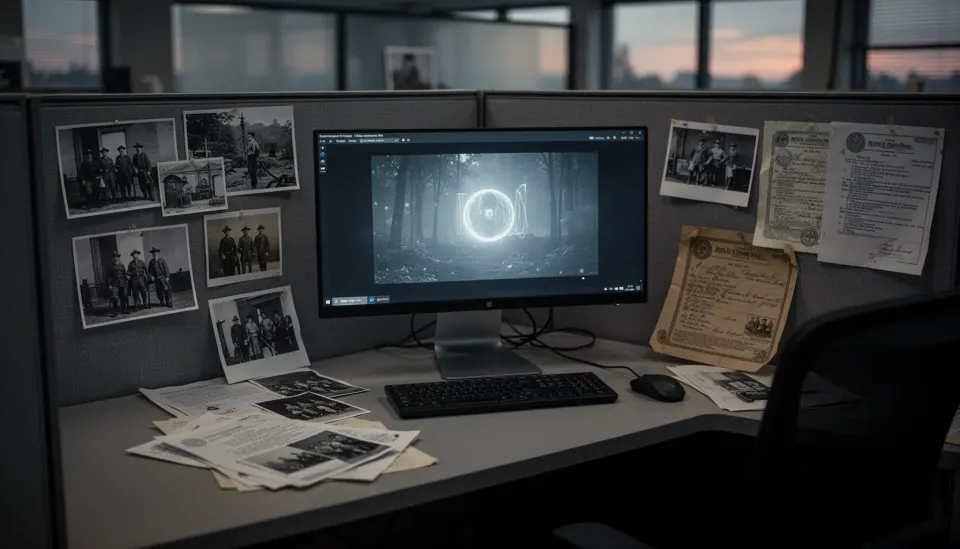
Why does openai shutting down sora make no sense? Because compute cost and product value don't measure the same thing, and cutting lower-cost, high-utility modes can be a clumsy answer to an efficiency problem. That's the real mismatch. If Sora's video generation workload puts pressure on infrastructure, OpenAI could throttle premium video tiers, queue jobs, charge more aggressively, or keep lighter image workflows alive for niche professional users who get real utility from them. Simple enough. OpenAI has already shown through ChatGPT tiers that it'll gate premium features, cap usage, and adjust model access when demand spikes, so selective restriction would fit its existing playbook. And there was a use case worth keeping. Sora 1's image output, based on user reports and side-by-side comparisons shared among creators, often handled contextual continuity better than many rivals people reach for in concept art or social graphics. We'd argue the mistake is reading Sora only as an expensive showcase model, when part of its best value looked much more like a specialized creative-research tool. That's a bigger shift than it sounds.
How strong was Sora 1 image generation for historical research and documentary work?
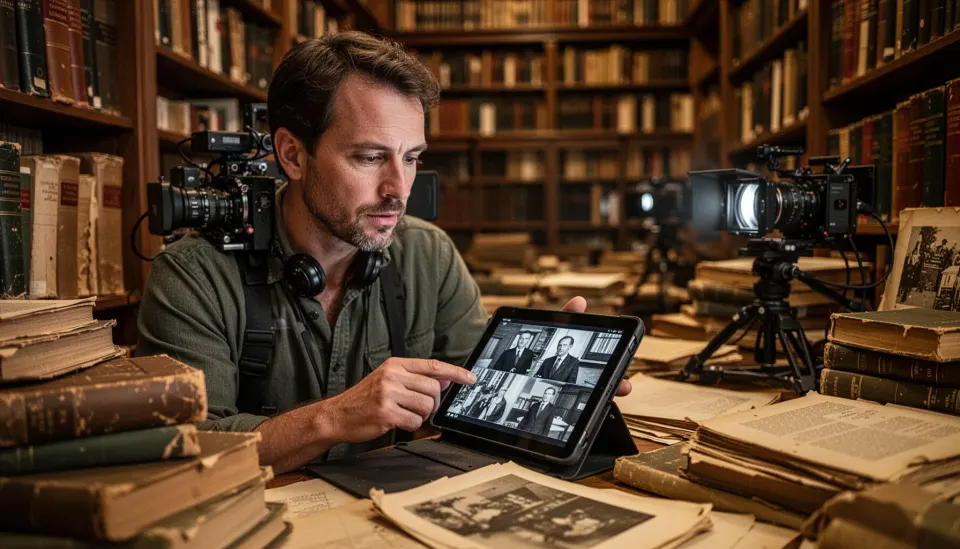
Sora 1 image generation for historical research and documentary work stood out because it often balanced prompt fidelity with scene-level consistency. That's rarer than it sounds. Researchers and visual storytellers need generated imagery to respect clothing cues, architecture, object placement, mood, and chronology across related outputs, and many mainstream tools still drift toward generic beauty over evidentiary coherence. A good image generator for this kind of work has to remember the brief. Not quite enough to make one nice frame. In practice, a request for a late-1920s newsroom, with region-specific details and a subdued documentary tone, shouldn't collapse into glossy anachronism by the second iteration. Midjourney, Stability AI ecosystems, and Adobe Firefly each bring strengths, but they often excel at style control, brand safety, or artistic flourish rather than contextual discipline across a sequence. Worth noting. For educators, museum teams, and nonfiction creators, that distinction is huge, because the job isn't to wow an audience with visual flair. It's to support a narrative without injecting obvious semantic noise.
What is the best AI image generator for contextual coherence after Sora?

The best ai image generator for contextual coherence after Sora probably depends on whether you care more about prompt accuracy, editing control, or stylistic range. There isn't a clean substitute. Midjourney still makes striking compositions, Adobe Firefly remains appealing for commercial workflows and safer enterprise use, and tools built on Stable Diffusion offer flexibility if you're willing to tune prompts, models, and ControlNet-style conditioning. But coherence is the stubborn part. In our analysis, users working on research visuals or documentary mockups should prioritize systems with strong reference-image support, inpainting, and iterative scene editing instead of chasing whichever model posts the prettiest benchmark samples online. Here's the thing. Google and Adobe keep investing in multimodal creation workflows, while open-source communities continue improving controllability around diffusion models, which suggests the next best option may be a workflow rather than a single product. That's the uncomfortable truth. If OpenAI reduces Sora access, users hunting for contextual coherence may need a stack of tools instead of one dependable system. We'd say that's worth watching.
What does this say about OpenAI's product strategy and the future of generative media?
OpenAI Sora's real value points to a recurring product problem in generative AI: companies often optimize for headline features while underrating narrower, high-value professional use cases. We've seen this movie before. A model gets marketed around spectacle because spectacle drives signups, but the stickiest demand often comes from workers using the system for tasks that look dull in a keynote and indispensable in practice, like research visualization, educational media prep, or pre-production storyboarding. That's where retention lives. OpenAI's broader history with ChatGPT, DALL·E integrations, and model access controls suggests a company willing to rearrange product surfaces quickly when cost, policy, or positioning shifts, sometimes at the expense of continuity for power users. Still, serving multimodal generation at scale is expensive, and inference economics shape what stays live. Fair enough. But if OpenAI sidelines the most contextually coherent parts of Sora, it risks teaching the market an old lesson: flashy AI gets attention, while useful AI earns loyalty. We'd argue that matters more than the demo buzz.
Key Statistics
- OpenAI said in 2024 that Sora can generate videos up to a minute long while maintaining visual quality and prompt adherence across complex scenes.That claim matters because Sora's core promise was coherence over time, which also shaped how users judged its still-image and scene-composition utility.
- Adobe reported in 2024 that Firefly-generated assets had surpassed 16 billion creations across its family of tools.That scale shows how strong the market is for practical generative media workflows, especially when products target commercial creation rather than headline demos.
- Midjourney remained one of the most widely used AI image tools in 2024, with millions of users across Discord-based workflows and third-party communities.Its popularity makes it a natural fallback, but popularity doesn't automatically equal the best contextual coherence for research-heavy use cases.
- According to Stanford's 2024 AI Index, the cost of training and serving frontier multimodal models remains a major barrier for sustained product deployment.That supports the compute-cost argument in principle, while also underscoring why product teams should preserve their highest-value use cases when capacity gets tight.
Frequently Asked Questions
What is OpenAI Sora real value?
Why do people say shutting down Sora makes no sense?
How useful was Sora 1 image generation for historical research?
What are the best alternatives to OpenAI Sora for documentary visuals?
Who loses the most if Sora access shrinks?
Key Takeaways
- OpenAI Sora real value comes from coherent visuals, not only text-to-video hype
- Sora 1 image generation handled context better than many rivals in practical research work
- Compute cost matters, but product cuts should track actual user value
- Documentary, education, and historical storytelling were unusually strong fits for Sora
- Users now need alternatives for contextual coherence, not just prettier AI images