
PrologMCP for LLM agents: cheaper reasoning at depth
PrologMCP for LLM agents offers a standardized Prolog tool interface that can cut reasoning costs and improve deductive reliability.

Table of Contents
Quick Answer
PrologMCP for LLM agents is a standardized Prolog tool interface that lets a model delegate deductive subproblems to a symbolic engine instead of stretching chain-of-thought ever longer. That matters because symbolic reasoning can be cheaper, more reliable, and deeper than pure LLM inference on rule-heavy tasks.
PrologMCP for LLM agents sounds niche on first read. It probably isn't. The paper behind it, arXiv:2606.14935, suggests a wider shift in agent design: stop making language models carry every step of reasoning internally when a symbolic tool can handle part of the work faster and with fewer hallucinated detours. That's a practical case, not a philosophical one. And if you're building tool-using agents, especially in MCP-shaped environments, standardized symbolic delegation deserves a close look right now.
What is PrologMCP for LLM agents and why does it matter?

PrologMCP for LLM agents gives models a standardized way to hand deductive reasoning to a Prolog system through a predictable external interface. That's the headline. The paper, listed as arXiv:2606.14935v1, says frontier reasoning-tuned models still wobble on deep deductive tasks, while longer internal reasoning drives inference cost up fast. Prolog takes a different route. You encode facts and rules. Then the engine searches and proves results. This idea isn't new in computer science. But packaging it for agent toolchains feels new enough to count, because standardization is what turns a clever demo into infrastructure teams can actually rely on. We'd argue the paper's real contribution isn't symbolic reasoning by itself. It's making that reasoning reachable for LLM agents in a way that matches modern tool-use patterns. Think of it as a bridge between language fluency and formal logic, with less hand waving. Worth noting.
Why symbolic reasoning for LLM agents can be cheaper than longer chain-of-thought

Symbolic reasoning for LLM agents can cost less because a Prolog engine handles search and deduction without chewing through more model tokens on every inference branch. That economic angle gets missed a lot. When teams try to patch reasoning errors by expanding context windows, adding scratchpads, or paying for slower reasoning modes, costs rise quickly while reliability still stalls on formal tasks. Not ideal. A symbolic tool changes the math. The LLM turns the problem into facts, rules, or queries; then the symbolic system computes the proof path. DeepMind, OpenAI, and Anthropic have each suggested in reasoning studies and product notes that test-time compute improves results, but it isn't free. And where every token matters, PrologMCP looks less like an academic curiosity and more like a compute control valve. That's a bigger shift than it sounds.
How PrologMCP fits real MCP-based agent architectures
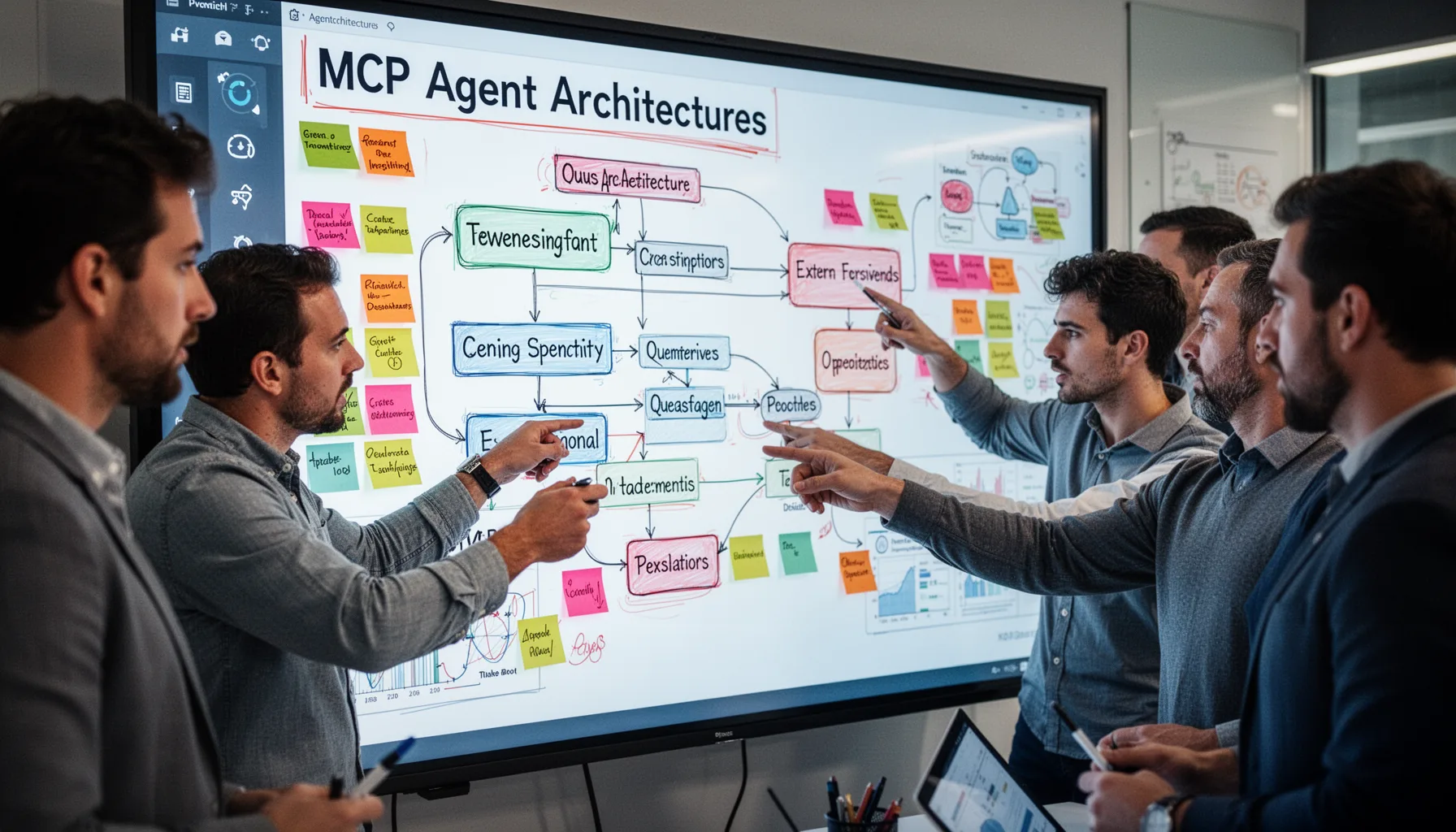
PrologMCP fits real MCP-based agent architectures by acting as a specialist reasoning tool beside search, code execution, and retrieval. That's where the paper gets useful. In a Claude Code or MCP-style setup, the agent can inspect available tools, decide a task needs formal deduction, and send that subproblem to Prolog instead of improvising in natural language. Picture a compliance assistant. A retrieval tool can fetch the policy text. But a Prolog tool can check whether a chain of conditions actually implies a violation. That's the difference. We think that split of labor is exactly right. Language models excel at interpretation and translation; symbolic systems excel at rule execution and consistency. When you connect both cleanly, the agent stops pretending one architecture can do every job equally well. Simple enough. Worth noting.
When standardized Prolog tool interfaces beat prompting alone

Standardized Prolog tool interfaces beat prompting alone when the task is rule-bound, compositional, and easy to formalize into facts and constraints. That's the decision rule most builders need. If you need legal drafting tone, UX copy, or broad research synthesis, prompting alone usually wins because the problem is fuzzy and grounded in language. But if you're verifying dependency constraints, checking access policies, planning under explicit rules, or solving family-relation logic puzzles, symbolic delegation often works better. IBM Research and years of academic neuro-symbolic work have pointed to this pattern for a while. The difference now is operational. PrologMCP offers a cleaner path to plug formal deduction into an agent stack without custom glue for every project, and that's what could push adoption beyond labs. Here's the thing. We'd say that's the consequential part.
Step-by-Step Guide
Identify rule-heavy subtasks
Look for parts of your agent workflow where correctness depends on explicit rules rather than stylistic judgment. Policy checks, access control, scheduling constraints, and logic verification are good starting points. If a human can sketch the answer as facts plus rules, Prolog is probably a candidate.
Separate language from deduction
Use the LLM for interpretation, extraction, and query formulation. Then pass the formal subproblem to Prolog rather than asking the model to reason through every branch itself. This split keeps the model in its strength zone while giving deduction to the right engine.
Define a standardized tool contract
Expose Prolog capabilities through a consistent interface with named operations, inputs, outputs, and failure modes. That's where PrologMCP matters. A stable contract lets the agent decide when to call the tool and how to recover if a query fails or returns multiple solutions.
Validate facts before execution
Check that the extracted facts are complete and well typed before sending them to the symbolic engine. Many failures in hybrid systems come from bad translation, not bad deduction. Add guardrails for missing entities, malformed predicates, and conflicting assumptions.
Benchmark cost against prompt-only reasoning
Compare token spend, latency, and answer accuracy across several tasks. Include at least one deep deductive case where the prompt-only model tends to drift or loop. The result will tell you whether symbolic delegation gives you meaningful savings rather than theoretical elegance.
Keep fallback paths for fuzzy problems
Not every hard question belongs in Prolog. Build a fallback path so the agent uses prompting, search, or code execution when the task isn't formal enough for symbolic representation. Good architecture is selective. It doesn't turn every workflow into logic programming.
Key Statistics
- The PrologMCP paper appeared as arXiv:2606.14935v1 in June 2026, positioning standardized symbolic delegation as an alternative to longer internal reasoning.That timing matters because developers now have mature MCP-style tool ecosystems where such interfaces can plug in cleanly.
- Anthropic's Model Context Protocol, introduced in 2024, created a common pattern for exposing external tools to models such as Claude Code.PrologMCP fits that broader tool standardization wave rather than standing apart as a one-off symbolic experiment.
- OpenAI, Anthropic, and Google have all pushed reasoning-focused model modes that trade higher test-time compute for better accuracy on difficult tasks.PrologMCP matters because it offers another path: move some reasoning into cheaper symbolic execution instead of paying ever more token costs.
- Academic work in neuro-symbolic AI over the past decade has repeatedly found that hybrid systems often outperform pure neural methods on formal reasoning and verification-style tasks.PrologMCP gives that long-running research direction a developer-facing interface that agents can actually use in production-style toolchains.
Frequently Asked Questions
What is PrologMCP?
Why use symbolic reasoning for LLM agents?
How does PrologMCP compare with prompt-only reasoning?
Who should care about PrologMCP arXiv 2606.14935?
When should developers choose Prolog over another tool?
Key Takeaways
- PrologMCP turns Prolog into a callable reasoning tool for MCP-style agent environments.
- Symbolic delegation can outperform longer chain-of-thought on cost, reliability, and logical depth.
- The paper matters most for tool-using agents, not just symbolic AI enthusiasts.
- Use PrologMCP when rules are explicit, constraints matter, and answers must be checkable.
- Prompting alone still wins for fuzzy tasks, open-ended writing, and ambiguous world knowledge.