
⚡ Quick Answer
Qwen3.6 35B A3B uncensored benchmark claims point to a permissive local model release aimed at users who want fewer refusals and multiple deployment formats. The real question isn't whether it's uncensored, but whether it stays accurate, stable, and hardware-efficient enough to beat standard Qwen variants for your workload.
Qwen3.6 35B A3B uncensored benchmark reads like a launch name cooked up by a benchmark sheet at 2 a.m. But local AI users should still look twice. Under the messy label sits a very practical question: is this model actually stronger, or just more willing to answer prompts that other models shut down? Those aren't the same. If you're weighing safetensors, GGUF, GPTQ-Int4, or newer low-bit builds, the real impact shows up in VRAM limits, latency, and output quality long before the branding means much.
What does Qwen3.6 35B A3B uncensored benchmark really measure?

Qwen3.6 35B A3B uncensored benchmark should track more than refusal rates if you want a picture of model quality that holds up. Not quite. A low-refusal score may point to permissiveness, but it can also mask weaker judgment or sloppier edges on risky prompts. That's the trap. For a serious test, you'd want at least four lanes: harmless instruction following, hard reasoning, policy-sensitive prompts, and long-context coherence. The claim of roughly 10 refusals out of 100 prompts sounds flashy, yet without the prompt set, scoring rubric, and a baseline model comparison, that number only tells a slice of the story. We see this on Hugging Face all the time. A custom finetune might answer more questions outright while quietly dropping reliability on coding, extraction, or multilingual work. If you compare it against a stock Qwen variant with the same prompt suite and fixed seeds, you'll find out whether the model is freer, better, or simply looser. That's a bigger shift than it sounds. Think of NousResearch releases: looser alignment can look great in screenshots, then wobble under repeat testing.
What is Qwen3.6 35B A3B Native MTP preserved explained in plain English?

Qwen3.6 35B A3B Native MTP preserved explained simply means the release tries to keep multi-token prediction behavior from the source model instead of cutting it out during conversion or finetuning. Simple enough. That mostly matters to inference nerds and server operators. Multi-token prediction can raise throughput by predicting more than one token step efficiently, especially when paired with speculative decoding or engines tuned around it. But support isn't uniform. Some llama.cpp-style stacks handle it one way, vLLM builds another, and vendor kernels can be their own little universe. So preservation is a capability claim, not a promised speed win. The KLD value in the title, likely shorthand for Kullback-Leibler divergence against a reference distribution, suggests the maker wants to signal closeness to some original behavior. That's useful when measured cleanly, though we'd still want the dataset, temperature settings, and comparison checkpoints before treating that figure like a buying signal. Worth noting. For a concrete example, vLLM may expose gains that a desktop runner never touches.
Which Qwen3.6 35B A3B GGUF safetensors GPTQ format should you choose?
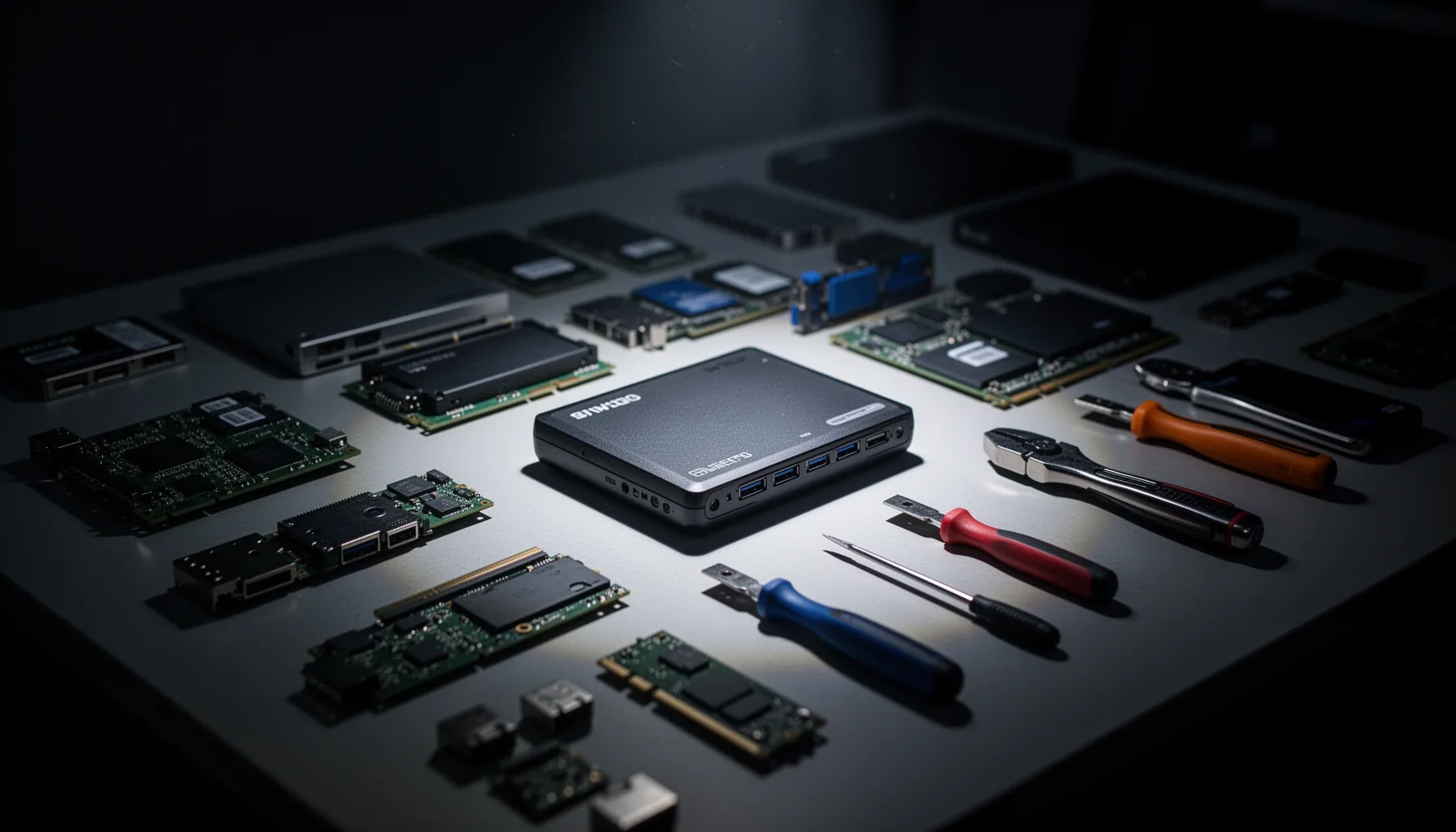
Qwen3.6 35B A3B GGUF safetensors GPTQ formats target different people, and the best pick depends on your hardware and what you're trying to do with the model. Here's the thing. Safetensors usually suits people who want the least altered original weights for PyTorch or server stacks such as vLLM and Text Generation Inference. GGUF tends to be the easiest path for local desktop work through llama.cpp-based tools like LM Studio, Jan, and KoboldCpp, especially when CPU offload or mixed memory matters. GPTQ-Int4 still draws NVIDIA users who care most about lower VRAM use and familiar CUDA tooling, though newer quantization families can beat it on the speed-quality tradeoff in some setups. NVFP4 variants point to more aggressive low-bit tuning, but support can get patchy depending on the stack. So here's our take: if you're tinkering on a workstation, start with GGUF; if you're serving on Linux with serious GPUs, begin with safetensors; if memory is tight, compare GPTQ and other low-bit options side by side. Format isn't some tiny detail. It's the product. We'd argue LM Studio users learn this faster than anyone.
How to run Qwen3.6 35B A3B locally without guessing on hardware
How to run Qwen3.6 35B A3B locally starts with matching quantization to realistic VRAM, not hopeful forum math. That's the first reality check. A model in the 35B class usually sits well beyond casual laptop territory unless you quantize hard or accept slower output through CPU offload. For plenty of users, a 4-bit GGUF or GPTQ build will be the first practical stop, often paired with a 24GB to 48GB NVIDIA GPU for generation speeds that feel usable. Apple Silicon users may get it running with unified memory, but throughput and context settings decide whether the setup feels productive or painfully sluggish. And batch size matters more than people admit. If your main job is solo drafting, local coding help, or exploratory roleplay, lighter quantizations may do the trick. But for production summarization, extraction, or chain-heavy agent workflows, we'd benchmark latency, context stability, and hallucination rates before swapping out a standard Qwen release. Worth noting. An RTX 4090 can run the model; that doesn't mean you'll enjoy the experience.
Step-by-Step Guide
- 1
Define your evaluation prompts
Build a small test set before you download anything. Include harmless tasks, coding tasks, policy-sensitive prompts, and long-context checks. That way you can judge whether the model is genuinely useful or merely less likely to refuse.
- 2
Match the format to your runtime
Pick safetensors for server-oriented stacks, GGUF for llama.cpp ecosystems, and GPTQ if your current CUDA setup already favors it. Don't choose by hype. Choose by what your toolchain actually supports well today.
- 3
Estimate memory before loading
Check VRAM, system RAM, context length, and whether your runtime can offload efficiently. A 35B-class model can run, but that doesn't mean it will run comfortably. Fast enough and usable are two different things.
- 4
Benchmark stock Qwen against the finetune
Run the same prompt set on the custom model and a standard Qwen baseline. Keep temperatures and seeds as close as possible. That's how you'll see whether low refusals come with accuracy loss or better compliance.
- 5
Test refusal behavior carefully
Separate harmless restricted prompts from clearly unsafe requests. You want to know whether the model improves instruction following or simply ignores safety boundaries. Those are not interchangeable qualities.
- 6
Deploy with logging and limits
If you use the model in a real workflow, capture latency, token throughput, and failure modes from day one. Set output limits and review loops for sensitive tasks. Uncensored local models can be useful, but they need adult supervision.
Key Statistics
Frequently Asked Questions
Key Takeaways
- ✓Low-refusal claims look flashy, but their real value depends on accuracy and instruction discipline
- ✓MTP preservation matters mostly if you care about speculative decoding and serving efficiency
- ✓Format choice changes the whole equation: VRAM, speed, compatibility, and quality all shift together
- ✓Local users should test harmless, risky, and long-context prompts before trusting the model
- ✓Standard Qwen builds may still suit many teams better when safety and consistency matter more