
⚡ Quick Answer
The sam altman personal robot project appears to be less about a near-term home robot launch and more about building the foundations for embodied AI. OpenAI robotics hiring 2026 signals serious interest, but shipping a useful consumer robot still requires hardware, safety, supply chain, and data systems that take years to assemble.
The sam altman personal robot project has kicked up the usual storm: big headlines, stretchy guesses, and plenty of sci-fi heat. But hiring tells the cleaner story. When a company starts filling robotics roles, you can often spot its real priorities well before a polished launch video hits YouTube. And in our read, openai personal robots news makes more sense as a hiring-led map of capability building, not proof that a home robot is about to stroll into your kitchen. Worth noting.
Is OpenAI building a robot or just exploring embodied AI?
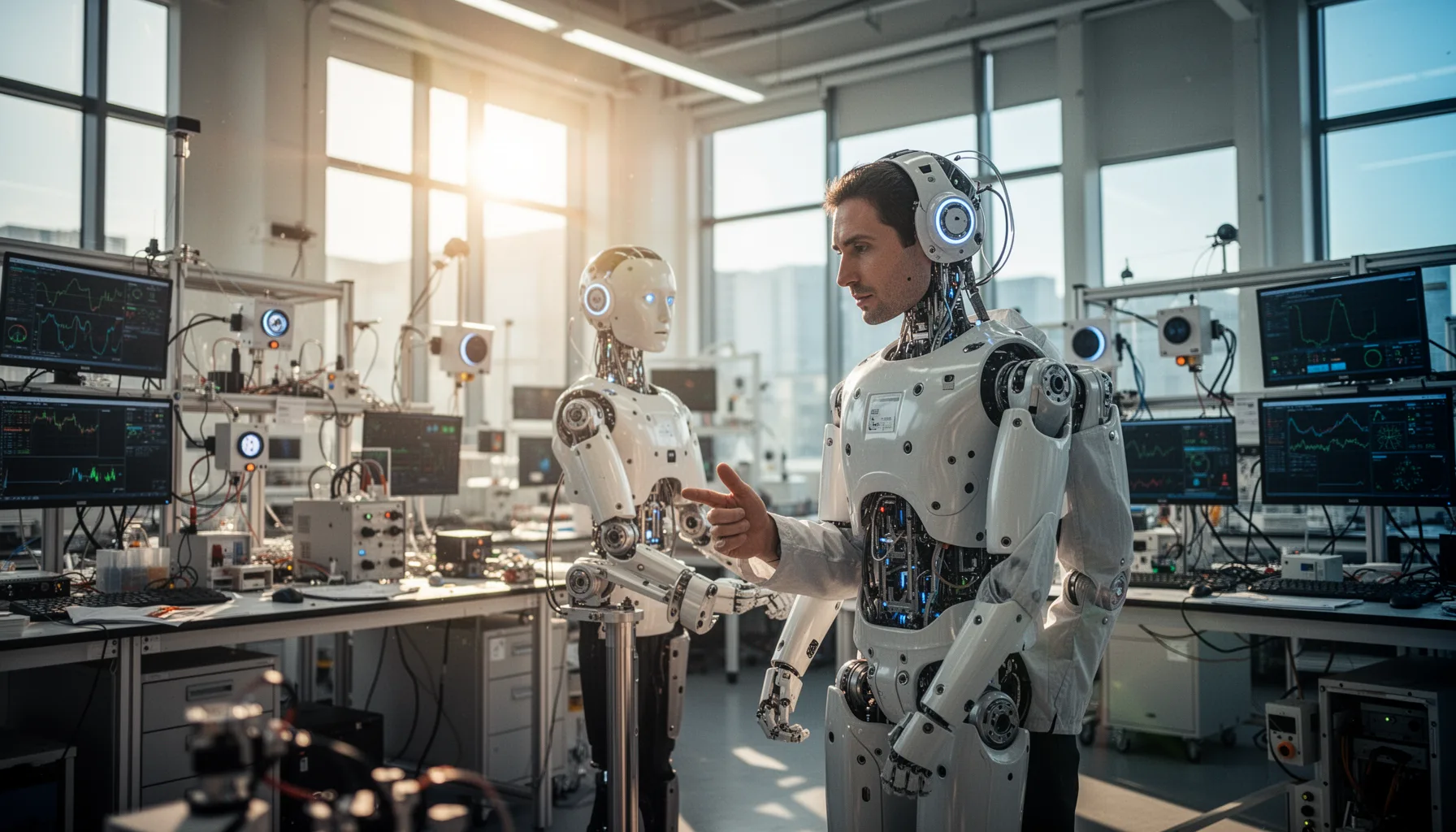
Yes, is openai building a robot is now a fair question. But the evidence suggests embodied AI groundwork more than an imminent consumer device. Hiring patterns usually reveal intent, and that's more consequential than executive mystique. OpenAI ran a robotics effort before, then wound it down in 2021, which gives this renewed push extra weight. Not quite a guarantee, though. Reopening the robotics door doesn't mean a polished home companion bot ships next year. Figure AI, 1X, and Tesla all learned the hard way that robots fail in kitchens, warehouses, and hallways for boring reasons, not cinematic ones. That's the reality. We'd argue the logic reaches beyond one gadget: robots create proprietary multimodal data, open fresh model feedback loops, and cut dependence on chat subscriptions as the only big revenue lane. That's a bigger shift than it sounds.
What OpenAI robotics hiring 2026 suggests about the product roadmap
OpenAI robotics hiring 2026 most likely points to investment in perception, control, and data infrastructure before any broad rollout. Job descriptions usually tell you whether a company wants a demo, a developer platform, or something it can actually ship. If roles stress simulation, reinforcement learning, teleoperation, sensor fusion, and safety systems, that suggests a serious embodied stack rather than a one-off prototype. And if hiring swings toward product engineering, firmware, test automation, and field reliability, the company probably wants something real in the world. Consider Tesla Optimus. Tesla's edge doesn't come from one model alone, but from years of manufacturing, actuators, battery systems, and fleet data. OpenAI doesn't have that industrial base today. So the most plausible roadmap starts with reference platforms, partnerships, or developer systems before any true mass-market personal robot appears. Worth noting.
Sam Altman robot startup OpenAI strategy: why robotics matters beyond headlines
The sam altman robot startup openai story matters because robotics could hand OpenAI a whole new control point in AI. Models already compete on benchmarks, price, and distribution, which makes physical-world data far more valuable than just another chatbot feature. A robot sees, hears, moves, fails, retries, and gathers feedback in ways text interfaces simply can't. That's a moat. Nvidia has pushed this idea with Isaac simulation tools, while Covariant and Physical Intelligence have argued that embodied interaction creates richer training signals than web text alone. And for OpenAI, robotics also opens post-chat revenue through enterprise systems, licensing, or operating software other manufacturers adopt. We'd go further. The robot itself may matter less than the training loop and platform position it creates. That's a bigger shift than it sounds.
Chatgpt vs personal ai robots: what changes technically and commercially?
Chatgpt vs personal ai robots is not a feature comparison; it's a full-stack shift from tokens to atoms. A chatbot can be wrong and mildly irritating, but a robot can break objects, block hallways, or hurt someone. That raises the bar for latency, planning, controls, fail-safe behavior, and verification. Boston Dynamics spent years proving how hard locomotion and manipulation are, even before you ask for consumer-grade affordability. Then you pile on cost of goods, battery life, return logistics, and customer support, and the business turns brutal fast. Here's the thing. Consumer robotics margins often look thin until volumes rise, but volumes don't rise until usefulness feels obvious. So many companies start in warehouses, security, or elder care before chasing a general-purpose home robot. We'd say that's the sober path.
How OpenAI could compete with Figure, 1X, and Tesla Optimus
OpenAI could compete with Figure, 1X, and Tesla Optimus only by choosing a narrower wedge than 'general household robot.' Figure has chased manufacturing use cases and raised major capital, including backing linked to Microsoft and OpenAI conversations in earlier reporting. 1X has focused on humanoid systems with a safety-first story and investor interest from OpenAI's Startup Fund, which already hints at adjacency in the market. Tesla, meanwhile, pairs AI ambition with factory know-how that very few software firms can copy. So OpenAI's edge probably sits in models, multimodal reasoning, speech, and developer tooling rather than motors and metal. That means the winning move could be an embodied intelligence layer for partner hardware. Not glamorous, maybe. But commercially, a platform play often beats trying to become Foxconn and iRobot at the same time. Worth noting.
Key Statistics
Frequently Asked Questions
Key Takeaways
- ✓OpenAI robotics hiring 2026 points to long-term platform building, not instant consumer robot sales
- ✓Job postings matter because they reveal data pipelines, safety work, and embodied AI priorities
- ✓Figure, 1X, and Tesla Optimus set the competitive bar for hardware and deployment
- ✓A personal robot needs sensors, teleoperation, simulation, and post-sale support to work
- ✓The real prize may be proprietary real-world data and new revenue beyond chat products