
⚡ Quick Answer
Shopify GraphQL API for AI agents offers rich commerce access, but it demands a different design style than REST-first agent systems. Agents must handle schema discovery, cost limits, pagination, and mutation safety with far more discipline than most generic API tools expect.
Shopify GraphQL API for AI agents sounds like a clean match on paper: a modern commerce platform paired with software that can reason across orders, products, inventory, and customers. Then the messy part arrives. Shopify supports millions of merchants and has nudged developers toward GraphQL for years, a move that brings precision and power but also leaves some sharp corners for AI systems trained on the habits of REST endpoints. We'd argue that's the real story. Not the hype around “agentic commerce.”
Why Shopify GraphQL API for AI agents creates friction

Shopify GraphQL API for AI agents creates friction because most agents still expect fixed endpoints, simple pagination, and request patterns that forgive a little sloppiness. Shopify has spent years steering developers toward GraphQL in the Admin API, and that choice gives teams fine-grained access to data while forcing them to think about schemas, connections, and query cost. That's solid API design for seasoned developers. It isn't always friendly to generic agents. According to Shopify’s own public platform materials, the company supports millions of merchants worldwide and processed more than $235 billion in gross merchandise volume in prior annual reporting context, which explains why efficiency and controlled access matter so much. Big scale changes the rules. A merchant assistant that fetches products, inventory levels, and fulfillment orders in one shot sounds tidy, but a loosely planned GraphQL query can turn costly or malformed very quickly. We'd argue Shopify made the right call for platform scale, yet that same call punishes lazy agent orchestration. Worth noting. Take Shopify Flow and Shopify’s app ecosystem as a clue: the automations that work on Shopify usually narrow the task, constrain the action, and validate the payload before anything reaches production. Klaviyo follows that pattern too.
How building AI agents for Shopify differs from REST integrations
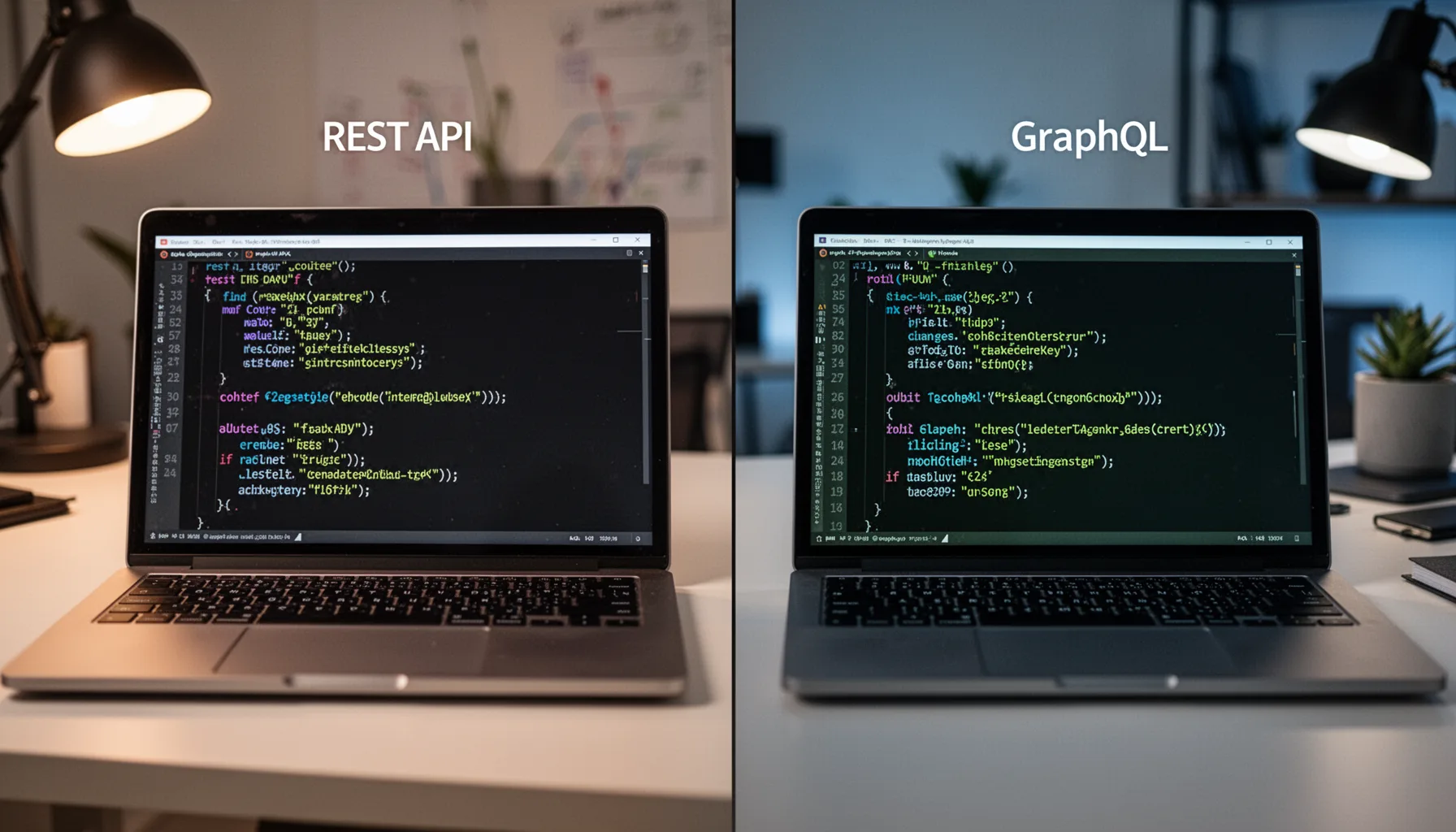
Building AI agents for Shopify differs from REST integrations because the agent has to plan queries, not just pick endpoints. In a REST-first setup, an agent can often recover by hitting another URL, inspecting a predictable response, or following links between resources. Shopify’s GraphQL model asks the agent to know which fields exist, how objects nest, and how pagination runs through edges and cursors. That's a steeper lift. And it gets heavier once you add mutations, where one wrong field selection or input structure can throw errors that a weak tool-calling loop won't diagnose well. GitHub’s GraphQL API created a similar learning curve for developer tooling, and the same pattern shows up here: schema-rich systems reward preparation more than improvisation. Simple enough. In our view, the winning setup isn't a free-range LLM calling Shopify directly. It's an orchestrated stack where a planner selects from prebuilt query templates, a validator checks requested fields, and a runtime watches throttling, retries, and side effects. That's a bigger shift than it sounds.
REST vs GraphQL for agent systems on Shopify

REST vs GraphQL for agent systems on Shopify isn't really an argument over which style is better; it's a question of what kind of discipline each style demands from the agent. REST gives agents obvious verbs and predictable resource boundaries, which is why many tool-use benchmarks still feel easier in REST-heavy environments. GraphQL gives one endpoint, flexible structure, and tighter control over overfetching, but that flexibility turns into ambiguity when an agent writes its own query from scratch. Not quite a minor detail. Shopify’s GraphQL Admin API uses cost-based throttling concepts that force developers to think in budgets, and that makes blind trial-and-error especially wasteful for autonomous systems. Budgets matter. A customer-support agent that checks an order, refund status, and fulfillment timeline can do that efficiently with GraphQL, but only if it understands the schema and asks narrowly. We'd argue GraphQL beats REST for sophisticated Shopify workflows over time. But for agent systems, GraphQL only wins when you wrap it in constraints that mimic the clarity REST used to hand you for free. Gorgias is a useful example.
What are the main Shopify API agent integration challenges

The main Shopify API agent integration challenges are schema complexity, mutation safety, throttling, pagination, and weak error recovery. Those issues sound technical because they are, but each one maps directly to business risk. If an agent misreads a connection, it may skip inventory records. If it mishandles a mutation, it could update product data incorrectly or trigger a bad fulfillment action. According to Postman’s 2024 State of the API report, more than two-thirds of surveyed organizations now rely on APIs as the basis for customer-facing revenue flows, which means reliability failures hit income, not just engineering pride. That's not trivial. Shopify app developers already know this, and companies like Klaviyo and Gorgias build carefully scoped Shopify integrations rather than letting a model roam across the Admin API unchecked. Here's the thing. My view is simple: the integration challenge isn't “Can the model call Shopify?” It’s “Can the system prove the model should call Shopify, with this exact query, under this exact merchant policy, and log every consequence?” That's the real bar.
How to make Shopify GraphQL API for AI agents actually work

Shopify GraphQL API for AI agents works best when you treat GraphQL as an execution substrate, not as a playground for open-ended prompting. Start with a task catalog: create draft order, fetch abandoned checkouts, update inventory item, read fulfillment events. Then map each task to tested queries or mutations with bounded variables and policy checks. Because once you do that, the agent stops “writing API calls” and starts selecting safe actions. That's the healthier model. Shopify’s developer tooling, webhooks, and bulk operations give teams useful primitives here, especially for asynchronous jobs or large catalog reads that shouldn't happen inside a conversational loop. A practical example is a merchandising copilot that suggests title changes but requires human approval before any productUpdate mutation runs; that setup keeps intelligence in the loop without giving up control. We'd argue the best architecture is boring in the right places: typed wrappers, schema snapshots, action approvals, and strong observability. Boring wins when money is on the line. Shopify Flow points the same way.
Step-by-Step Guide
- 1
Define narrow merchant tasks
Start by listing the exact jobs your agent should handle inside Shopify. Keep them concrete: fetch order status, tag risky orders, draft product copy, or reconcile low-stock alerts. And resist the urge to make one agent do everything, because narrow scopes sharply reduce GraphQL mistakes and bad mutations.
- 2
Map tasks to fixed GraphQL operations
Write approved queries and mutations for each task instead of letting the model compose them freely. Store variable schemas, expected outputs, and cost expectations alongside each operation. So when the agent acts, it chooses from known patterns rather than improvising against the live schema.
- 3
Add schema-aware validation
Validate every requested field, argument, and object type against a current schema snapshot. This step catches hallucinated fields before Shopify rejects the request or, worse, before your retry loop spirals. Use typed clients or code generation where possible, since they give teams a cleaner contract than prompt-only tooling.
- 4
Enforce action guardrails
Put approvals, role checks, and mutation allowlists between the model and sensitive commerce actions. A read-heavy analytics assistant can run with broad access, but anything that edits products, discounts, or orders needs tighter control. Yet guardrails should live in code and policy, not just in system prompts.
- 5
Monitor cost, errors, and side effects
Track query cost, latency, retry behavior, and mutation outcomes in one dashboard. Shopify integrations fail in sneaky ways, especially when pagination, throttling, or partial data enters the picture. We recommend storing the model decision, selected operation, raw variables, and merchant result together for audits.
- 6
Test against real merchant scenarios
Run the agent on realistic store data and edge cases before any production rollout. Include large catalogs, missing metafields, canceled orders, duplicate SKUs, and permission mismatches. Because if your agent only passes clean demo data, it probably isn’t ready for Shopify’s messy real world.
Key Statistics
Frequently Asked Questions
Key Takeaways
- ✓Shopify’s GraphQL-first design gives agents depth, but very little forgiveness
- ✓REST-trained agent frameworks often stumble on Shopify query structure and rate costs
- ✓Bulk operations, schema awareness, and guardrails make more difference than prompt cleverness
- ✓The best Shopify agents mix GraphQL planning with narrow, task-specific tools
- ✓If you’re building AI agents for Shopify, observability is non-negotiable